Mareez
Sufi on the Rock Since 2004
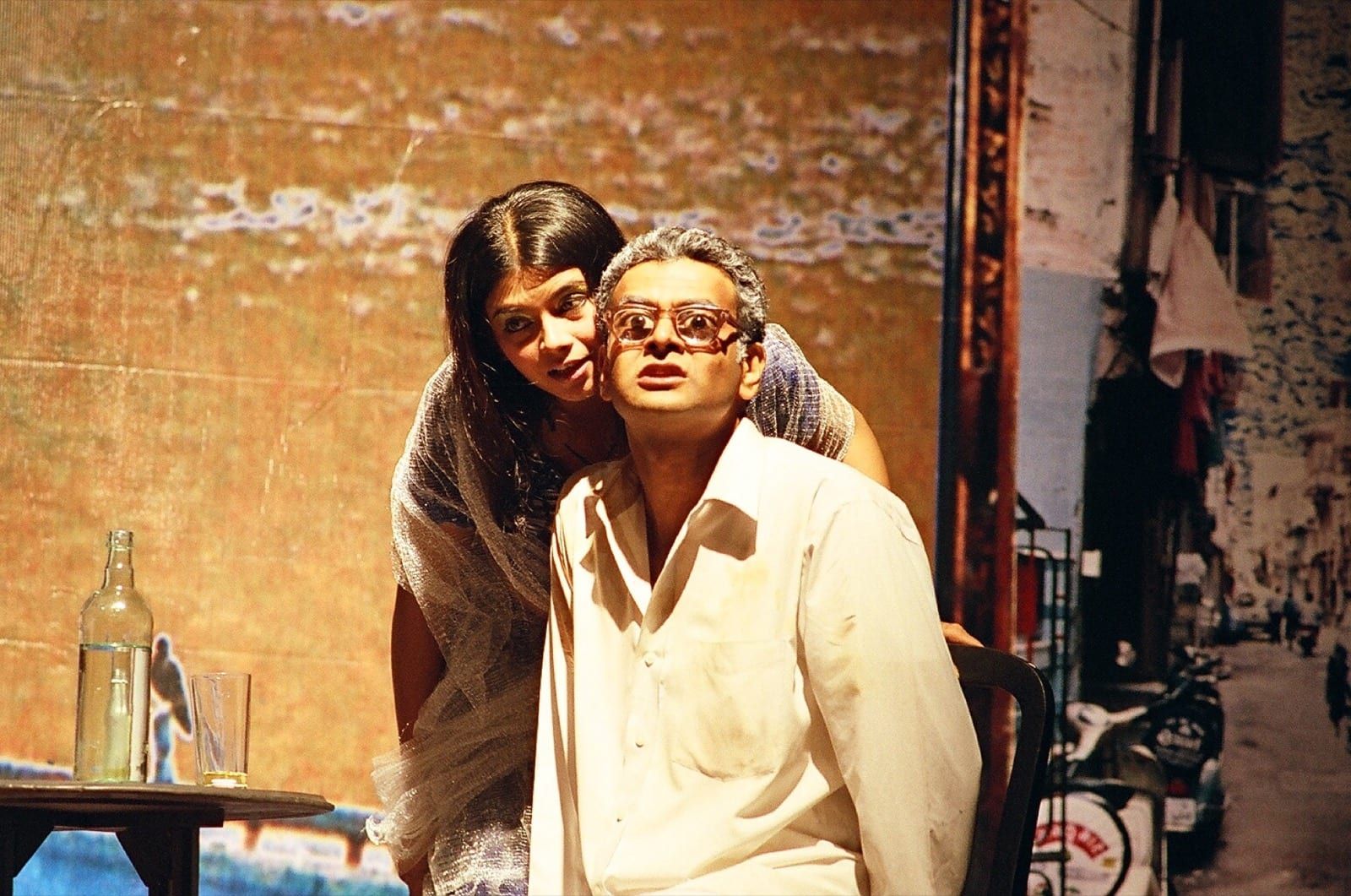
The longest-running Gujarati play. Two hundred performances and counting, at Prithvi Theatre continuously since 2004. Abbas Abdul Ali Vasi was born in Surat in 1917 into a Dawoodi Bohra family. He dropped out of school in the second grade. By fourteen, he was composing ghazals. By his twenties, he was selling them for five rupees apiece to wealthy men who published them under their own names. He drank. He loved a woman who would not love him back. He married another who stood by him. He contracted tuberculosis. He wrote 178 poems that the literary establishment ignored and the people of Gujarat memorised. His pen name was Mareez — literally, ‘a sick man.’ They called him the Ghalib of Gujarat. He died in 1983 after being hit by an auto-rickshaw on a Mumbai street. Adapted by Vinit Shukla from Raeesh Maniar’s biography Mareez: Astitva Ane Vyaktitva, and directed by Manoj Shah, the play does not tell this story in order. It weaves poetry, fantasy, hallucination, and realism into a theatrical fantasia — inspired by Vincent van Gogh’s letters Dear Theo and Charles Bukowski’s Barfly. Dharmendra Gohil has played Mareez since the 2004 premiere — twenty years in the same role — with critics noting that ‘Mareez was in his veins.’ Kumkum Das plays Sona, his wife. The set comprises six paintings by Padma Bhushan-awarded artist Ghulam Mohammed Sheikh. The music is by Uday Mazumdar, a tabla player trained under Ravi Shankar.
The People
Behind
the Play
Press &
Reviews
Mumbai Theatre Guide
Mareez — A Breath of Fresh Air in Gujarati Theatre
A biographical narrative interspersed with poetry that is simple yet effective and evocative. Dharmendra Gohil's performance ranges from the lover whose love is unrequited through various life phases to alcoholism. A breath of fresh air.
1 December 2004
Amar Mahanagar (Marathi)
Not a Play, Mareez Is a Life-Poem
A Marathi critic's account of witnessing Manoj Shah's Mareez — a play that dissolves the boundary between biography and poetry, between the stage and the street.
1 March 2005
Asian Age
In Sync With Past, Present — Four Best Plays at Prithvi
Gujarati theatre director Manoj Shah has earned a reputation as a director who brings a lot of variety into his work. His four best plays are being staged at the Prithvi Theatre this weekend.
25 June 2011
Mid-Day
The Man Who Didn't Give a Damn
Gujarati theatre director Manoj Shah loves people who don't give a damn. The Gujarati play Mareez brings the life, disappointments and hallucinations of an underrated poet to the stage at the NCPA.
22 July 2012
The Indian Express (Surat)
At a Theatre Near You: Mareez
Vadodara may be the sanskarnagari of Gujarat, but Surat too can boast of a famous poet: Mareez. A play based on the life of this poet who was born and brought up in Surat arrives in the city.
27 December 2004
Aangikam (Gujarati)
Mareez: Lajvaab!
A Gujarati review published the week of the premiere, declaring the production 'Lajvaab' — an Urdu word meaning beyond compare. The reviewer describes the emotional impact of watching Mareez's life unfold on Prithvi's stage.
26 November 2004
Divya Bhaskar (Gujarati)
Mareez ni Yaado na Jaam Chhalkata Gaya
The cups of Mareez's memories kept overflowing — a Gujarati review describing how the play brought the poet's world alive at Prithvi Theatre, with audiences moved to tears by the ghazals and Gohil's performance.
15 June 2005
Time Out Mumbai
Mareez — Time Out Mumbai
This play chronicles the life of Gujarati poet Mareez, an alcoholic who died in anonymity, with sublime dialogue dripping with poetry. Rated 6 out of 10.
25 February 2009
Also Worth
Seeing
Jal Jal Mare Patang
The Burning Kite — Life of Manilal Dwivedi
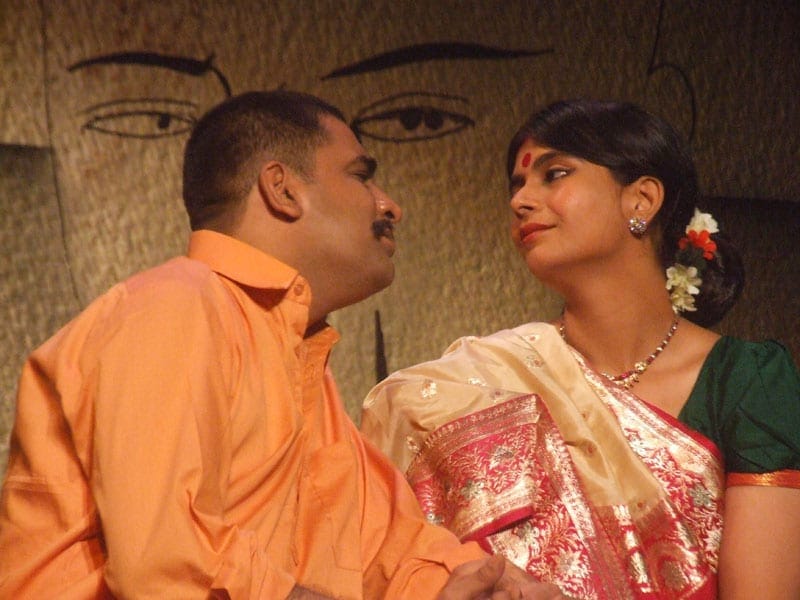
The story of Manilal Nabhubhai Dwivedi (1858–1898) — the philosopher, writer, and literary critic who blazed through forty years of life with an intensity that redefined Gujarati literature and introduced Western philosophy to Gujarat. Married at fourteen to a four-year-old girl. Professor of Sanskrit at Samaldas College, Bhavnagar. Founder of Priyamvada, India’s first women’s magazine. Invited to the Parliament of World Religions in Chicago in 1893 — the same event where Vivekananda gave his famous speech — but could not afford to attend; his paper on Hinduism was read by Virchand Gandhi in his absence. His Raja Yoga was praised by Edwin Arnold and later read by Mahatma Gandhi in a South African prison. Narmad, the founder of modern Gujarati literature, considered him his intellectual heir. The era of Gujarati literature from 1885 to 1905 is named after him: the Mani-Govardhan Era. Manoj Shah spent seven years researching before staging this play. Written by Mihir Bhuta and drawn from Dwivedi’s autobiography Atmavrittanta — compared to Rousseau’s Confessions — the production features backdrop paintings by Atul Dodiya, one of India’s foremost contemporary artists. It premiered on 28 February 2009 at NCPA and received an A-certificate from the Maharashtra Censor Board of Theatres for its frank depiction of Manilal’s personal life. The title translates as ‘the kite burns as it flies’ — a metaphor for a life that blazed brilliantly and briefly. Manilal died at forty, writing at his desk in Nadiad.
Apurva Avsar
The Spiritual Mentor of Mahatma Gandhi
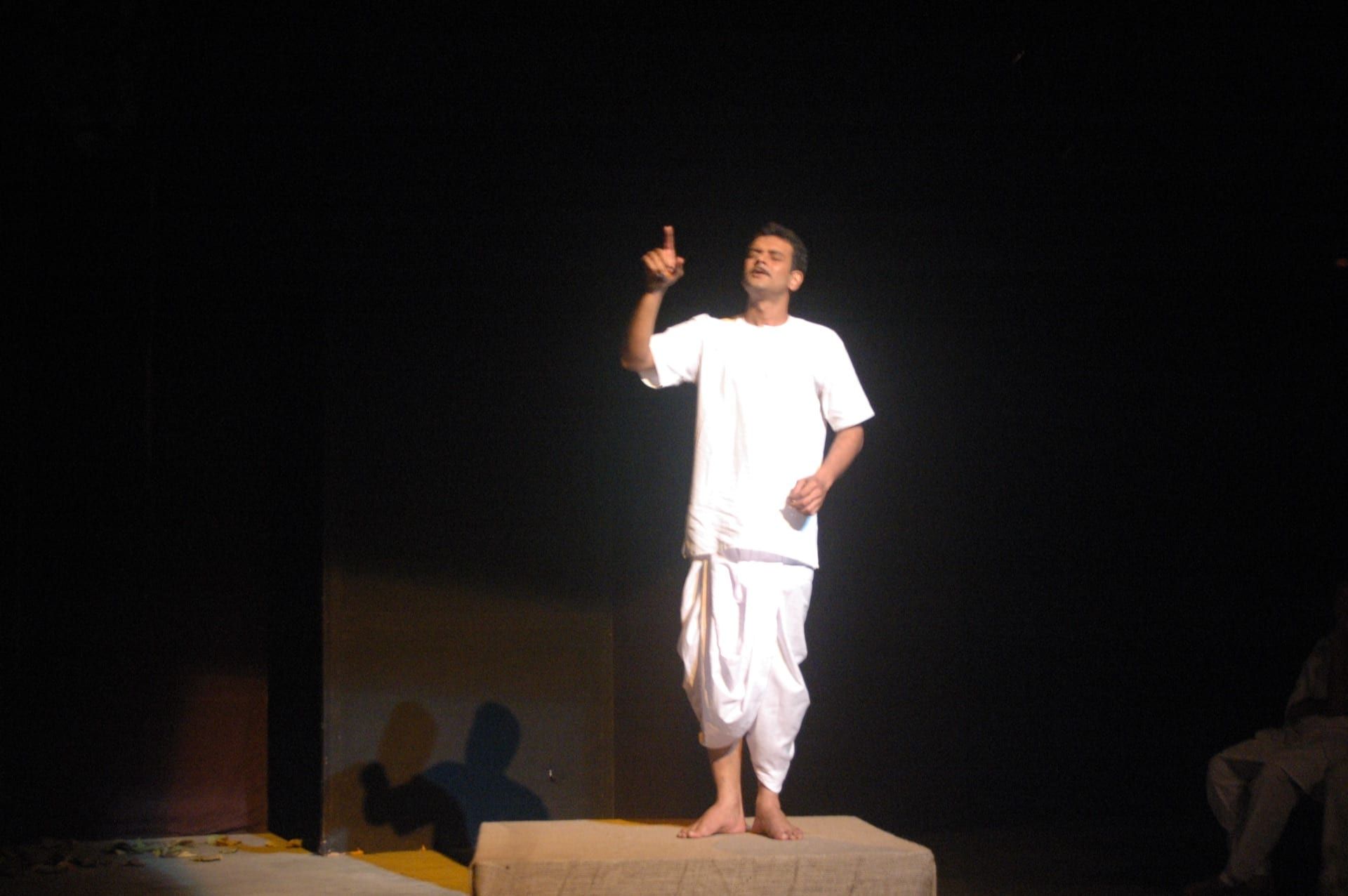
Apurva Avsar — meaning 'a rare occasion' — is a Gujarati biographical drama based on the life and teachings of Shrimad Rajchandra (1867–1901), the Jain philosopher, poet, mystic, and social reformer whom Mahatma Gandhi called his spiritual guide and refuge in moments of crisis. Born in Vavaniya, a small village near Morbi in Gujarat, Rajchandra recalled his past lives at the age of seven. He became a master of poetry, Shatavadhana (the feat of simultaneously tracking a hundred different tasks), and astrology. His fame spread across the country — yet he renounced it all, concentrating on self-restraint and the pursuit of liberation from the cycle of births and deaths. Against his own will, he married and entered business, which flourished across India and beyond, but his hours remained consumed by spiritual inquiry. Wanderers and seekers visited him constantly. The play brings together three towering figures of Jain spiritual history on a single stage — Acharya Hemchandra (11th century), Avdhut Anand Ghanji (17th century), and Shrimad Rajchandra (19th century) — tracing 2,500 years of a living philosophical tradition. Three actors perform fifteen characters in a theatrical challenge that moves from Rajchandra's childhood visions through his meetings with Gandhi in Mumbai in 1891, their searching correspondence while Gandhi was in South Africa, and Rajchandra's final renunciation. Dramatized by Raju Dave and Manoj Shah after a year and a half of research, the play premiered at Prithvi Theatre, Mumbai on 28 February 2007. It has since been performed across India and in the United States, including at the Jain Center of Southern California. A Hindi adaptation by Prayas Dave followed the same year. The subject matter is drawn from the everyday texture of society — the treatment is realistic, so that any common person can relate to how Jain culture has shaped Indian heritage, religion, language, literature, and philosophy in ways both visible and profound.
Huto and Huto Oh Yaa!
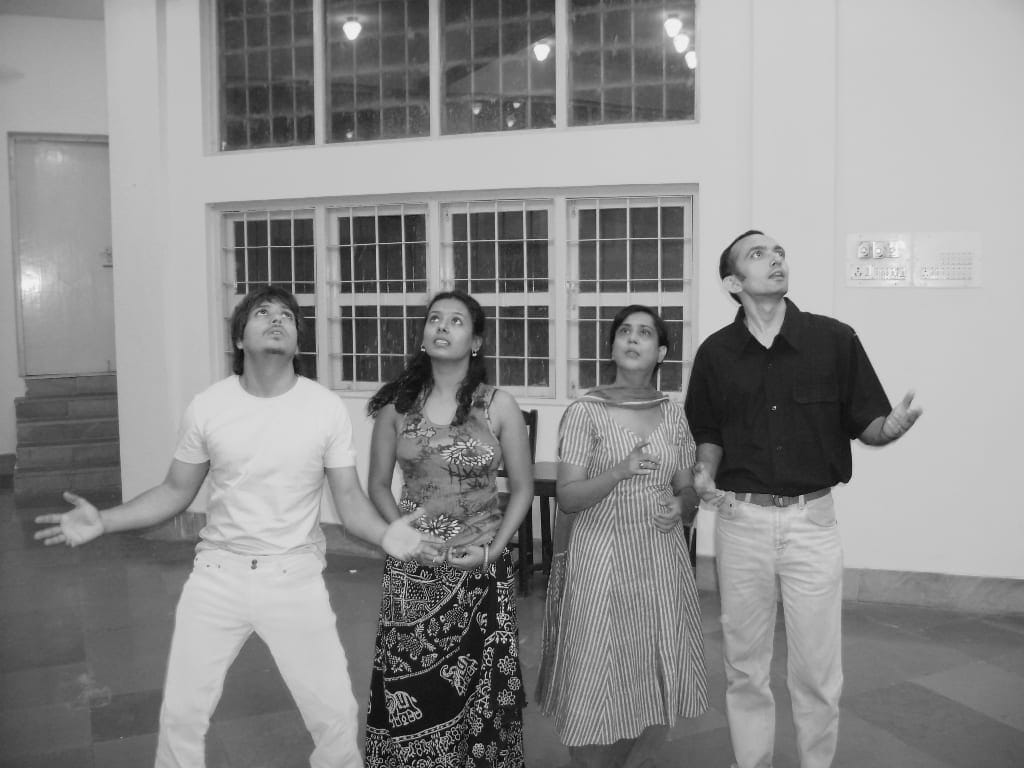
An Ideas Unlimited production directed by Manoj Shah, featuring Chirag Vohra.
Gujarat Ni Asmita
The Glory of Gujarat
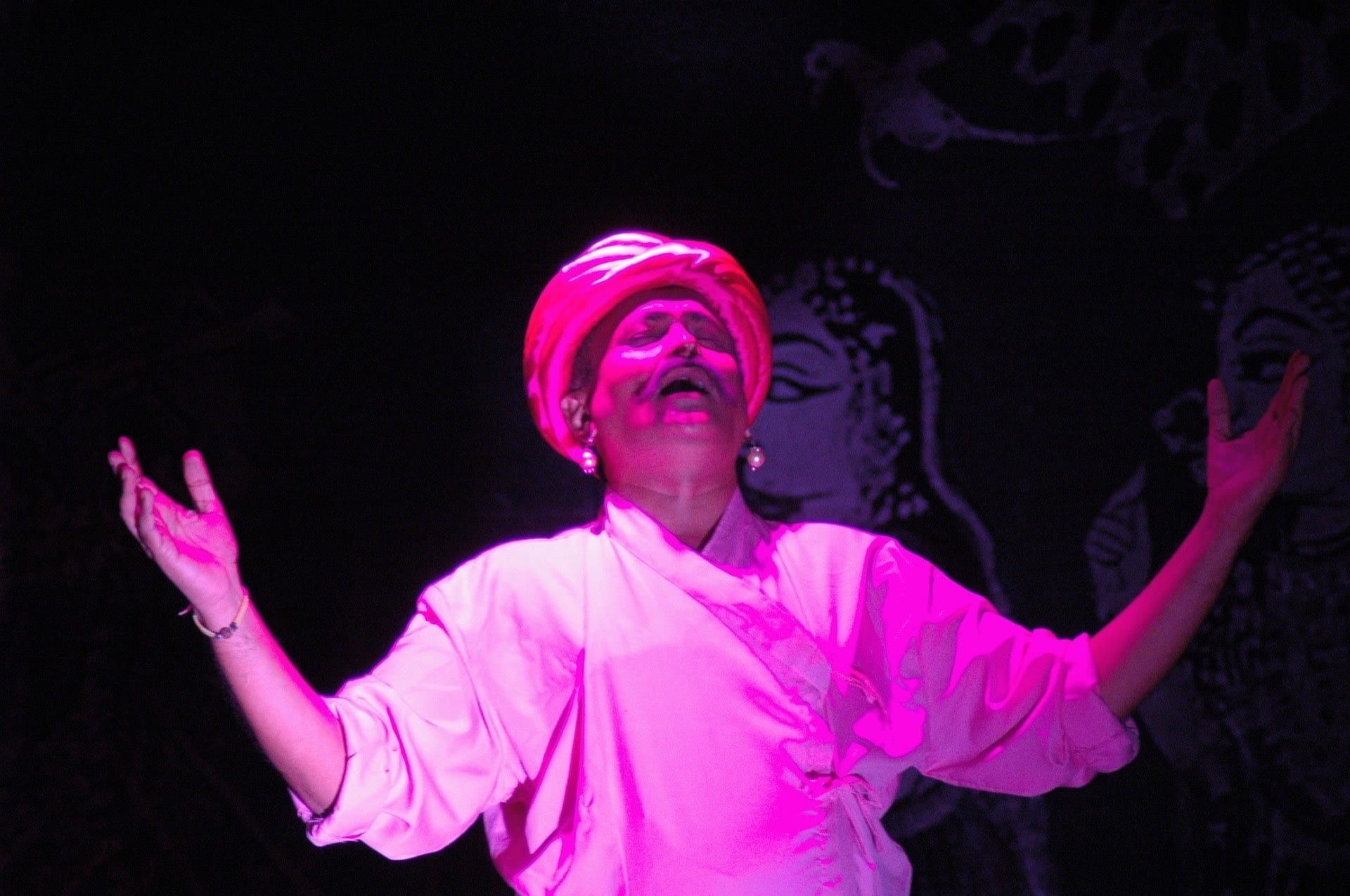
Gujarat Ni Asmita is a theatre and music journey through the literature that made Gujarati a language to be proud of — from Gujarat, by Gujarat. Conceived and directed by Manoj Shah, dramatised by Raju Dave and Satya Mehta, it gathers the great voices of Gujarati poetry and reform onto one stage across six centuries: Narsinh Mehta and Meera, Akho and Premanand, the Krishna–Sudama episode Premanand made his own, Dayaram and his garbis, Dalpatram and his historic meeting with Alexander Kinloch Forbes, Narmad with his fierce reformist prose, and Meghani with the folk songs of Saurashtra. The play projects these characters, their work and their lives alongside the ordinary people of Gujarat for whom they wrote. It is an epic staged in a contemporary register — built so that anyone with no more than a slight idea of Gujarati literature can discover the gem of the past, without lecture or apology. The verse arrives in the language it was written in, and the staging trusts the audience to lean in and listen. Suresh Joshi's score runs under the whole evening — thirty-nine cues moving from Narsinh Mehta's bhajans to Meghani's lokgeet, a parallel narrative of how Gujarati identity has always been carried in melody. Rajiv Bhatt's costumes date each century as it arrives, and the lighting by Ajinkya Sampat and Shekhar Phadke works against a painted pichhwai backdrop and projected images that put the poets' own faces behind the actors playing them. It first went up in 2003 at Gujarat College, Ahmedabad, as a forty-five-actor piece before an audience of fifteen thousand that included the then Chief Minister Narendra Modi, and was later staged for more than twelve thousand people in and around Morari Bapu's Mahuva in Saurashtra. In August 2008 a nine-member company took it to the main stage of Chaalo Gujarat '08, the World Gujarati Conference in New Jersey — Ideas Unlimited's third American tour after Master Phoolmani in 2004 and Apurva Avsar in 2007.
Socrates
Mukkadamo — The Trial
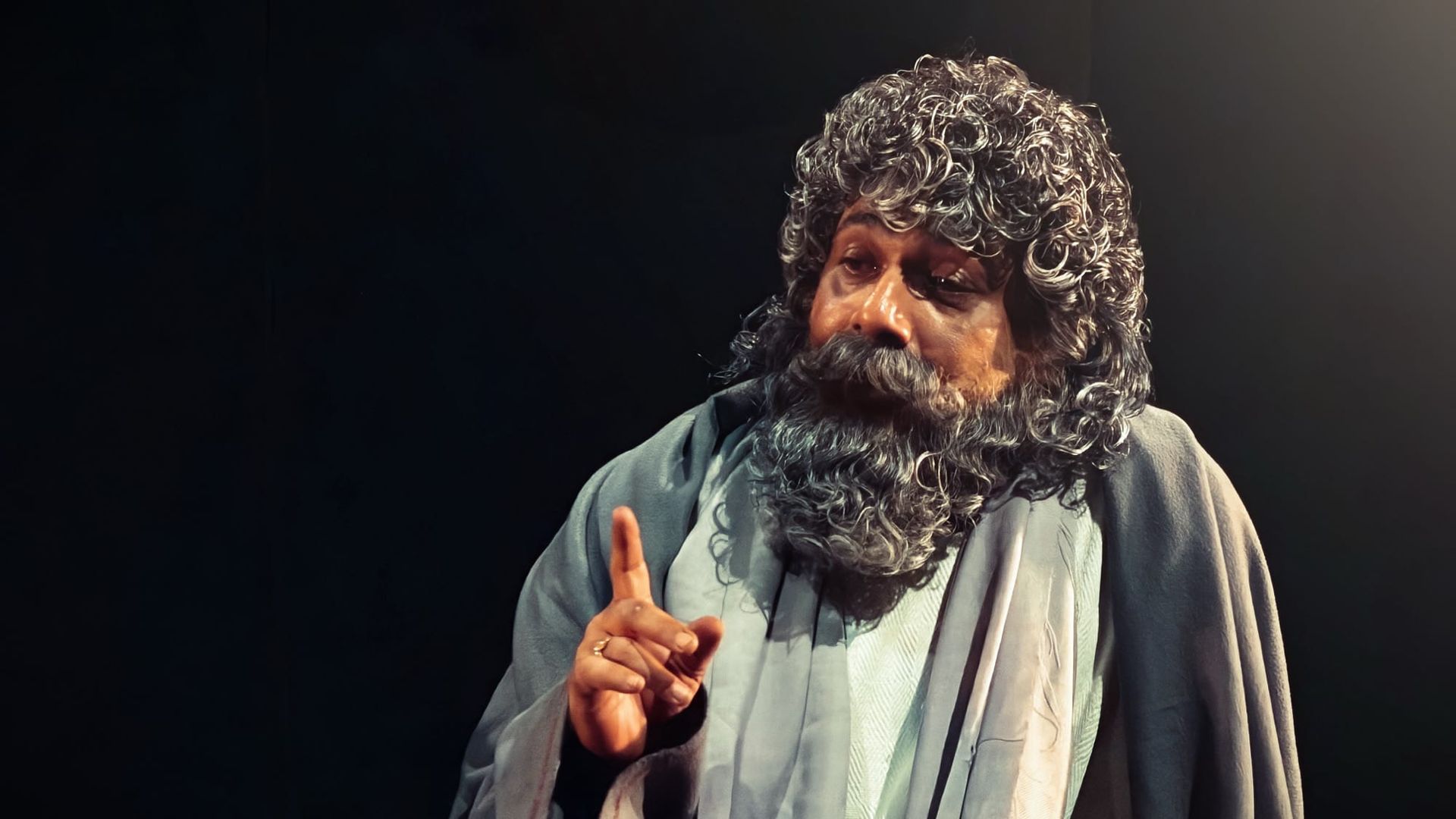
Mukkadamo — Socrates Trial. A 90-minute Gujarati play, directed by Manoj Shah, that returns to the Athenian court 2,400 years after Socrates' death and asks why the philosopher still refuses to leave us alone. Drawing on the writings of three of Socrates' contemporaries — the playwright Aristophanes, the philosopher Plato, and the military general Xenophon — the play assembles a portrait that no single source could give. The five cardinal virtues that anchored his teaching — courage, temperance, justice, piety, and wisdom — are not philosophical abstractions here but the framework of a man's death sentence. What makes this Socrates new on the Gujarati stage is its insistence that any work containing something eternal must be continually reinterpreted. Socrates' obsession with morality, freedom of speech, fearlessness, and self-examination is read here against Indian philosophy, finding parallels that shorten the distance between Athens and Ahmedabad. The play also takes a fresh look at the reality of his death — not as state execution alone, but as the most demanding of his own choices. The production argues that Socrates' insistence on critical thinking is indispensable today — from school education and scientific research to political understanding. After many earlier plays on Socrates, this is the one that brings him home in Gujarati.
Bombay Flower
The Untold Story of Ruttie Petit and Muhammad Ali Jinnah
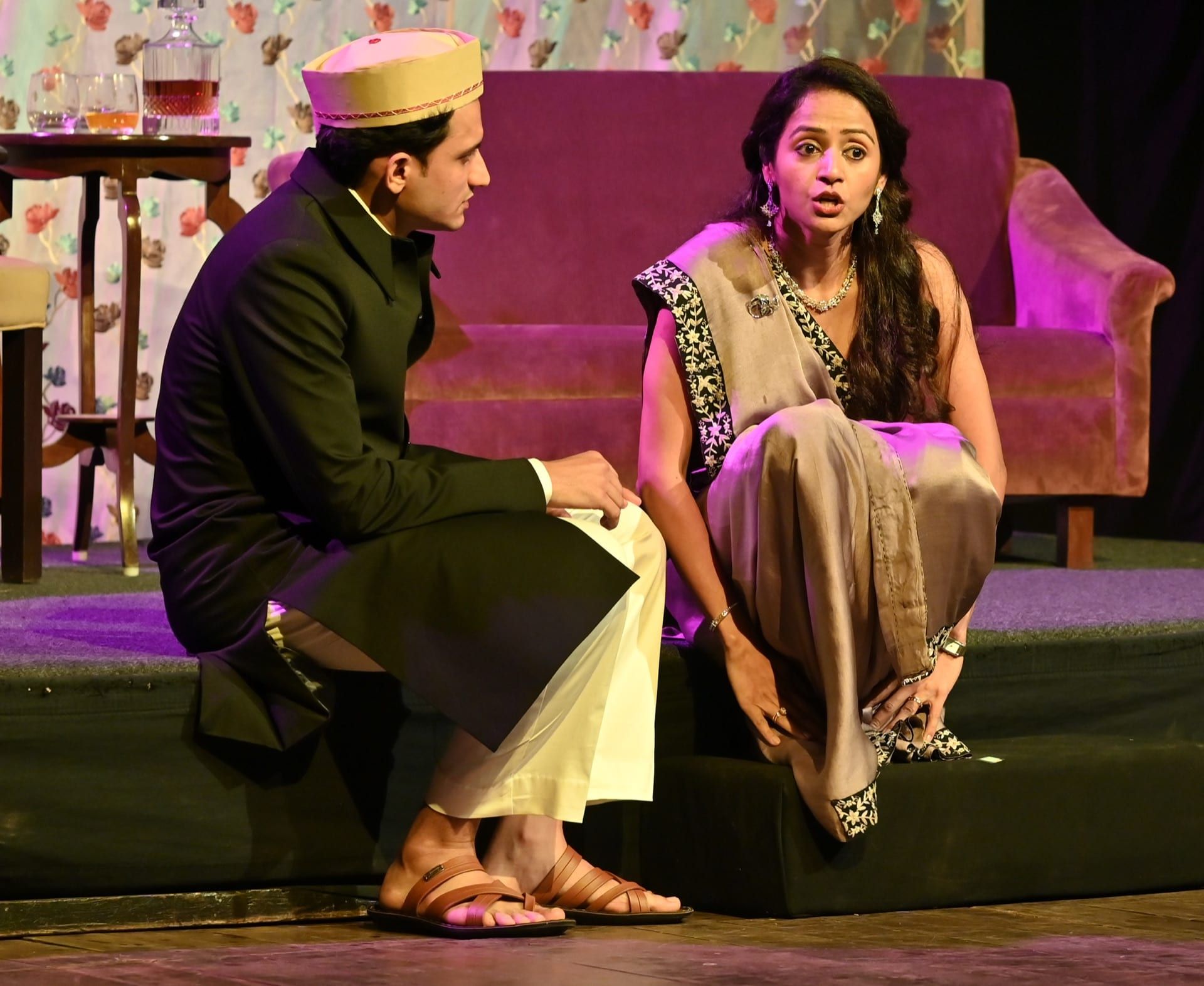
A tribute to the legendary Parsi theatre — Bombay Flower tells the astonishingly daring story of Ruttie Petit (1900–1929), the fiercely independent daughter of Sir Dinshaw Petit, second baronet, who at eighteen married the era's most divisive political figure: Muhammad Ali Jinnah, a man more than two decades her senior. Given the sobriquet 'Bombay Flower' by Sarojini Naidu, Ruttie's exuberance fills the first half of the play — her rebellion against family, faith, and Parsi society to marry for love. In the second half, shunned by her parents and increasingly isolated by Jinnah's consuming political ambitions, she becomes an embittered woman who finds solace in theosophy, opium, and solitary wanderings across Europe. She died at twenty-nine. Written by Geeta Manek and drawn from Sheela Reddy's Mr and Mrs Jinnah: The Marriage That Shook India, the play took four years to develop. It began as a one-woman show before Manoj Shah brought in Jinnah, then Ruttie's parents, his sister Fatima, and their friend Kanji Dwarkadas. Bhamini Oza Gandhi leads as Ruttie, with Vishal Shah as Jinnah. The play premiered to a full house at the Experimental Theatre, NCPA on March 26, 2023 — an NCPA co-production. Bombay Flower is dedicated to Parsi theatre, which Manoj Shah discovered to be the pioneer of both Gujarati and Urdu theatre during his research for Master Phoolmani in 1999. It asks a question that remains relevant: why would an intelligent, sensitive young woman from a privileged background risk everything for a man whose world was entirely different from hers?