Jal Jal Mare Patang
The Burning Kite — Life of Manilal Dwivedi
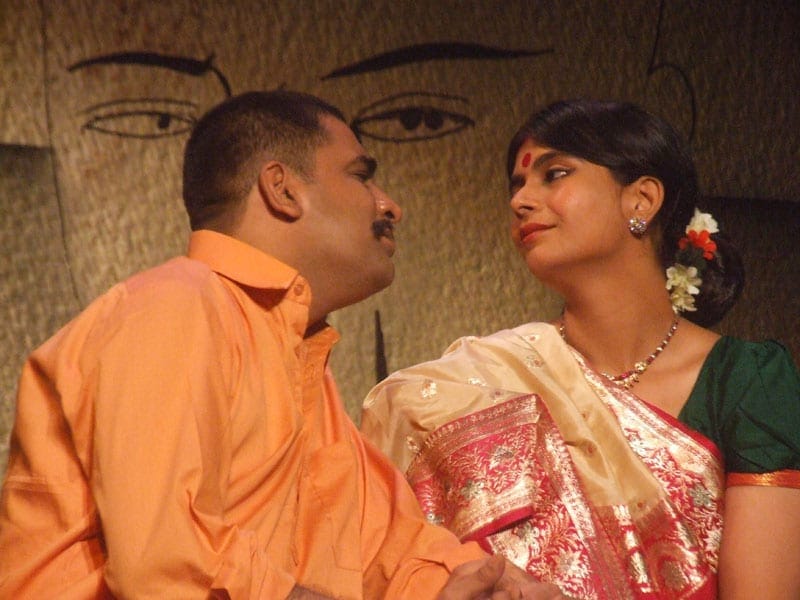
The story of Manilal Nabhubhai Dwivedi (1858–1898) — the philosopher, writer, and literary critic who blazed through forty years of life with an intensity that redefined Gujarati literature and introduced Western philosophy to Gujarat. Married at fourteen to a four-year-old girl. Professor of Sanskrit at Samaldas College, Bhavnagar. Founder of Priyamvada, India’s first women’s magazine. Invited to the Parliament of World Religions in Chicago in 1893 — the same event where Vivekananda gave his famous speech — but could not afford to attend; his paper on Hinduism was read by Virchand Gandhi in his absence. His Raja Yoga was praised by Edwin Arnold and later read by Mahatma Gandhi in a South African prison. Narmad, the founder of modern Gujarati literature, considered him his intellectual heir. The era of Gujarati literature from 1885 to 1905 is named after him: the Mani-Govardhan Era. Manoj Shah spent seven years researching before staging this play. Written by Mihir Bhuta and drawn from Dwivedi’s autobiography Atmavrittanta — compared to Rousseau’s Confessions — the production features backdrop paintings by Atul Dodiya, one of India’s foremost contemporary artists. It premiered on 28 February 2009 at NCPA and received an A-certificate from the Maharashtra Censor Board of Theatres for its frank depiction of Manilal’s personal life. The title translates as ‘the kite burns as it flies’ — a metaphor for a life that blazed brilliantly and briefly. Manilal died at forty, writing at his desk in Nadiad.
The People
Behind
the Play
Also Worth
Seeing
Apurva Avsar
The Spiritual Mentor of Mahatma Gandhi
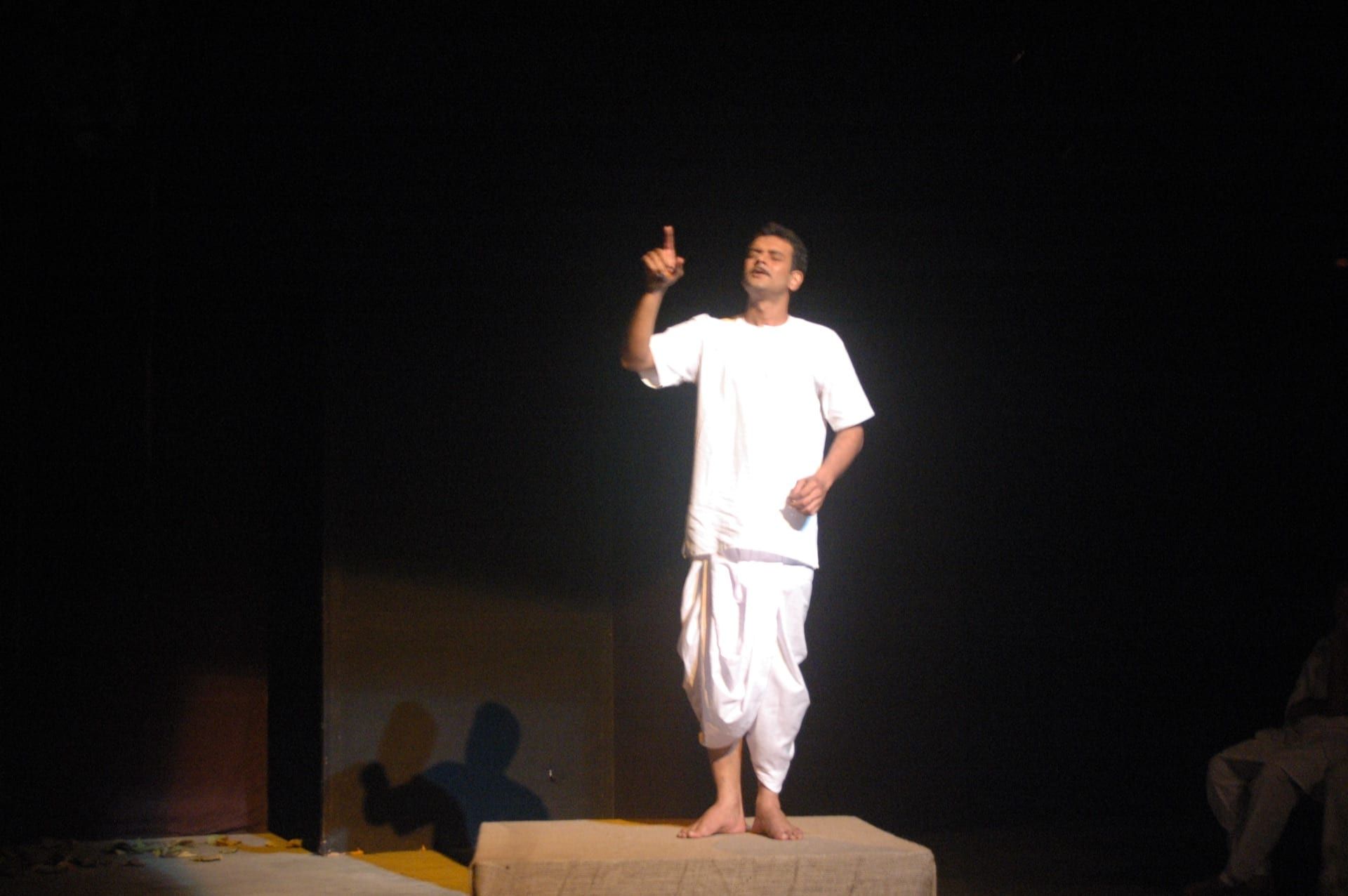
Apurva Avsar — meaning 'a rare occasion' — is a Gujarati biographical drama based on the life and teachings of Shrimad Rajchandra (1867–1901), the Jain philosopher, poet, mystic, and social reformer whom Mahatma Gandhi called his spiritual guide and refuge in moments of crisis. Born in Vavaniya, a small village near Morbi in Gujarat, Rajchandra recalled his past lives at the age of seven. He became a master of poetry, Shatavadhana (the feat of simultaneously tracking a hundred different tasks), and astrology. His fame spread across the country — yet he renounced it all, concentrating on self-restraint and the pursuit of liberation from the cycle of births and deaths. Against his own will, he married and entered business, which flourished across India and beyond, but his hours remained consumed by spiritual inquiry. Wanderers and seekers visited him constantly. The play brings together three towering figures of Jain spiritual history on a single stage — Acharya Hemchandra (11th century), Avdhut Anand Ghanji (17th century), and Shrimad Rajchandra (19th century) — tracing 2,500 years of a living philosophical tradition. Three actors perform fifteen characters in a theatrical challenge that moves from Rajchandra's childhood visions through his meetings with Gandhi in Mumbai in 1891, their searching correspondence while Gandhi was in South Africa, and Rajchandra's final renunciation. Dramatized by Raju Dave and Manoj Shah after a year and a half of research, the play premiered at Prithvi Theatre, Mumbai on 28 February 2007. It has since been performed across India and in the United States, including at the Jain Center of Southern California. A Hindi adaptation by Prayas Dave followed the same year. The subject matter is drawn from the everyday texture of society — the treatment is realistic, so that any common person can relate to how Jain culture has shaped Indian heritage, religion, language, literature, and philosophy in ways both visible and profound.
Hu Chandrakant Bakshi
I, Chandrakant Bakshi
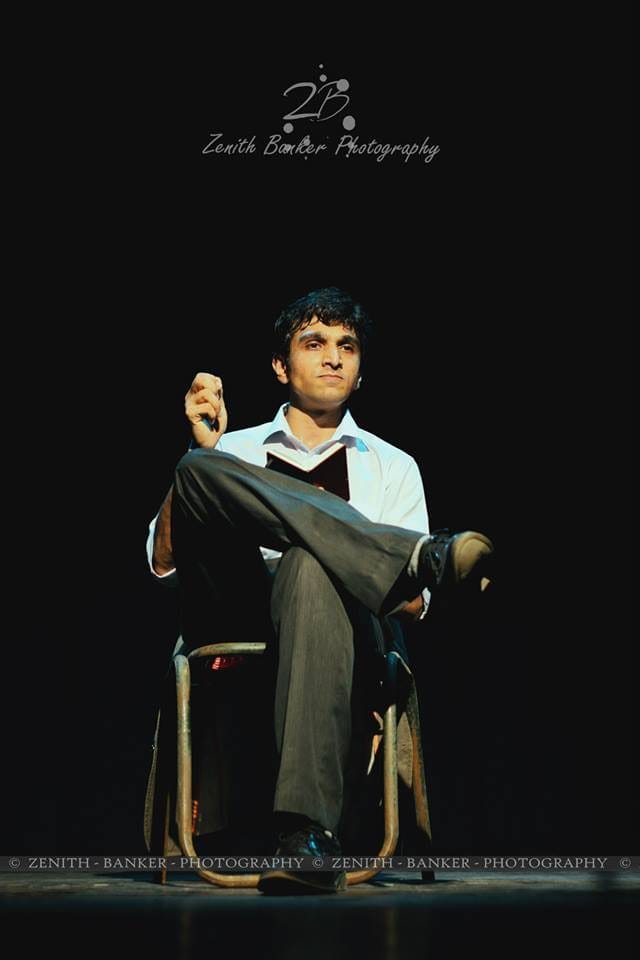
The story of Gujarati literature's most controversial writer, told by the man himself — or rather, by Pratik Gandhi inhabiting him with a ferocity that made audiences forget they were watching an actor. Chandrakant Bakshi (1932–2006) authored 178 books, served as Professor of History, became Sheriff of Mumbai, got his short story 'Kutti' banned by the Gujarat government, publicly defied Bal Thackeray and refused to apologise, and wrote an autobiography so incendiary that parts of it could not be published. His writing style — Gujarati laced with Urdu, Hindi, and English — was as deliberately provocative as his public persona. He was, by every account, an incredible egoist. He was also, by every account, adored by his readers. Written by Shishir Ramavat and drawn from Bakshi's autobiography Bakshinama, the play premiered on 15 June 2013 at Prithvi Theatre. Manoj Shah uses a ladder throughout the production as a metaphor for Bakshi's obsession with being on top. Gandhi — years before Scam 1992 would make him a household name — delivers what CreativeYatra called a 'cautious yet fearless' performance, bringing the bold and egotist protagonist to 'flawless perfection.' This play, along with Mohan No Masalo two years later, is credited with solidifying Pratik Gandhi's reputation as an actor of immense talent.
Apoorav Khela
The Ecstatic Wanderer of Rajasthan
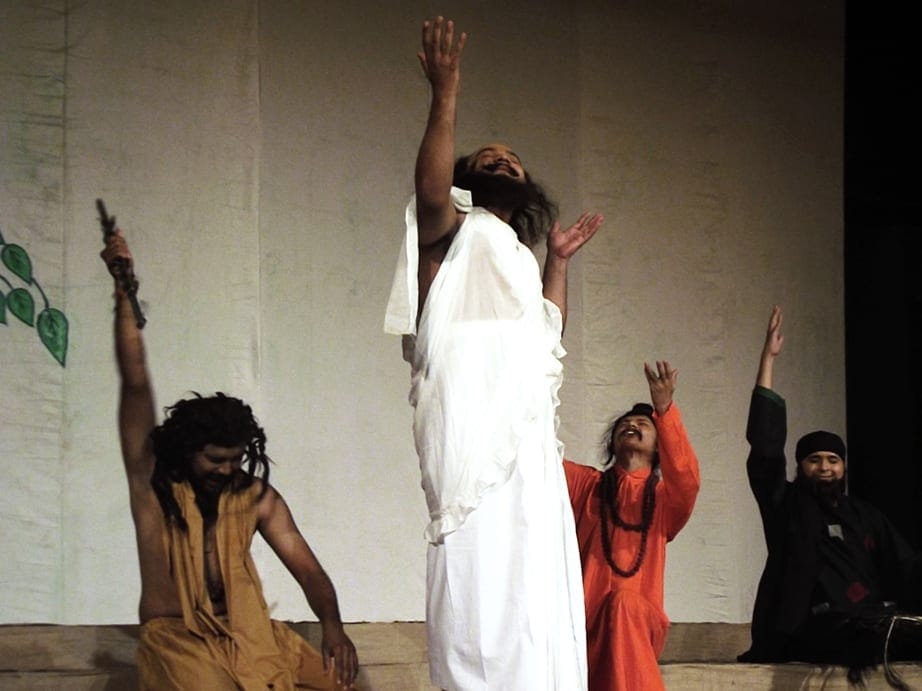
Apoorav Khela — meaning 'a wondrous play' — is the biography of Avdhoot Anandghanji, a 17th-century Jain mystical poet who dwelled in the forests of Rajasthan and whose name has been all but erased from the books of history. Anandghan — literally 'cloud of bliss' — was born as Labhanand, likely before 1624, and was initiated as a Svetambara monk in the Tapa Gaccha order under the name Labhavijaya. But monastic convention could not contain him. He became an avdhoot — an ascetic wanderer who had renounced all worldly attachments — and disappeared into the forests of Rajasthan, where his proximity to nature was said to pacify the beasts and make the trees sway in joy. His absence from monastic records suggests he was always an outsider, more mystic than monk. What survived is his poetry. Anandghan composed padas — devotional songs — in a mixed vernacular of Gujarati, Rajasthani, and Braj that were spontaneous, ecstatic, and radically non-sectarian. His Anandghan Chauvisi honours the twenty-four Jain Tirthankaras. His Anandghan Bahattari was transmitted orally and in manuscripts, its verses sometimes found alongside those of Kabir, Surdas, and Banarasidas. Mahatma Gandhi included one of his hymns in his prayer collection. His songs are still sung in Jain temples across India — and even appear in Digambara hymn collections, despite his Svetambara origins. The play, written by Dr. Dhanvant Shah and directed by Manoj Shah, is constructed from the anecdotes and oral traditions surrounding this enigmatic figure. Five actors — Ashok Parmar, Jay Upadhyay, Nimesh Dave, Manish Rohit, and Sagar Rawal — bring to life a man about whom barely any documented information exists. Kabir Thakore's set design and Uday Mazumdar's music carry the Rajasthani folk texture, while Rajesh Mandloi's language work ensures the dialect rings true. The play does not attempt a conventional narrative. It is, as its own programme notes describe it, 'an astonishing flight of happiness, beginning with anand and ending with Anandghan.'
Amar Fal
The Eternal Story of Raja Bharthari
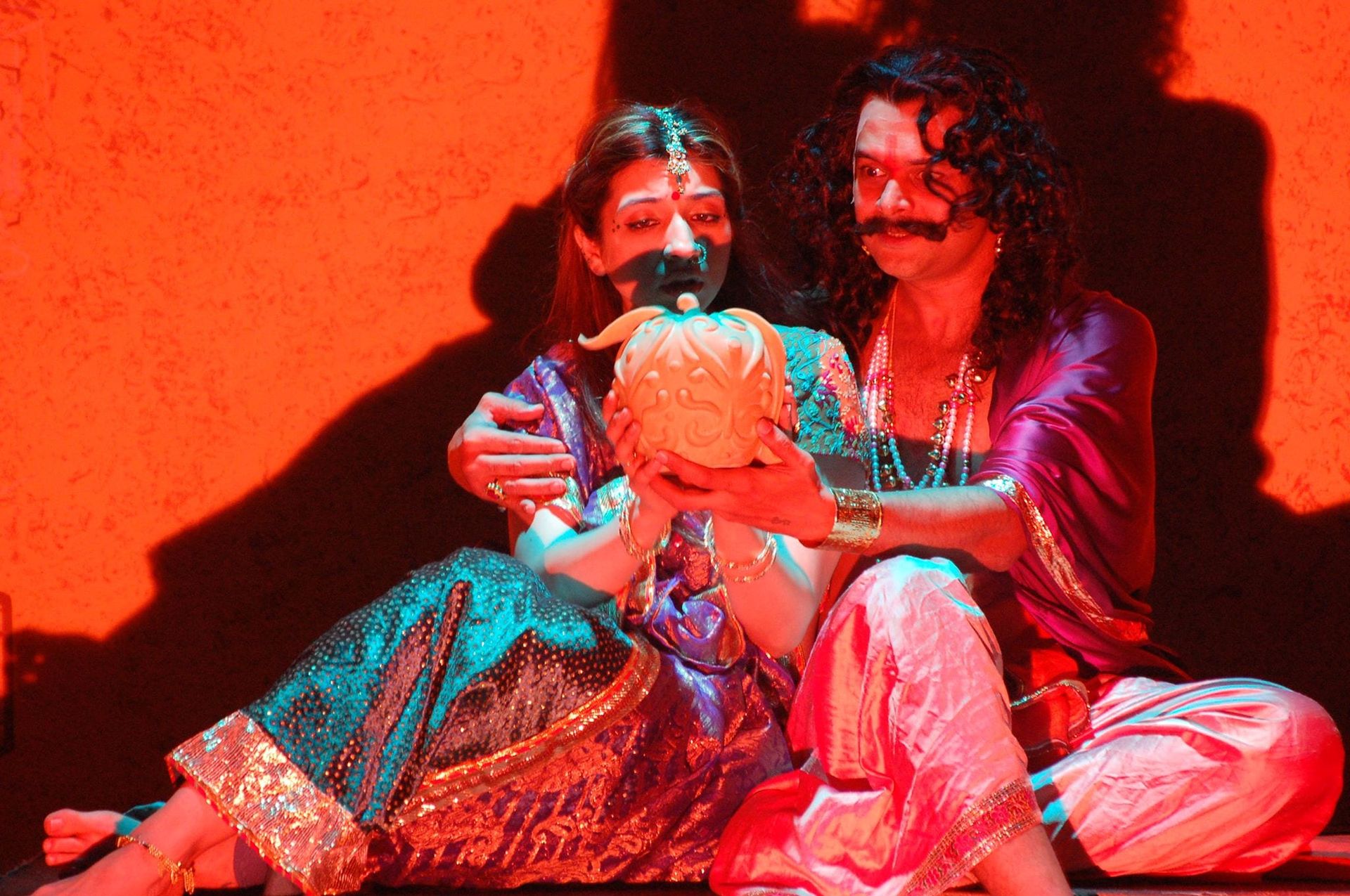
He was the chosen one — a king, chosen by the omnipresent for the element that would make him immortal. The undying love for his queen made him bestow the fruit of life on her, only later to question the very meaning of life. Amar Fal is the story of Raja Bharthari, which ends as the story of Sant Bharthari. Written by Bharat Naik and directed by Manoj Shah, the play traces a king's shattering journey from royal power to spiritual awakening — from the intoxication of love and sovereignty to the stark clarity of renunciation. Bharthari has been a mystery since the 5th century. Numerous scholars have tried to decipher his works — from the Dutch in 1651 to the French in 1670 to the Germans in 1882. He formed the basis of notable thinkers' thoughts for centuries thereafter. His works have been translated into English, Greek, Russian, Marathi, Brij, and Hindi. With Kalidas as his close friend and Gopichand as his nephew, Bharthari's story becomes all the more transcendent. When the fruit of immortality reaches Bharthari through divine grace, he gives it to the queen he loves above all else — only to discover the fruit has passed through a chain of betrayals. Dejected and crestfallen, he questions everything. He watches his world burn in a towering inferno. The more he questions, the more he finds answers — answers that lead to the realisation that reality is nothing but an illusion. This realisation, dawned on a cremation ground in the company of the almighty, transforms him. He writes as he thinks — Shringar Shatak, Niti Shatak, and ultimately Vairagya Shatak — works that taught the world the fundamentals of Moksha. With Dharmendra Gohil as Raja Bharthari, Pratik Gandhi as Ashwapal, and Manoj Shah himself as Guruji, Amar Fal is a visually rich ensemble production that brings one of India's most enduring legends to the Gujarati stage.
Lakshmi Poojan
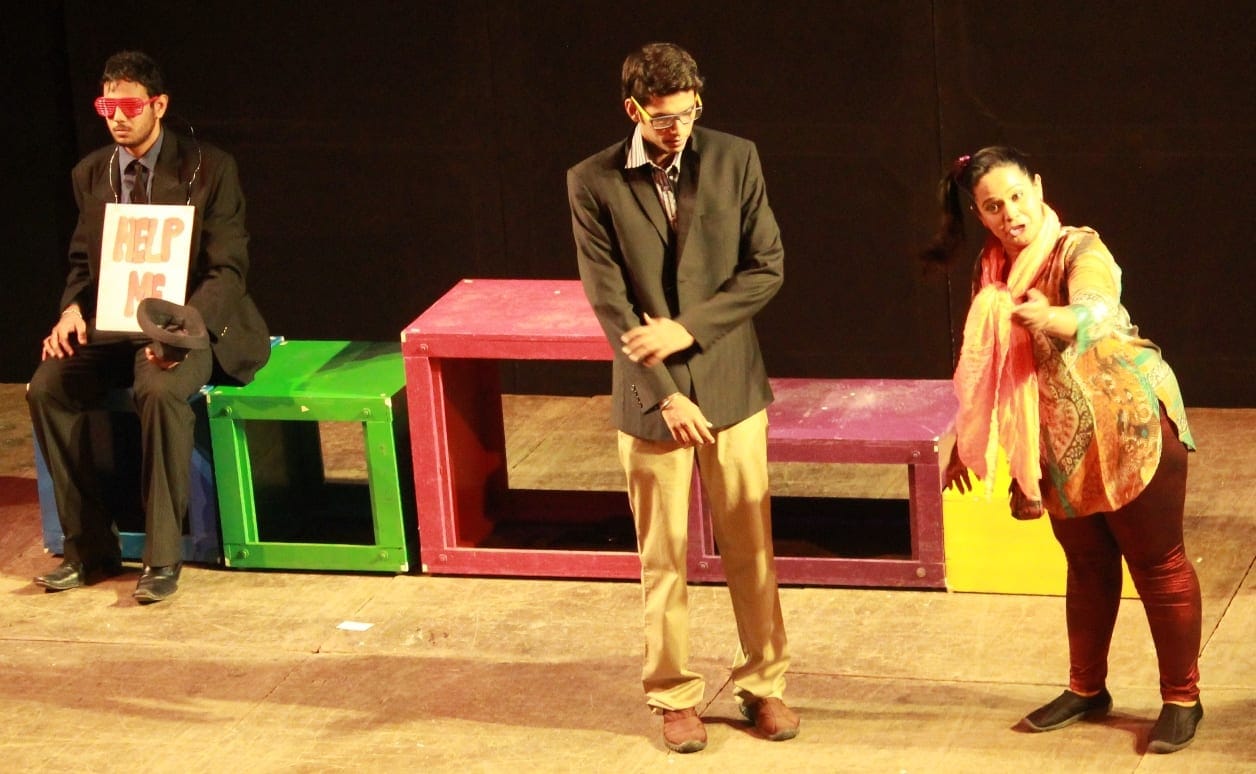
Lakshmi Poojan is a Gujarati play in two acts — 2 hours 15 minutes with intermission — written by Uttam Gada and directed by Manoj Shah, with music by Kaniya, sets by Kabir Thakore, lights by Asmite Pathare, and a cast including Pratik Gandhi, Bhamini Oza Gandhi, Satchit Puranik and Trupti Thakkar. Produced by Ideas Unlimited. The destinies of Sonali and Viraj are tied together since they were children — by a single note of one song. That note haunts them for years. Two decades later, the same note brings them back to each other, and they fall madly in love. But — yes, there is the usual but — both their families are staunch enemies. So love is in peril, and has to survive the trials and tribulations of the story. Sounds familiar? This love story is startlingly different. It is a laugh riot, a roller-coaster ride as never seen before. The stage is teeming with strange and weird characters — more than twenty-two of them. The action moves from Nal Bazar to Nepean Sea Road to New York and back at breakneck speed. There is singing, dancing, fighting, breaking arms and legs, and breaking hearts. And, somewhere in all of it, there is a race to invent something that will change the face of the planet. All this — enacted by just four actors. Love survives. The music survives. And so does the planet.
Vastupal Tejpal
A Tale of Toil and Selfless Giving
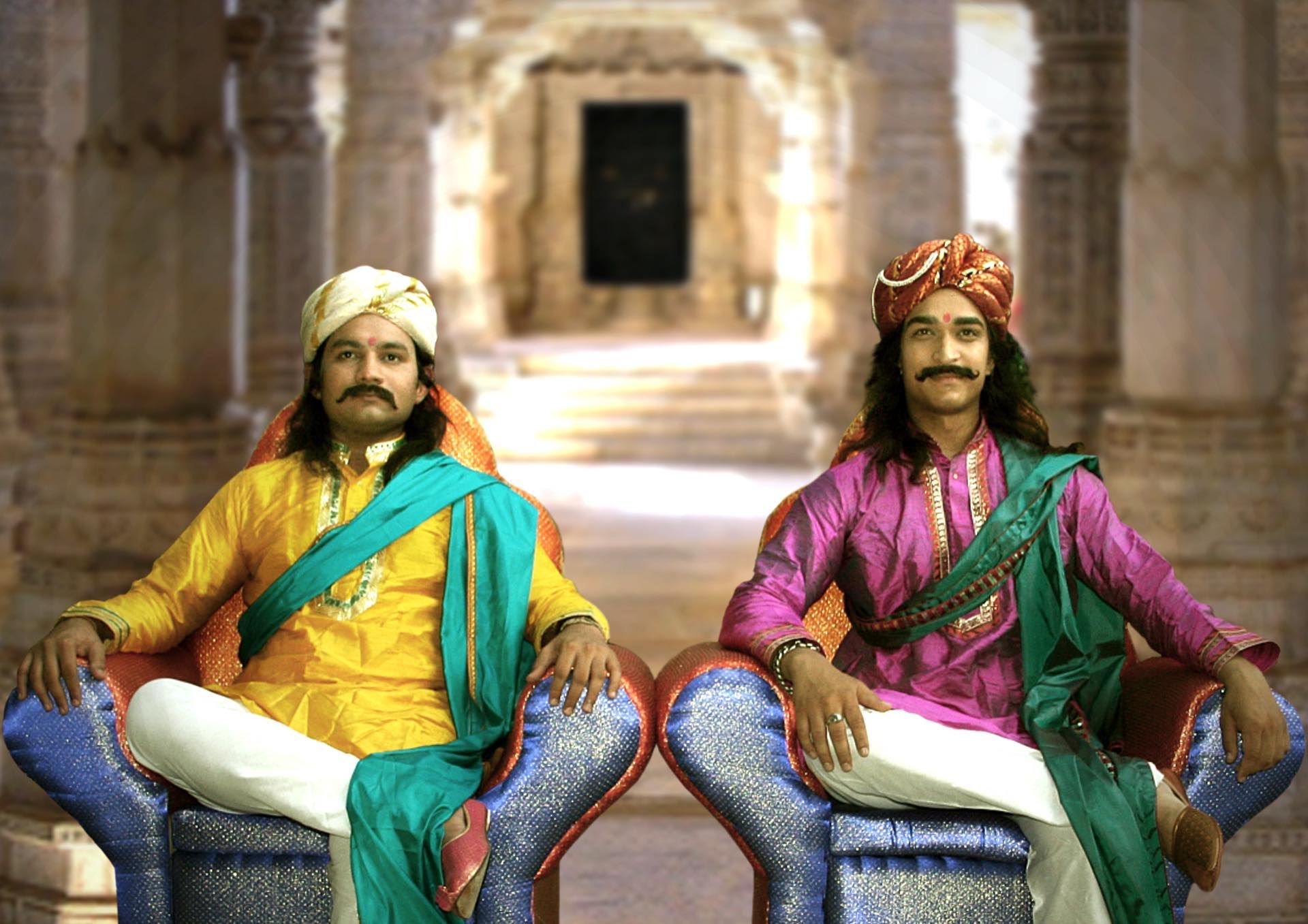
Vastupal and Tejpal were brothers who rose to become ministers of the Vaghela court in thirteenth-century Gujarat, and who spent the fortune they built on the marble that still stands at Delvada on Mount Abu and at Girnar — carving so fine it remains among the highest achievements of Indian temple craft. Dineshbhai Modi's play is the story of how they got there. It does not open with the brothers. It opens a generation earlier, with a scandal. Kumardevi, widowed in her twelfth year and sent home two months after her wedding, is to be married again — to Asaraj, son of the minister of Patan — on the word of Acharya Haribhadrasuri, who has read her palm and been visited by Shasandevi with a prophecy: two sons of extraordinary lustre. Her father Abhu Sheth, who wants nothing more than his daughter's happiness, can only ask the question that stops him: widow remarriage — what will society say? His wife tells him to put society aside. The two sons of that defiant match are Vastupal and Tejpal. What follows is a chronicle of reversal and repair. Born to privilege, the brothers lose their wealth and keep their integrity, rebuild it through honest trade until they are among the foremost merchants in Gujarat, and are then raised to ministerial office, where they turn on the corruption and drift of the administration they have inherited. The poster called it a tale of toil and selfless giving — parishram ane parmarth — and the play holds both halves: the labour that makes a fortune, and the decision to spend it on something that outlasts you. Manoj Shah staged it on a grand scale, with Prasad Walavalkar's stone-palace set, Rajiv Bhatt's costumes, Bhotesh Vyas's lighting and Suresh Joshi's score, and a company of sixteen actors — among them a young Malhar Thakar, six years before Chhello Divas made him a name in Gujarati cinema. It was commissioned by the Jain Adhyatma Studies Circle Federation, whose lifetime chairman, Dineshbhai Modi, wrote it, and presented by Kaustubh Trivedi. It opened on a Sunday evening at Yashwantrao Chavan Pratishthan, Nariman Point, on 31 May 2009.