A Sacred Collection
Jain
Performing Arts
Stories drawn from Jain philosophy, history and scripture — staged with the reverence they deserve and the craft of thirty-five years. Plays of courage, compassion, and the quiet, ceaseless work of the soul.
The Productions
8 Plays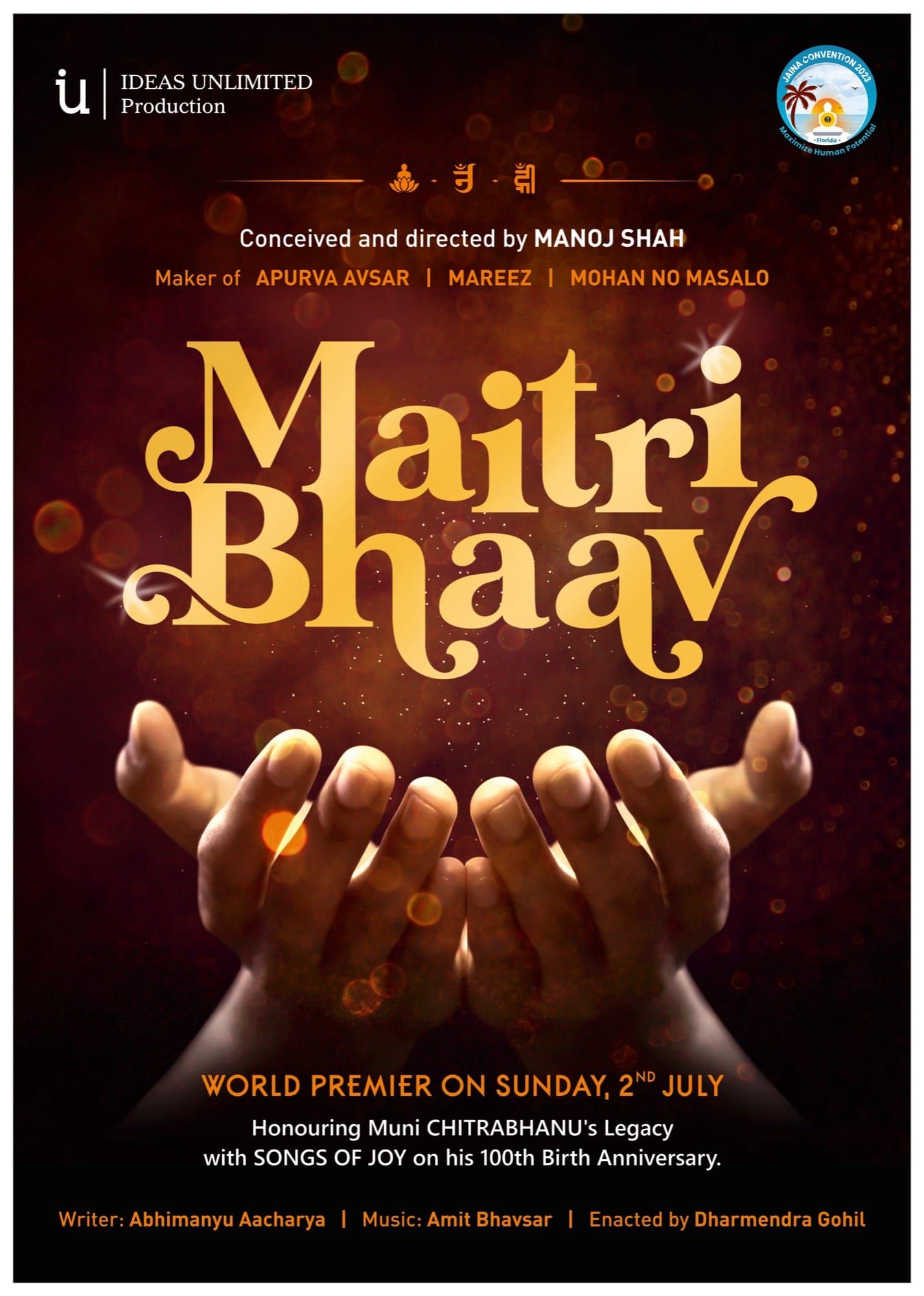
Maitribhaav
One Man's Path to Enlightenment
A solo play on the life of Gurudev Shree Chitrabhanu — the Jain monk who gave up twenty-nine years of monkhood to carry Jain philosophy to the West. Written by Abhimanyu Acharya, conceived and directed by Manoj Shah, scored by Amit Bhavsar and enacted by Dharmendra Gohil. He was born Rup-Rajendra Shah in 1922 in Takhatgarh, in the Pali district of Rajasthan. He lost his mother as a boy and his sister soon after, and at twenty he took diksha at Palitana, on the slopes of Shatrunjaya. For the next twenty-nine years he was Muni Chandraprabh Sagar, walking barefoot across India. Then, in 1970, he accepted an invitation to address the Spiritual Summit Conference in Geneva — and in 1972, Harvard Divinity School. Jain monks do not travel overseas. He went anyway, becoming the first Jain monk to do so, and surrendered his monkhood for it. He founded the Jain Meditation International Center in Manhattan in 1973 and died in Mumbai in 2019, aged ninety-six. Maitribhaav stages that life as a first-person reckoning, delivered on the rhythms of music — thirty-five cues moving between Jain history, painting, literature, Western philosophy and Chitrabhanu's own memory. It works through detachment and attachment, grief and redemption, and keeps returning to the questions underneath: what is identity, what is existence, what is any of this finally for. JAINA's own newsletter called it “that rare, uncanny mixture of spiritual preaching, personal narrative, philosophical lecture, and stand-up comedy — all rolled into one.” The play was made for the JAINA Convention 2023 in Lakeland, Florida, and premiered there on Sunday, 2 July 2023, marking the centenary of Chitrabhanu's birth. It exists in full Gujarati and Hindi versions, and closes with the audience singing the Maitri Bhaav together — the Jain prayer of universal friendship that gives the play its name.
Virayan
Gatha Prabhu Veer Ni
Magadha, in the lifetime of Mahavir. King Shrenik has just read a letter from his dying nagarsheth — a man who spent a whole life enlarging a trade across countries and never found an hour for his wife, his sons or his God, and who writes at the end to say so. Shrenik puts the letter down and sends for his minister. Samay ja samay nu kaam kare, he says: time does time's own work. Before his subjects sleep their way to the same regret, he wants to walk out among them. What the king finds on that walk is the first half of the play. A young man pays a vegetable seller five gold mohar for a mohar's worth of brinjals, because three and a half dokda were left owing in that lane by his father years earlier and he had promised to clear them. Two merchants who have competed all their lives sit together, and the one with money offers to pay for the other's daughter's wedding. A farmer sends the year's surplus grain to the royal granary because three people do not need it. Nobody sermonises. This is simply what people do under a king who is trying to live well, and it is the ground the rest of the play stands on. Then the figures Jain literature has carried for twenty-five centuries come on, and Shrenik stays as sutradhar — the audience's way in. Mahavir's household is here: his brother Nandivardhan, his wife Yashoda and his daughter Priyadarshana, the people a renunciation is walked away from and who then have to go on living. So are his disciples — Sudharmaswami; Indrabhuti Gautam, the Vedic scholar who arrives to defeat him in debate and leaves as his first ganadhar; and Goshalak, the follower who breaks away, turns on his teacher and hurls the tejoleshya at him. At the end Shrenik himself is in a cell, imprisoned by his own son Kunik, calling on the master he had spent the play introducing. Written by Satya Mehta and directed by Manoj Shah, Virayan sets all of it on the plainest Jain proposition there is: karma. Not doctrine handed down from a dais, but the thing that quietly settles what becomes of each of these people. Kanhaiya wrote a fifty-four-cue score, sung by Parthiv Gohil, Suresh Joshi and Uday Mazumdar, and Huseini Dawawala lit the two acts and assisted the direction. It was presented by Ajaramar Youths and played at the Zaverben Sabhagruh in Hingwala, Ghatkopar, on the morning of 6 October 2018, to a hall that held the monks and nuns of the Shri Vardhman Sthanakvasi Jain Shravak Sangh along with its lay members.
Bhav Prapanch
The Soul's Journey Through Worldly Illusion
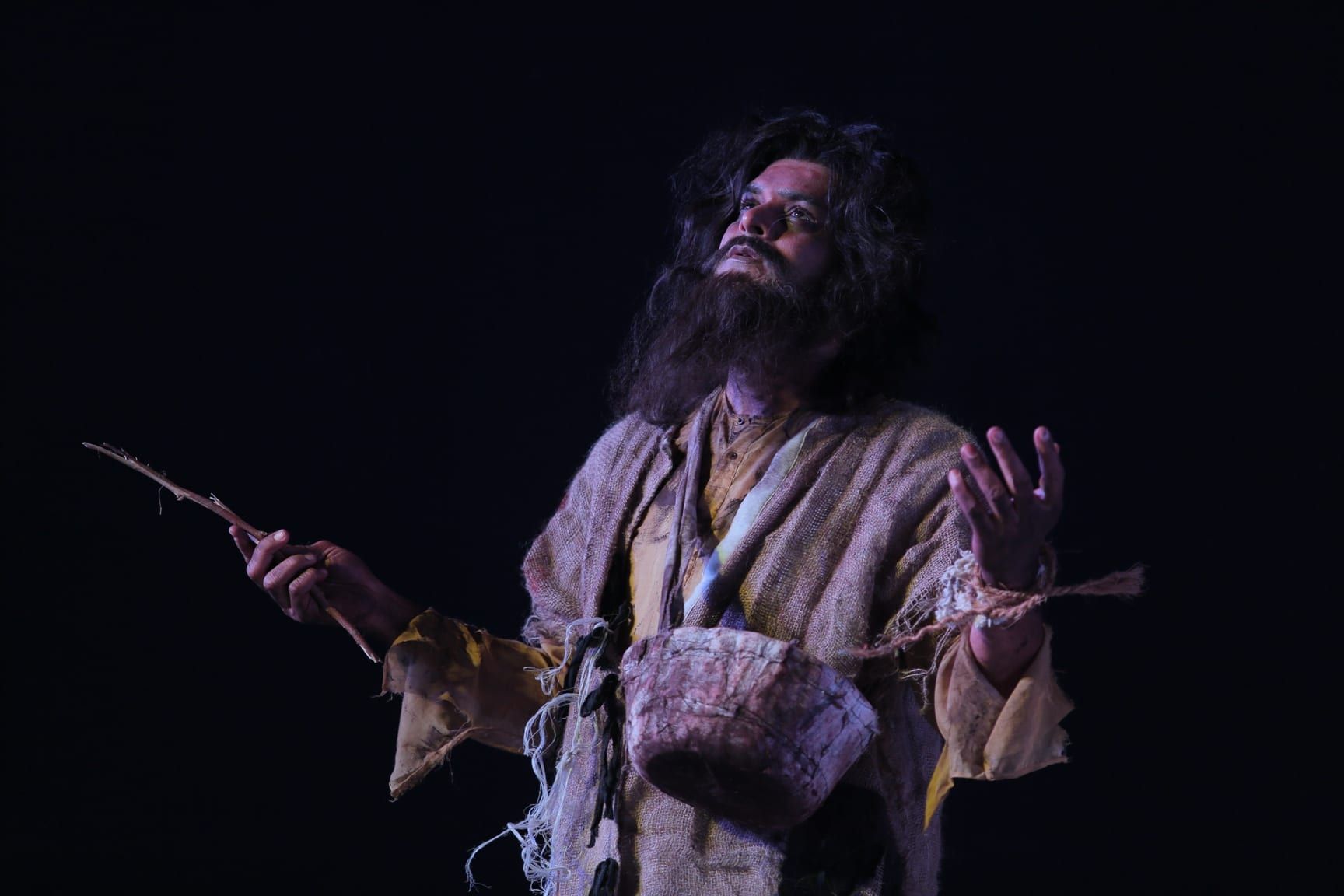
Based on the Upamitibhavaprapancha Katha by Siddharshi Gani — a 10th-century Sanskrit text that Hermann Jacobi called the first allegorical novel in Indian literature, predating Bunyan's Pilgrim's Progress by seven centuries. The play follows Dramak, an ordinary soul trapped in the city of Adrishyamool Paryant — a place that stands for the world as we know it, governed by greed, attachment, illusion, and desire. Dramak lives a bestial existence, wasting his time in futile efforts to preserve his meagre possessions. Caught in the bonds of attachment and illusion, believing the worldly illusion around him to be truth, he accumulates infinite karma and moves further from liberation with each birth and death. But there exists a Maharaja's royal temple — maintained with skill and devotion by servants who guide souls toward spiritual liberation through dharma, renunciation, compassion, and mercy. Their hands are always extended. The question is whether Dramak will take hold. The concept was distilled from Siddharshi's 16,000-verse original by Dr. Jitendra B. Shah, Director of the L.D. Institute of Indology, and dramatised by Prathang Dave and Raju Dave. Kabir Thakore designed the sets and Kanhaiya composed the music. The tagline reads: the end of sorrow is the beginning of peaceful happiness.
Bhamasha
The Warrior Who Funded Freedom
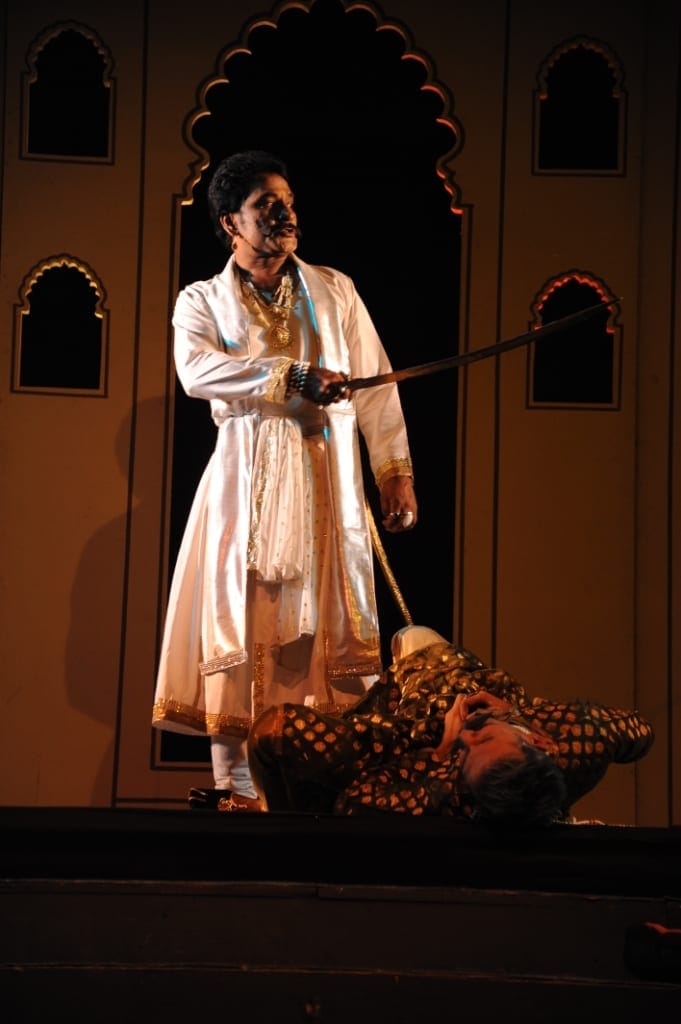
The story of Bhamashah — born 1547, Jain Shravak of the Oswal community, warrior, strategist, and the man who bankrolled Maharana Pratap's war against the Mughal empire. Little is known about him beyond the legend of his donation, but this play recovers the full arc of his life: his father Bharmal's service as fort commander of Ranthambore, his own rise as Diwan of Mewar, his raids on Mughal camps, and the moment at the village of Chulia when he presented twenty lakh gold coins and two-and-a-half crore silver rupees to a king with no kingdom left. Ideas Unlimited — known for dramatising biographies in Gujarati — chose to tell this story in Hindi, bringing it to the Tata Theatre at NCPA on Republic Day 2013. The story was conceived by Dr. Bipin Doshi and dramatised by Mihir Bhuta. Dayashankar Pandey, who had appeared in Lagaan and Swades, took on the title role, working on the Rajasthani dialect to inhabit a man who proved that ahimsa does not mean cowardice. Om Puri lent his voice as narrator. Chugge Khan and his ensemble of Manganiar folk musicians from Rajasthan performed the Marwari folk score live, transporting the audience four centuries into the past. Bhamasha is a play about a question most histories ignore: who pays for freedom? Not the king on the battlefield, but the man behind him — the merchant, the strategist, the Jain who believed that protecting his land was as sacred as any vow of non-violence.
Apoorav Khela
The Ecstatic Wanderer of Rajasthan
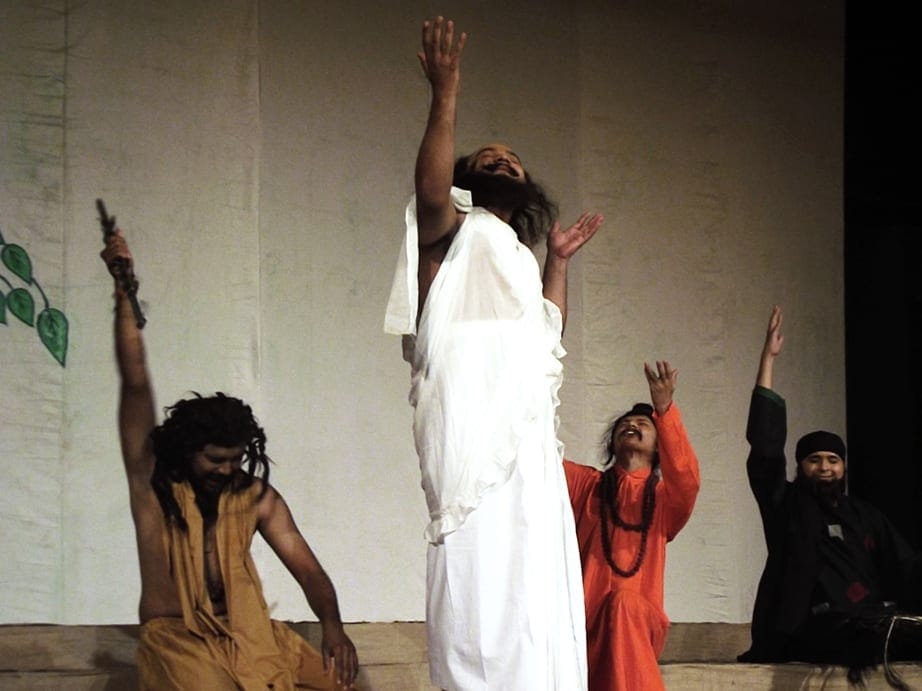
Apoorav Khela — meaning 'a wondrous play' — is the biography of Avdhoot Anandghanji, a 17th-century Jain mystical poet who dwelled in the forests of Rajasthan and whose name has been all but erased from the books of history. Anandghan — literally 'cloud of bliss' — was born as Labhanand, likely before 1624, and was initiated as a Svetambara monk in the Tapa Gaccha order under the name Labhavijaya. But monastic convention could not contain him. He became an avdhoot — an ascetic wanderer who had renounced all worldly attachments — and disappeared into the forests of Rajasthan, where his proximity to nature was said to pacify the beasts and make the trees sway in joy. His absence from monastic records suggests he was always an outsider, more mystic than monk. What survived is his poetry. Anandghan composed padas — devotional songs — in a mixed vernacular of Gujarati, Rajasthani, and Braj that were spontaneous, ecstatic, and radically non-sectarian. His Anandghan Chauvisi honours the twenty-four Jain Tirthankaras. His Anandghan Bahattari was transmitted orally and in manuscripts, its verses sometimes found alongside those of Kabir, Surdas, and Banarasidas. Mahatma Gandhi included one of his hymns in his prayer collection. His songs are still sung in Jain temples across India — and even appear in Digambara hymn collections, despite his Svetambara origins. The play, written by Dr. Dhanvant Shah and directed by Manoj Shah, is constructed from the anecdotes and oral traditions surrounding this enigmatic figure. Five actors — Ashok Parmar, Jay Upadhyay, Nimesh Dave, Manish Rohit, and Sagar Rawal — bring to life a man about whom barely any documented information exists. Kabir Thakore's set design and Uday Mazumdar's music carry the Rajasthani folk texture, while Rajesh Mandloi's language work ensures the dialect rings true. The play does not attempt a conventional narrative. It is, as its own programme notes describe it, 'an astonishing flight of happiness, beginning with anand and ending with Anandghan.'
Siddha Hem
The Man Who Gave Gujarati Its Grammar
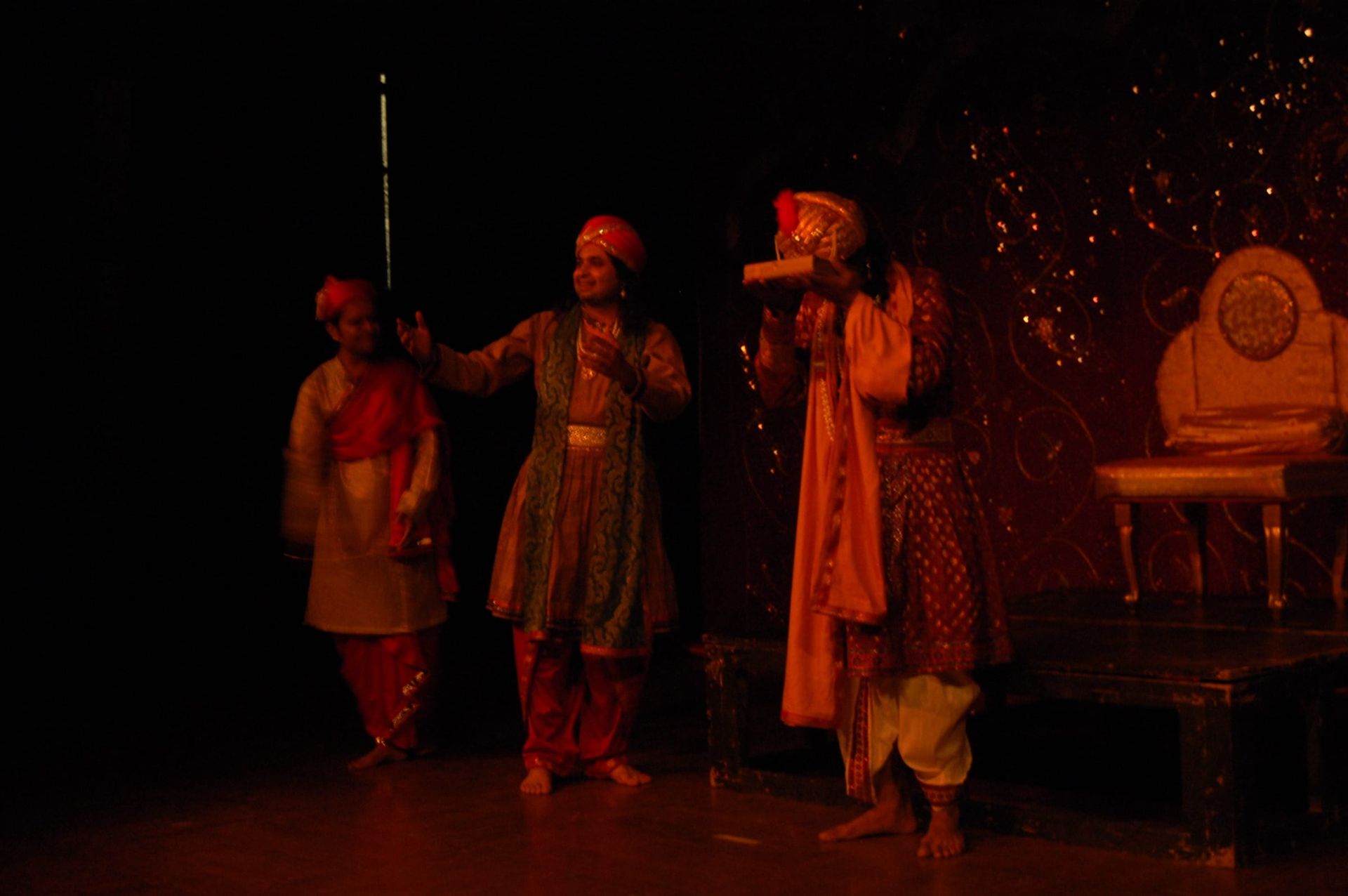
Motichand Girdharlal Kapadia, serving a sentence as a political prisoner during India's freedom struggle, picks up a book about Acharya Hemchandracharya to make good use of his time in jail. He gets so far inside it that he steps out of his own century and becomes the Sutradhar of the story he is reading. That is where Siddha Hem begins — and, in the company's own phrase for the play, where it starts "reintroducing you to yourself". Hemchandra was born in 1089 CE and lived eighty-four years. The figures for his output vary wildly by source — the company's own synopsis credits him with thirty million shlokas, the contemporary American press with three and a half million — but the list of works does not: the Siddha-Hem Shabdanushasan, the first grammar of the language that became Gujarati; the Yogashastra; the Trishashti Shalaka Purusha Charitra; the Abhidhana Chintamani; the Dwayashraya; treatises on prosody and on poetics, in Sanskrit and in Prakrit. Known as Kalikal Sarvagna, the omniscient one of the Kali age, he argued against alcohol and animal sacrifice and for ahimsa in the eleventh century. It is not really possible to imagine Gujarati without him, which is exactly why almost nobody can name him. The play moves through the dramatic episodes of that life. A thief's soul purified by hearing Mahavir preach, out of the old Sanskrit play Prabuddha Rauhineya. Chachiga the merchant coming home from a voyage to find his son Changdev given away to the order, and Udayan Mantri explaining to him what the boy is going to become — while Pahini Devi, the mother, is left holding the cost of the sacrifice. King Siddharaj Jaisingh back from the conquest of Malwa and disgusted with his own victory, because Malwa was so rich in language and heritage that its people had barely noticed the change of ruler; he wants a grammar of his own, and Hemchandra gives him one. The eight great treatises fetched from Kashmir, the Siddha-Hem finished, and the manuscript carried through the kingdom on the king's favourite elephant. Brahmin resistance to a Jain monk at court, and Hemchandra walking into the Mahadev temple to say "Brahma ho, Mahadev ho, Vishnu ho ke Jin ho, temne namaskar thao". Kumarpal named heir against the king's wishes. Animal sacrifice banned, and the seizure of widows' property with it. And at the close, George Bühler and Albert Einstein turning up in Motichand's vision — Bühler on the non-violence he put into his German book on Hemchandra, Einstein on Syadvada and its likeness to relativity and probability — before Pahini Devi arrives nine hundred years late, looking for her son and afraid the world has forgotten him. Its cast of characters ran from Hemchandra's parents and his guru Devchandra through Siddharaj Jaisingh, Kumarpal, Udayan Mantri, Vagbhatt and Ramchandra to Max Müller, Peterson, Sir William Jones, Lokmanya Tilak and the philologist Harivallabh Bhayani. The script used five languages — Gujarati, Hindi, Prakrit, Sanskrit and German — and the company travelled eleven strong. Manoj Shah directed. Johny Shah wrote it after combing Khambhat, where Hemchandra was initiated and did much of his life's work, and seeking out every scholar who could tell him anything about the Acharya. Siddha Hem had its world premiere on 3 July 2009 at the 15th JAINA Convention, in the Jain Bhavan of the Jain Center of Southern California at Buena Park in greater Los Angeles — the first time a major Gujarati play produced in India by an Indian company opened in the United States before playing a single show at home. The conveners had billed it in the souvenir as the convention's unique play. The audience began queueing at five in the afternoon for a half-past-seven performance, and the hall filled so far past capacity that the organisers ran a live telecast on the upper floor of the cultural complex. It closed to a standing ovation, and more than eight American Jain centres invited the company on the spot. The tour that followed ran to 15 August: Chicago on 11 July, San Francisco on 18 July, Boston on 25 July, and New Jersey after that.
Vastupal Tejpal
A Tale of Toil and Selfless Giving
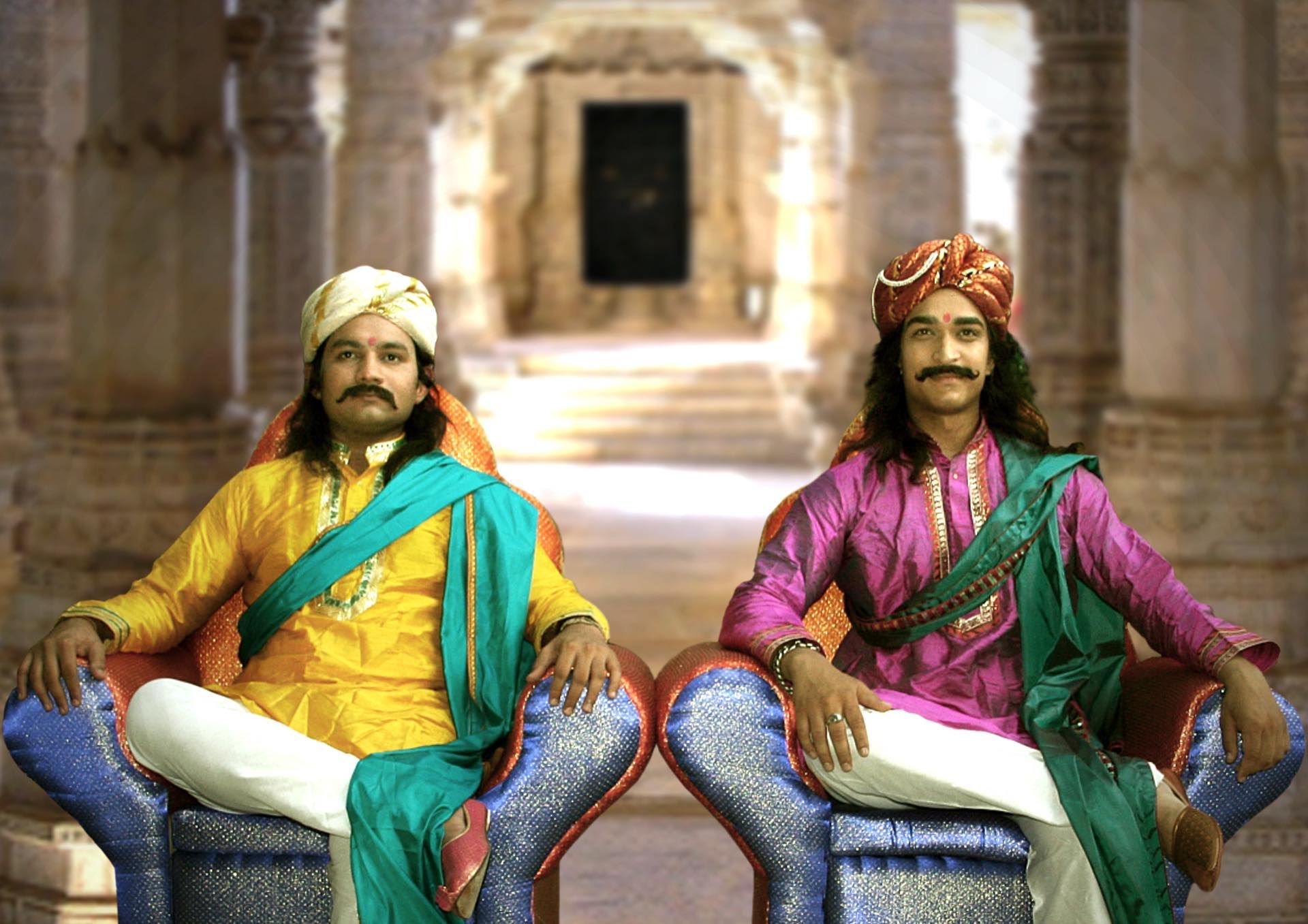
Vastupal and Tejpal were brothers who rose to become ministers of the Vaghela court in thirteenth-century Gujarat, and who spent the fortune they built on the marble that still stands at Delvada on Mount Abu and at Girnar — carving so fine it remains among the highest achievements of Indian temple craft. Dineshbhai Modi's play is the story of how they got there. It does not open with the brothers. It opens a generation earlier, with a scandal. Kumardevi, widowed in her twelfth year and sent home two months after her wedding, is to be married again — to Asaraj, son of the minister of Patan — on the word of Acharya Haribhadrasuri, who has read her palm and been visited by Shasandevi with a prophecy: two sons of extraordinary lustre. Her father Abhu Sheth, who wants nothing more than his daughter's happiness, can only ask the question that stops him: widow remarriage — what will society say? His wife tells him to put society aside. The two sons of that defiant match are Vastupal and Tejpal. What follows is a chronicle of reversal and repair. Born to privilege, the brothers lose their wealth and keep their integrity, rebuild it through honest trade until they are among the foremost merchants in Gujarat, and are then raised to ministerial office, where they turn on the corruption and drift of the administration they have inherited. The poster called it a tale of toil and selfless giving — parishram ane parmarth — and the play holds both halves: the labour that makes a fortune, and the decision to spend it on something that outlasts you. Manoj Shah staged it on a grand scale, with Prasad Walavalkar's stone-palace set, Rajiv Bhatt's costumes, Bhotesh Vyas's lighting and Suresh Joshi's score, and a company of sixteen actors — among them a young Malhar Thakar, six years before Chhello Divas made him a name in Gujarati cinema. It was commissioned by the Jain Adhyatma Studies Circle Federation, whose lifetime chairman, Dineshbhai Modi, wrote it, and presented by Kaustubh Trivedi. It opened on a Sunday evening at Yashwantrao Chavan Pratishthan, Nariman Point, on 31 May 2009.
Apurva Avsar
The Spiritual Mentor of Mahatma Gandhi
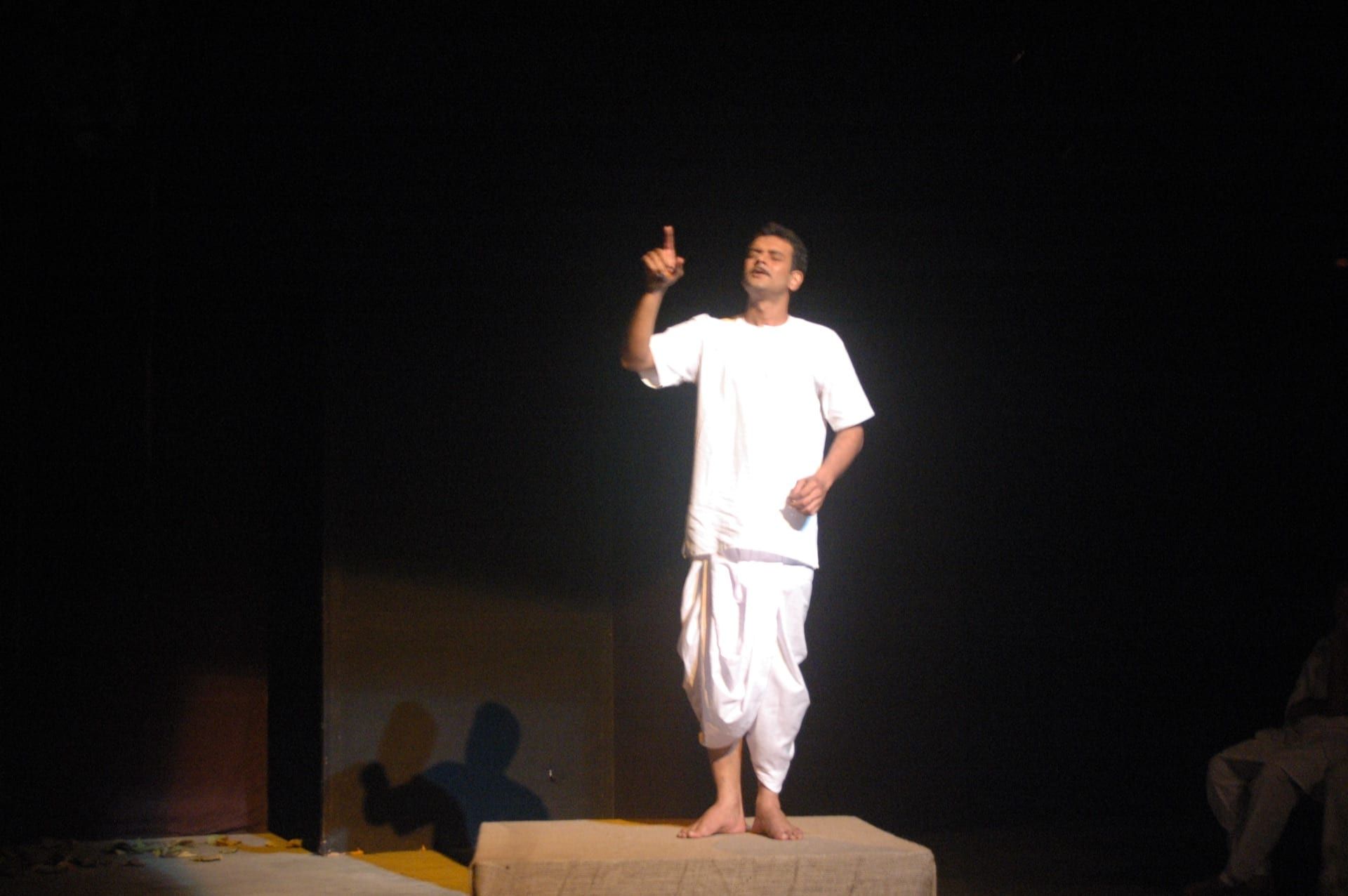
Apurva Avsar — meaning 'a rare occasion' — is a Gujarati biographical drama based on the life and teachings of Shrimad Rajchandra (1867–1901), the Jain philosopher, poet, mystic, and social reformer whom Mahatma Gandhi called his spiritual guide and refuge in moments of crisis. Born in Vavaniya, a small village near Morbi in Gujarat, Rajchandra recalled his past lives at the age of seven. He became a master of poetry, Shatavadhana (the feat of simultaneously tracking a hundred different tasks), and astrology. His fame spread across the country — yet he renounced it all, concentrating on self-restraint and the pursuit of liberation from the cycle of births and deaths. Against his own will, he married and entered business, which flourished across India and beyond, but his hours remained consumed by spiritual inquiry. Wanderers and seekers visited him constantly. The play brings together three towering figures of Jain spiritual history on a single stage — Acharya Hemchandra (11th century), Avdhut Anand Ghanji (17th century), and Shrimad Rajchandra (19th century) — tracing 2,500 years of a living philosophical tradition. Three actors perform fifteen characters in a theatrical challenge that moves from Rajchandra's childhood visions through his meetings with Gandhi in Mumbai in 1891, their searching correspondence while Gandhi was in South Africa, and Rajchandra's final renunciation. Dramatized by Raju Dave and Manoj Shah after a year and a half of research, the play premiered at Prithvi Theatre, Mumbai on 28 February 2007. It has since been performed across India and in the United States, including at the Jain Center of Southern California. A Hindi adaptation by Prayas Dave followed the same year. The subject matter is drawn from the everyday texture of society — the treatment is realistic, so that any common person can relate to how Jain culture has shaped Indian heritage, religion, language, literature, and philosophy in ways both visible and profound.
“Ahimsa Paramo Dharma”
Non-violence is the highest virtue