Sikka Ni Triji Baaju
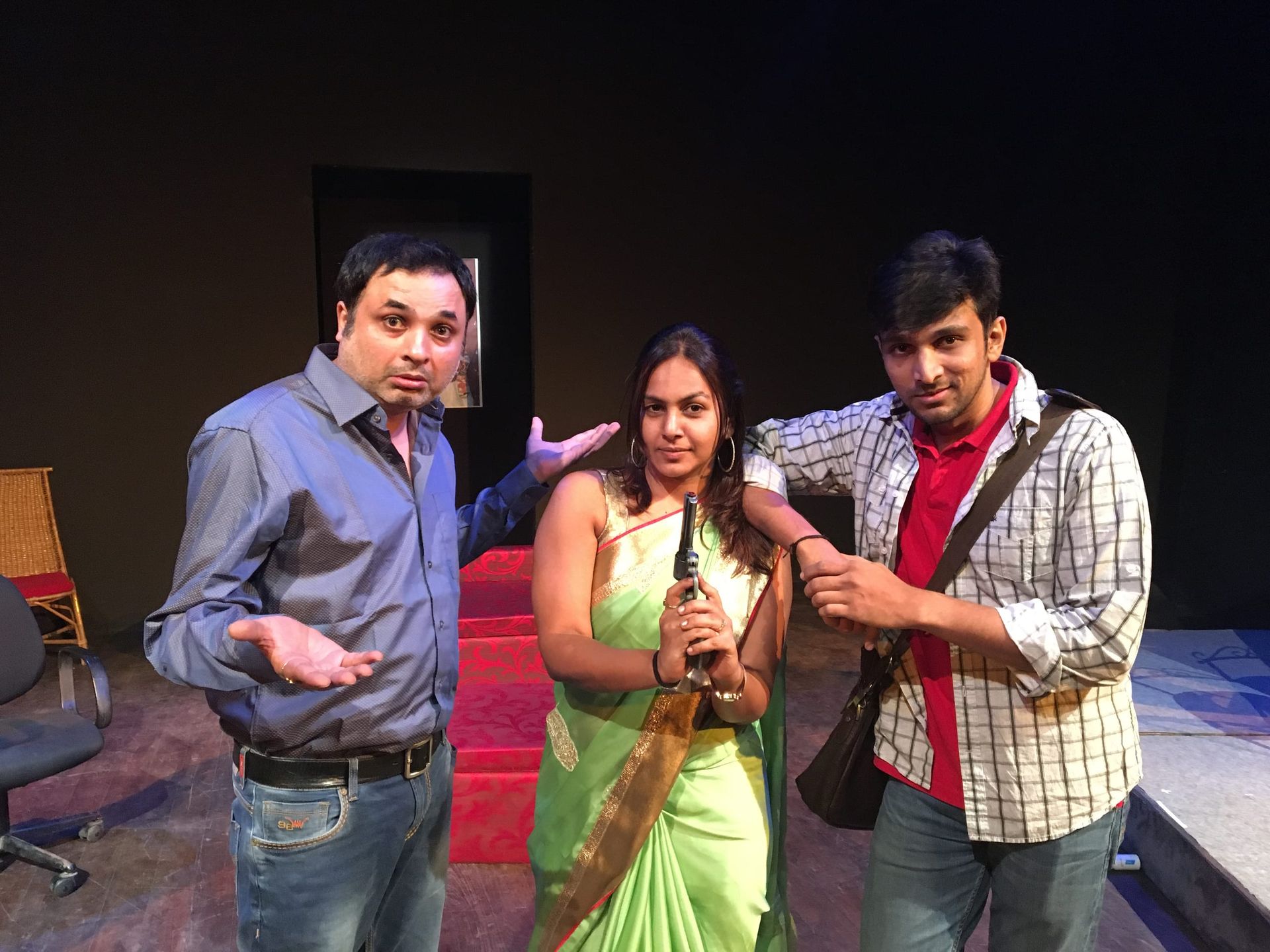
Sikkani Treeji Baju (The Third Side of the Coin) is a 110-minute thriller-comedy in Gujarati, written by Naushil Mehta and directed by Manoj Shah. Adapted from Chazz Palminteri's play Faithful, it is a sensuous thriller on the fragile themes of marriage, men, and money — with unexpected dollops of humour. Madhvi is the wife of multimillionaire diamond exporter Arvind Kothari. She lives in a secluded sea-facing bungalow in Mumbai. On a rainy day when she is home alone, Dhiru ‘Sixer’ — a top hit-man — manages to enter and overpower her. As Dhiru waits impatiently for his client's signal to kill her, Madhvi sits tied to a chair, realising she has only moments to save herself. Who wants Madhvi dead? Why? Is Madhvi able to find a way out of this predicament? Is Dhiru really the killer he claims to be? Is Arvind really Dhiru's client? The answers arrive with increasingly slippery footing, and the play slides between thriller and farce often in the same line. The third side of the coin, the one no one looks at, turns out to be the only side that matters.
The People
Behind
the Play
Also Worth
Seeing
Virayan
Gatha Prabhu Veer Ni
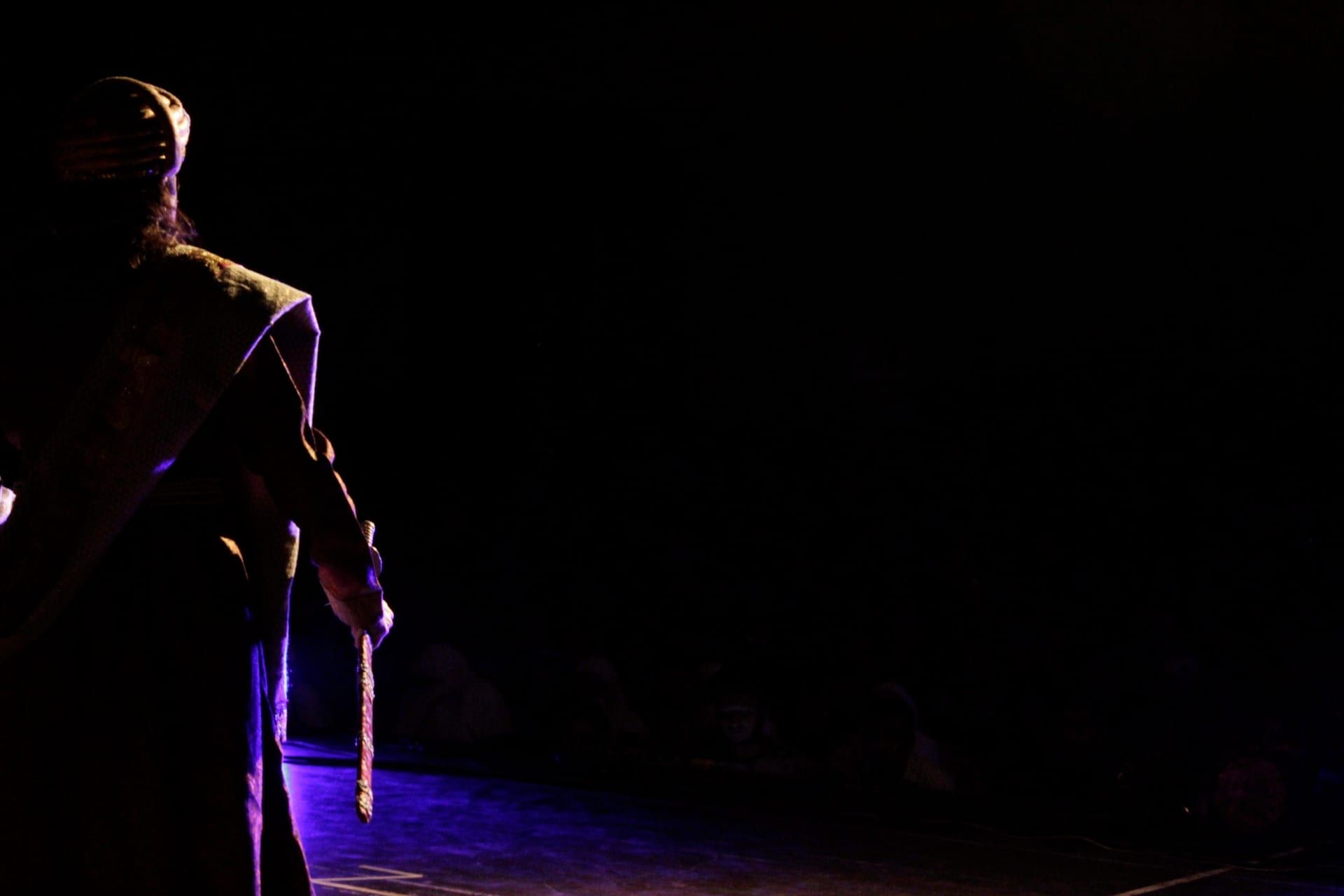
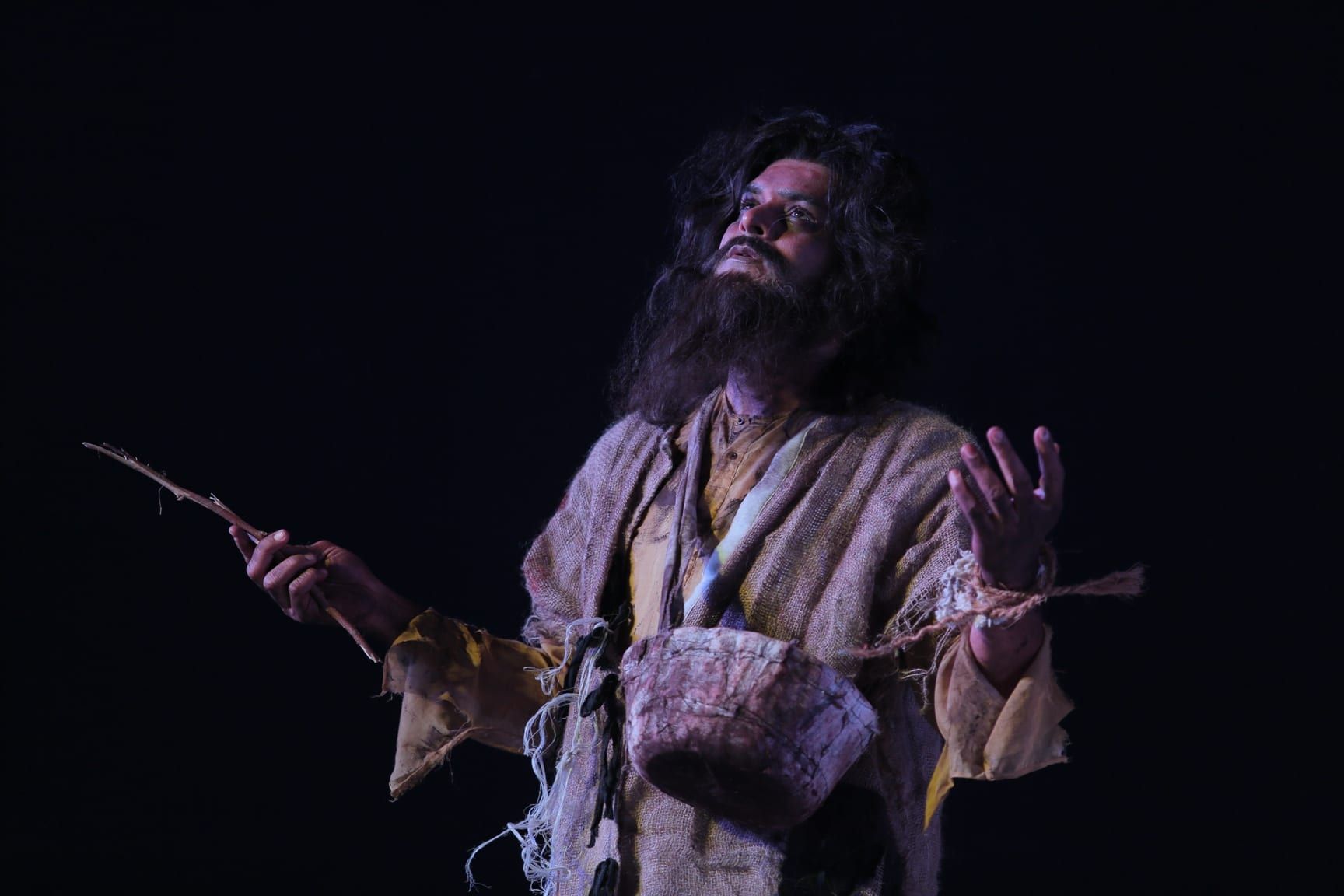
Magadha, in the lifetime of Mahavir. King Shrenik has just read a letter from his dying nagarsheth — a man who spent a whole life enlarging a trade across countries and never found an hour for his wife, his sons or his God, and who writes at the end to say so. Shrenik puts the letter down and sends for his minister. Samay ja samay nu kaam kare, he says: time does time's own work. Before his subjects sleep their way to the same regret, he wants to walk out among them. What the king finds on that walk is the first half of the play. A young man pays a vegetable seller five gold mohar for a mohar's worth of brinjals, because three and a half dokda were left owing in that lane by his father years earlier and he had promised to clear them. Two merchants who have competed all their lives sit together, and the one with money offers to pay for the other's daughter's wedding. A farmer sends the year's surplus grain to the royal granary because three people do not need it. Nobody sermonises. This is simply what people do under a king who is trying to live well, and it is the ground the rest of the play stands on. Then the figures Jain literature has carried for twenty-five centuries come on, and Shrenik stays as sutradhar — the audience's way in. Mahavir's household is here: his brother Nandivardhan, his wife Yashoda and his daughter Priyadarshana, the people a renunciation is walked away from and who then have to go on living. So are his disciples — Sudharmaswami; Indrabhuti Gautam, the Vedic scholar who arrives to defeat him in debate and leaves as his first ganadhar; and Goshalak, the follower who breaks away, turns on his teacher and hurls the tejoleshya at him. At the end Shrenik himself is in a cell, imprisoned by his own son Kunik, calling on the master he had spent the play introducing. Written by Satya Mehta and directed by Manoj Shah, Virayan sets all of it on the plainest Jain proposition there is: karma. Not doctrine handed down from a dais, but the thing that quietly settles what becomes of each of these people. Kanhaiya wrote a fifty-four-cue score, sung by Parthiv Gohil, Suresh Joshi and Uday Mazumdar, and Huseini Dawawala lit the two acts and assisted the direction. It was presented by Ajaramar Youths and played at the Zaverben Sabhagruh in Hingwala, Ghatkopar, on the morning of 6 October 2018, to a hall that held the monks and nuns of the Shri Vardhman Sthanakvasi Jain Shravak Sangh along with its lay members.
Kamrabhabhi No Barapo
The Outcry of Kamla
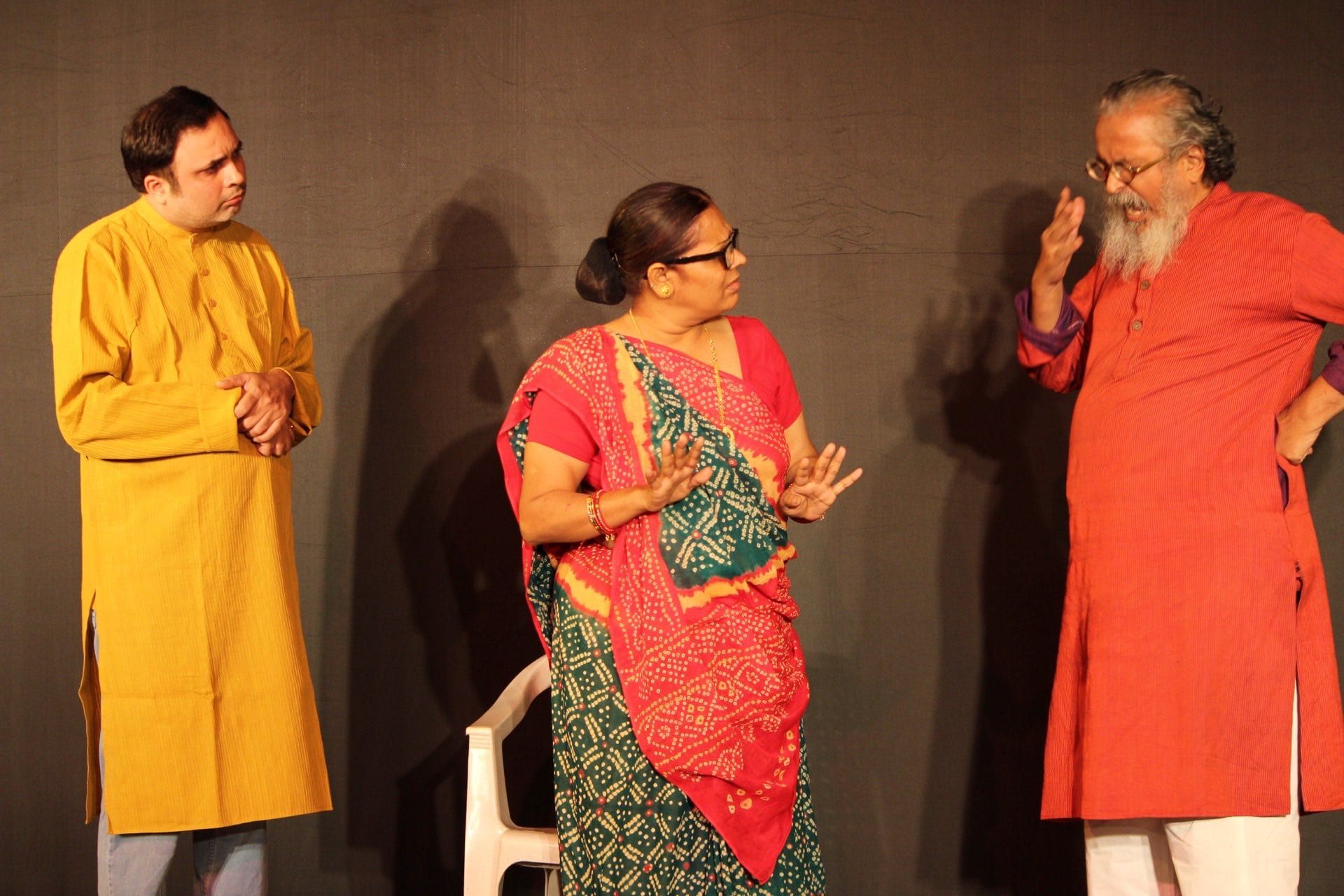
In the north Gujarat countryside the letter ળ softens into ર, and so Kamla becomes Kamra. The title is the joke and the whole play at once: Kamrabhabhi No Barapo — the outcry of Kamlabhabhi — is an evening of a woman complaining about her husband in a dialect that keeps mispronouncing her own name. Kamla's world turns on a single axis she never names directly. To anyone who will listen he is only "tamara bhai" — your brother. They started lower middle class and by the time he retired they had got as far as a second-hand car. The daughters are married off, the son works out of town, and Kamla has no leisure at all: she works while she talks, and everything she says is about him. Where is my towel. I cannot find my glasses. Kamra, where did you put the screwdriver. Thirty-seven years of putting the folded clothes in the same cupboard, and he still asks. She says she is fed up. What she is describing, sentence by sentence, is a life organised entirely around one man's comfort, and the complaint is how the affection gets said out loud. Then the play turns and hands him the stage. His name, he would like the audience to know, is Harshad Mehta — no relation, never bought a share in his life. He has been listening to all of it. The cotton wool he puts in his ears every morning after his bath is not for the draught; he took Best Actor prizes in college and has been performing partial deafness ever since he retired, because a man cannot read a newspaper while being told to count the cooker whistles. He has kept an accounting: forty tonnes of potatoes since the wedding, in every cut and configuration known to Gujarati cooking, which is why he had to learn to eat pickle. He knows every one of her techniques — a sari today, mohanthal tomorrow; a raised voice in the morning, dinner late at night. Reward and punishment, he says, like training a dog. And he knows she still half-suspects him about Bhavna from the neighbouring quarters, which was over before it began, forty years ago, because his job was private-sector and hers came with a government one. Manoj Shah directs and plays Harshad; Kalpana Shah plays Kamla and carries the bulk of the evening. Devanshu Pandit's script needs almost nothing on stage — a plastic chair, two people, a dialect — and it gets its comedy the hard way, out of observation rather than situation. There is no plot to spoil, because the marriage was never actually in dispute — only the question of who gets to describe it. Ideas Unlimited played it at the CCI in Churchgate and took it to the Hindustan Times Kala Ghoda Arts Festival in February 2017, where it was performed under Rang Savaari, the festival's Gujarati theatre strand.
Pai Pai
A Play for Ages 6 to 106
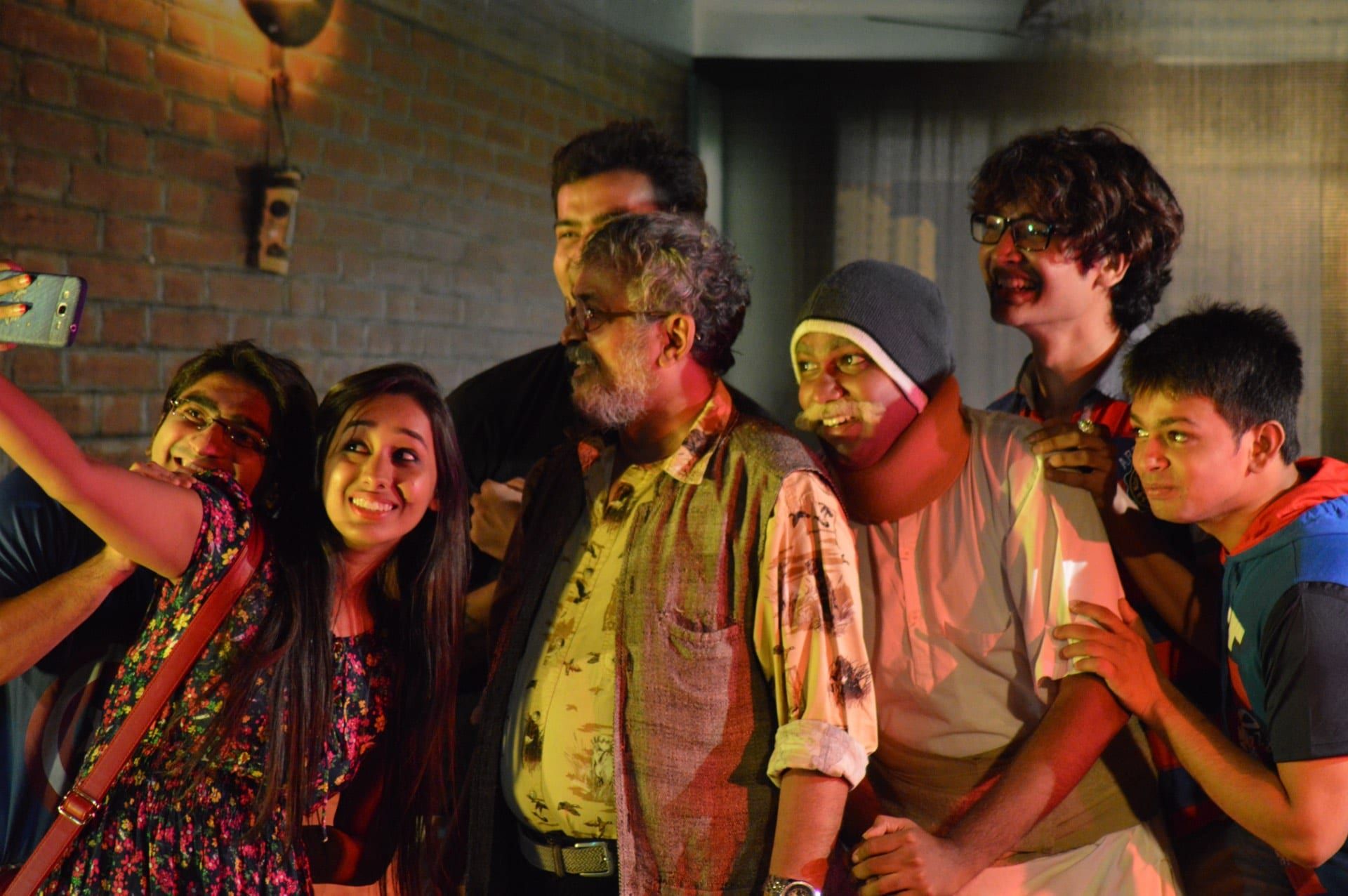
A pai was the smallest coin India ever minted — so small that the phrase pai pai came to mean every last fraction of what you own. Dhiruben Patel's play hangs one from a fishing line and lets a houseful of teenagers try to catch it. They are convinced their parents don't give them enough money. So they set out to earn some themselves, by every innovative scheme a group of school friends can dream up, and one after another the schemes fail. What arrives at the end is not a windfall but an understanding: of what it actually took their parents to build the comfortable home they had been taking for granted, and of how much of it was never about money at all. The play looks straight at the craze for money in the world these children are growing into, and does it as farce — a joke at the expense of everyone in the room, adults included. Written by Dhiruben Patel — novelist, playwright, editor of Sudha, president of the Gujarati Sahitya Parishad, and winner of the Ranjitram Suvarna Chandrak and the Sahitya Akademi Award — and directed by Manoj Shah, who also plays in it. Riddhi Vora, Durgesh Rajput, Maulik Shah, Prakash Waghela, Prashant Savalia, Nimesh Shinde and Rushikesh Chandaran complete the company, on a set that is a teenager's living room down to the pop-star posters on the wall. The poster puts the argument in one image: a 1945 one-pice coin with a hole through the middle, dangling on a line cast from a moon shaped like a pie. Two hours with an interval, and, as the Gujarati poster says, for children aged six to a hundred and six.
Bhav Prapanch
The Soul's Journey Through Worldly Illusion
Based on the Upamitibhavaprapancha Katha by Siddharshi Gani — a 10th-century Sanskrit text that Hermann Jacobi called the first allegorical novel in Indian literature, predating Bunyan's Pilgrim's Progress by seven centuries. The play follows Dramak, an ordinary soul trapped in the city of Adrishyamool Paryant — a place that stands for the world as we know it, governed by greed, attachment, illusion, and desire. Dramak lives a bestial existence, wasting his time in futile efforts to preserve his meagre possessions. Caught in the bonds of attachment and illusion, believing the worldly illusion around him to be truth, he accumulates infinite karma and moves further from liberation with each birth and death. But there exists a Maharaja's royal temple — maintained with skill and devotion by servants who guide souls toward spiritual liberation through dharma, renunciation, compassion, and mercy. Their hands are always extended. The question is whether Dramak will take hold. The concept was distilled from Siddharshi's 16,000-verse original by Dr. Jitendra B. Shah, Director of the L.D. Institute of Indology, and dramatised by Prathang Dave and Raju Dave. Kabir Thakore designed the sets and Kanhaiya composed the music. The tagline reads: the end of sorrow is the beginning of peaceful happiness.
Master Builder
In All the Universe, I Alone Am God
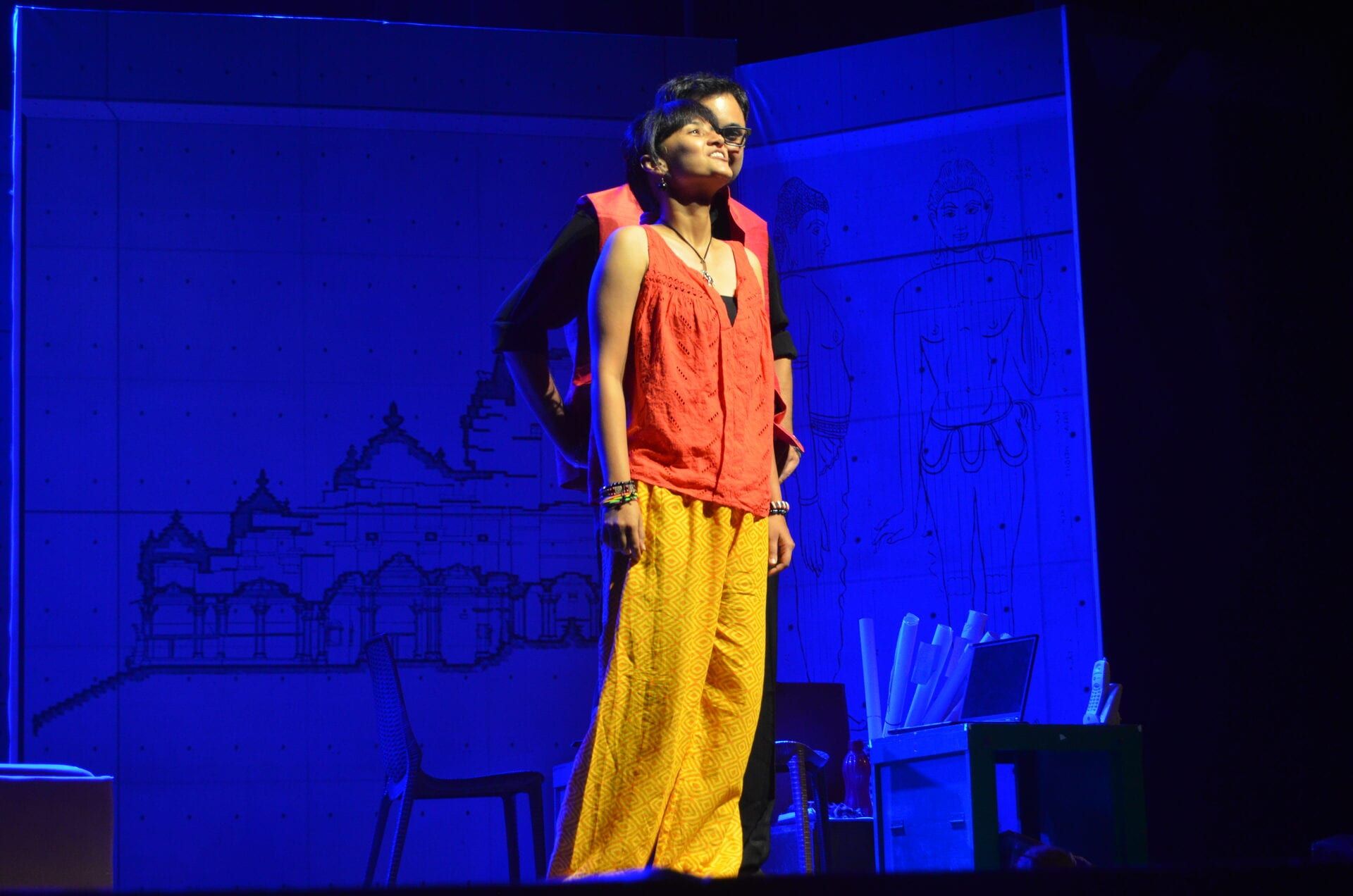
Henrik Ibsen published Bygmester Solness in December 1892, and for the next hundred and twenty-two years nobody staged it in Gujarati. When Ila Arun and K K Raina's Surnai Theatre invited Ideas Unlimited to make work for the first Ibsen Theatre Festival in Mumbai, Manoj Shah went through the whole canon looking for the play nobody had claimed. Every other major Ibsen — A Doll's House, Ghosts, Hedda Gabler, Peer Gynt — had already been translated into Gujarati, several of them performed. The Master Builder had not been translated, adapted or staged even once. "It is my choice and my decision," he wrote in his director's note, "to check myself as an artist." Chirantana Bhatt's adaptation moves the play from Norway to Mumbai, and Halvard Solness becomes Akhil Nanavati — an architect who prefers to be called a master builder, and who has made his name building temples. Ibsen's Christian imagery, gothic spires and mythic creatures give way to something older: the Sompura lineage of hereditary temple architects, the shikhara, three thousand years of building towards the sky. Knut Brovik, the old draughtsman Solness has broken, becomes Bhanushankar Sompura; his son Ragnar becomes Aadarsh; Hilde Wangel, who arrives out of nowhere to collect on a promise, becomes Kamya. Shah compressed Ibsen's three acts into two. Akhil is at the top and terrified of it. He is vain, unjust to the very people he learnt from, and frightened of the generation coming up behind him. His marriage to Saumya is a ruin held together by a fire years ago that took their children. Then Kamya walks in — twenty-four, from another town — and reminds him that they are not strangers, that he once made her a promise she chose to believe. She takes a place in his house, then in his practice, then in his head. She also discovers that the man who builds towers cannot bear heights. At the public opening of his newest building she asks him to climb it anyway. He does. He falls. Of the crowd standing appalled around the body, only Kamya steps forward, and she is smiling: my master builder. The poster carried the whole argument in a single line. Narsinh Mehta's fifteenth-century bhajan opens Akhil brahmandma ek tu Shrihari — in all the universe, you alone are God. Ideas Unlimited changed one word. Ek hu ja Shrihari: I alone am God. The architect's name is Akhil. Master Builder was made for the inaugural Ibsen Theatre Festival in Mumbai, ran at Bhaidas Auditorium on 9 November 2014, and had its first independent show at Prithvi Theatre on 14 December 2014.
Adbhut
The Wonder Within
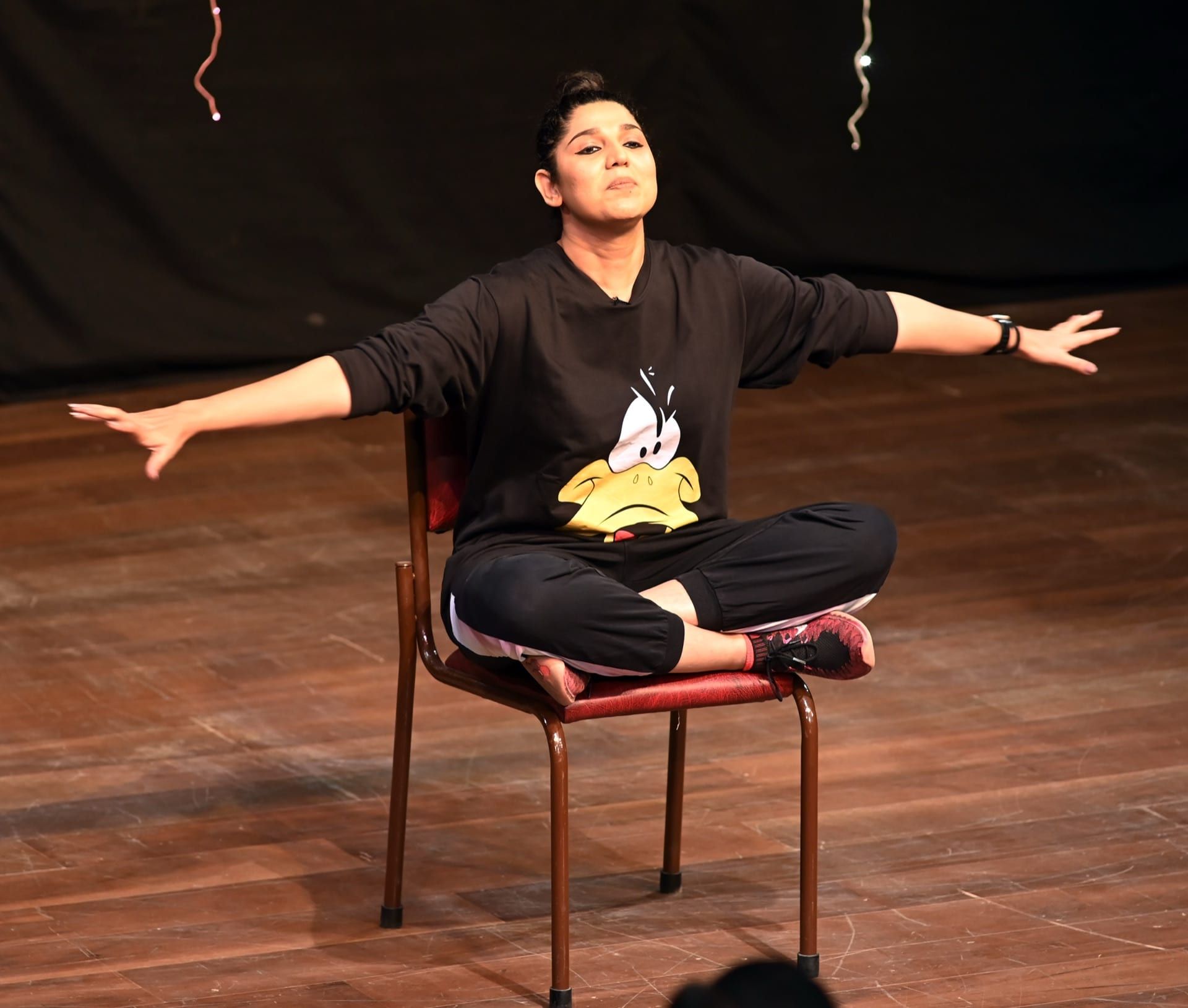
A solo Gujarati adaptation of Every Brilliant Thing by Duncan Macmillan and Jonny Donahoe — one of the most performed plays in the world — reimagined for Indian audiences by Satchit Puranik and directed by Manoj Shah. The original play premiered at the Ludlow Fringe Festival in 2013 with Donahoe performing, before transferring to London and an HBO special. It has since been staged thousands of times worldwide. Puranik's Gujarati adaptation transforms the play's cultural texture — Doordarshan evenings replace Saturday morning cartoons, garba nights replace school dances — while preserving its radical theatrical form: the audience is the cast. From the moment the play begins, the boundary between performer and audience dissolves. RJ Devaki guides the room through the story of a girl who, at age seven, begins a list of every brilliant thing worth living for as a way to pull her mother back from the edge of depression. The list grows as the girl grows, through adolescence, heartbreak, marriage, and the quiet weight of adulthood. With nothing but a chair, a Daffy Duck sweatshirt, and extraordinary presence, Devaki turns strangers in the audience into co-performers, drawing out laughter, silence, and tears in equal measure. Adbhut is not a lecture on mental health — it is a lived experience of it, told with the warmth of someone who understands that sadness and wonder can occupy the same breath.