Master Builder
In All the Universe, I Alone Am God
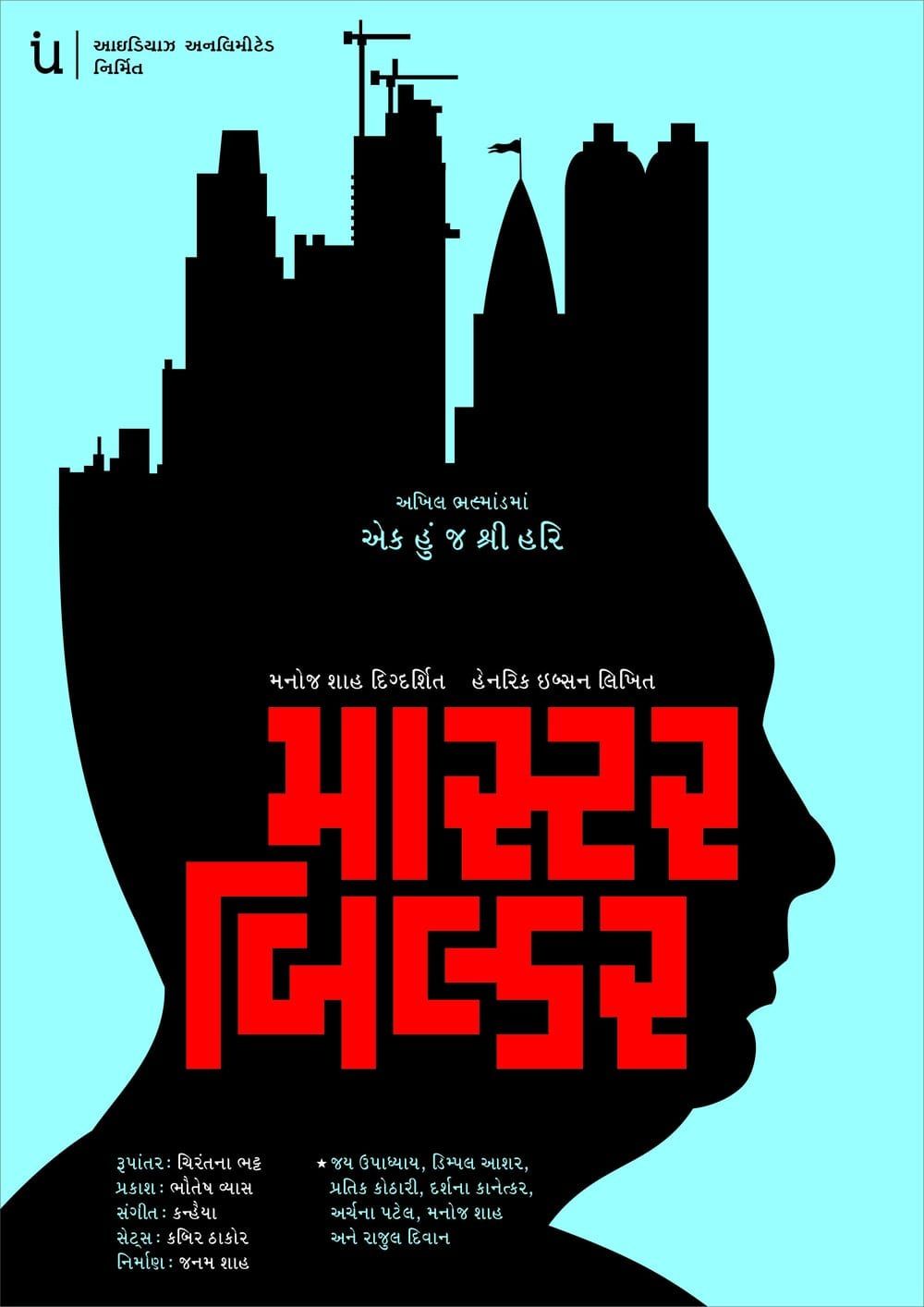
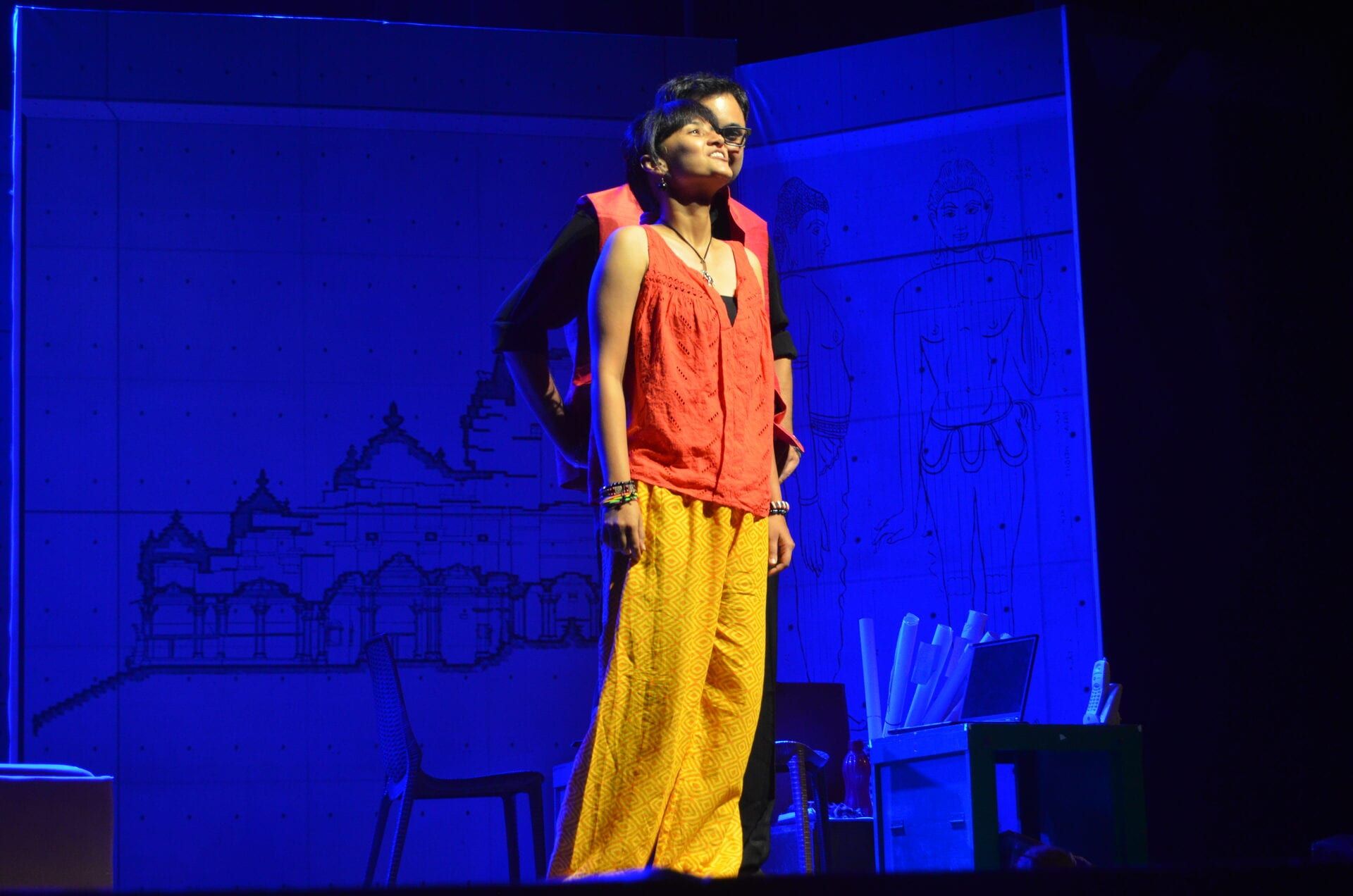
Henrik Ibsen published Bygmester Solness in December 1892, and for the next hundred and twenty-two years nobody staged it in Gujarati. When Ila Arun and K K Raina's Surnai Theatre invited Ideas Unlimited to make work for the first Ibsen Theatre Festival in Mumbai, Manoj Shah went through the whole canon looking for the play nobody had claimed. Every other major Ibsen — A Doll's House, Ghosts, Hedda Gabler, Peer Gynt — had already been translated into Gujarati, several of them performed. The Master Builder had not been translated, adapted or staged even once. "It is my choice and my decision," he wrote in his director's note, "to check myself as an artist." Chirantana Bhatt's adaptation moves the play from Norway to Mumbai, and Halvard Solness becomes Akhil Nanavati — an architect who prefers to be called a master builder, and who has made his name building temples. Ibsen's Christian imagery, gothic spires and mythic creatures give way to something older: the Sompura lineage of hereditary temple architects, the shikhara, three thousand years of building towards the sky. Knut Brovik, the old draughtsman Solness has broken, becomes Bhanushankar Sompura; his son Ragnar becomes Aadarsh; Hilde Wangel, who arrives out of nowhere to collect on a promise, becomes Kamya. Shah compressed Ibsen's three acts into two. Akhil is at the top and terrified of it. He is vain, unjust to the very people he learnt from, and frightened of the generation coming up behind him. His marriage to Saumya is a ruin held together by a fire years ago that took their children. Then Kamya walks in — twenty-four, from another town — and reminds him that they are not strangers, that he once made her a promise she chose to believe. She takes a place in his house, then in his practice, then in his head. She also discovers that the man who builds towers cannot bear heights. At the public opening of his newest building she asks him to climb it anyway. He does. He falls. Of the crowd standing appalled around the body, only Kamya steps forward, and she is smiling: my master builder. The poster carried the whole argument in a single line. Narsinh Mehta's fifteenth-century bhajan opens Akhil brahmandma ek tu Shrihari — in all the universe, you alone are God. Ideas Unlimited changed one word. Ek hu ja Shrihari: I alone am God. The architect's name is Akhil. Master Builder was made for the inaugural Ibsen Theatre Festival in Mumbai, ran at Bhaidas Auditorium on 9 November 2014, and had its first independent show at Prithvi Theatre on 14 December 2014.
Commissioned By
Surnai Theatre and Folk Arts Foundation
Created for the first Ibsen Theatre Festival in Mumbai (31 October – 2 November 2014), presented by Ila Arun and K K Raina's Surnai Theatre and Folk Arts Foundation in collaboration with the Norwegian Embassy. The festival's invitation sent Manoj Shah through Ibsen's complete works — and to the one major play that had never been translated, adapted or performed in Gujarati.
The People
Behind
the Play
Also Worth
Seeing
Achalayatan
Rabindranath Tagore's Allegory of Freedom
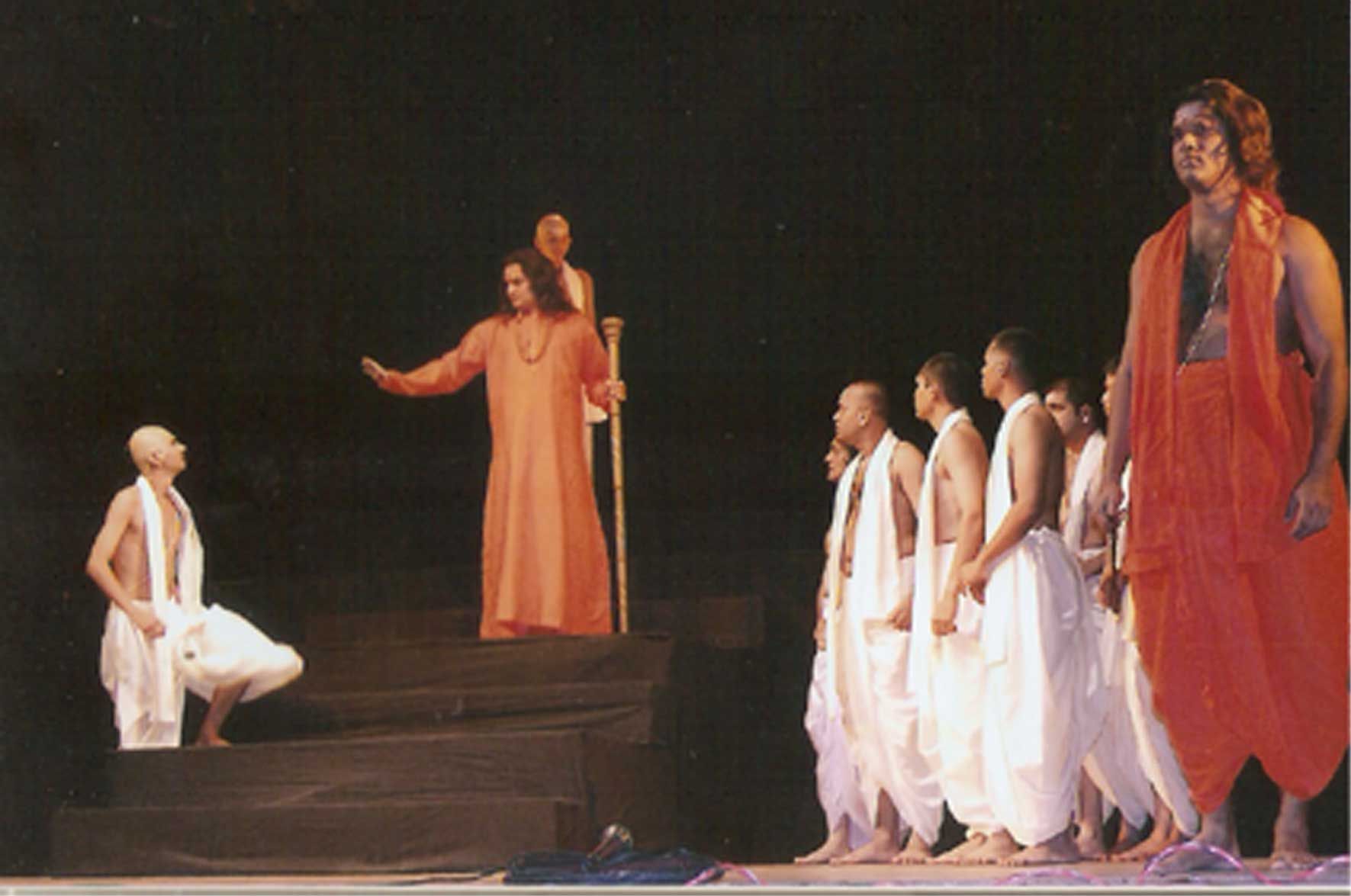
Tagore's searing allegory of an ashram so rigid that even light is forbidden entry. A young student named Panchak, unable to cope with the dead weight of rules, peeks through a forbidden window and discovers a world outside — free, simple, alive. His encounter with the untouchables beyond the walls sets him on a path of self-discovery that challenges the very foundations of the institution. When the Guruji finally arrives, he does not repair the system — he breaks it open. Adapted into Gujarati by Giridhar Kripalani under the guidance of Kaka Kalelkar, this production was Ideas Unlimited's tribute to India's first Nobel laureate. Manoj Shah spent eight months — six in study, two in rehearsal — preparing the play, calling it one of Tagore's best crafted works. The production premiered at the five-day Tagore Festival in Kolkata at G. D. Birla Sabhagar, where it was the only Gujarati-language play presented — a bold choice that brought Tagore's most scathing critique of institutional orthodoxy back to his own city, in a language he never wrote in.
Adbhut
The Wonder Within
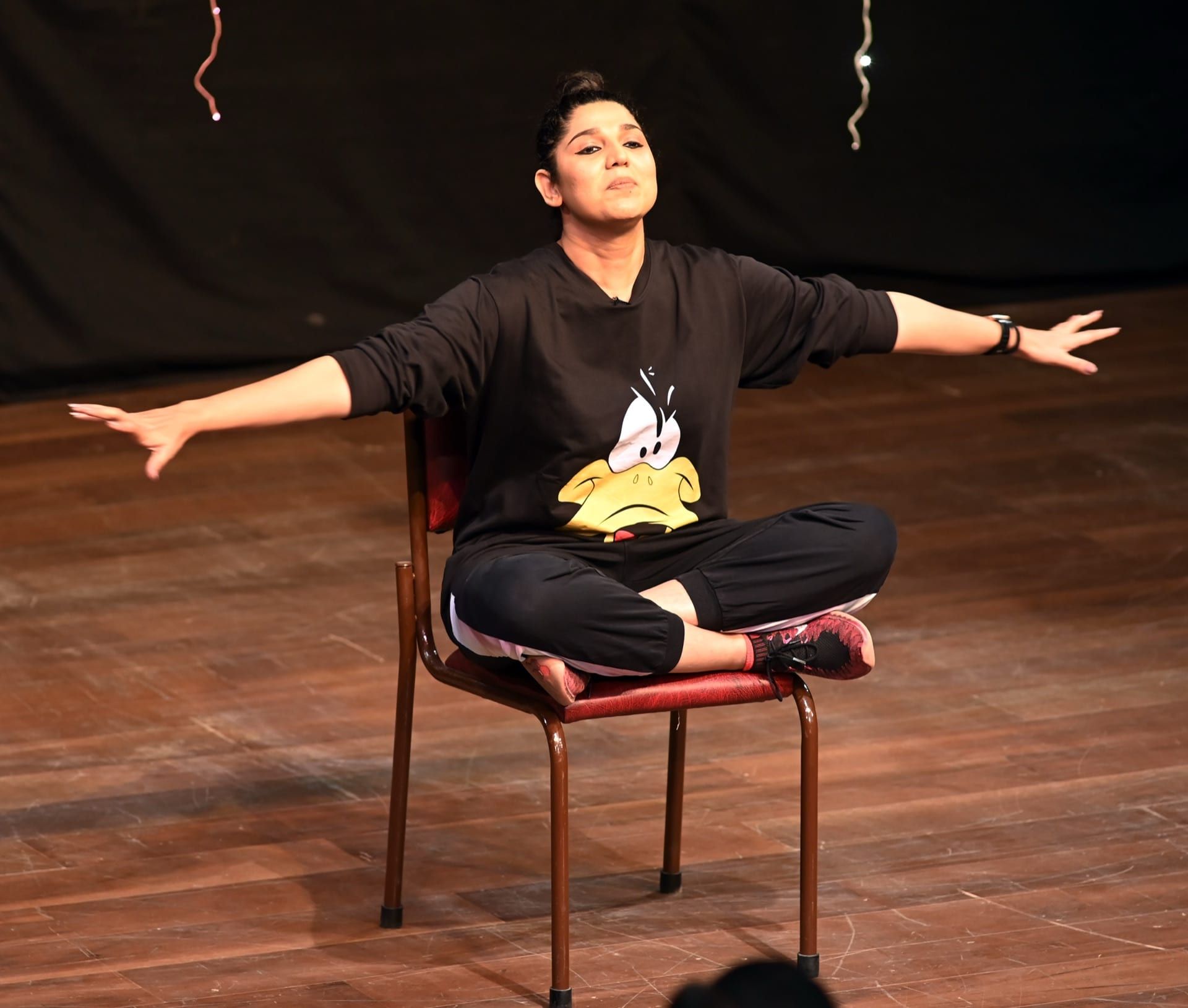
A solo Gujarati adaptation of Every Brilliant Thing by Duncan Macmillan and Jonny Donahoe — one of the most performed plays in the world — reimagined for Indian audiences by Satchit Puranik and directed by Manoj Shah. The original play premiered at the Ludlow Fringe Festival in 2013 with Donahoe performing, before transferring to London and an HBO special. It has since been staged thousands of times worldwide. Puranik's Gujarati adaptation transforms the play's cultural texture — Doordarshan evenings replace Saturday morning cartoons, garba nights replace school dances — while preserving its radical theatrical form: the audience is the cast. From the moment the play begins, the boundary between performer and audience dissolves. RJ Devaki guides the room through the story of a girl who, at age seven, begins a list of every brilliant thing worth living for as a way to pull her mother back from the edge of depression. The list grows as the girl grows, through adolescence, heartbreak, marriage, and the quiet weight of adulthood. With nothing but a chair, a Daffy Duck sweatshirt, and extraordinary presence, Devaki turns strangers in the audience into co-performers, drawing out laughter, silence, and tears in equal measure. Adbhut is not a lecture on mental health — it is a lived experience of it, told with the warmth of someone who understands that sadness and wonder can occupy the same breath.
Bhav Prapanch
The Soul's Journey Through Worldly Illusion
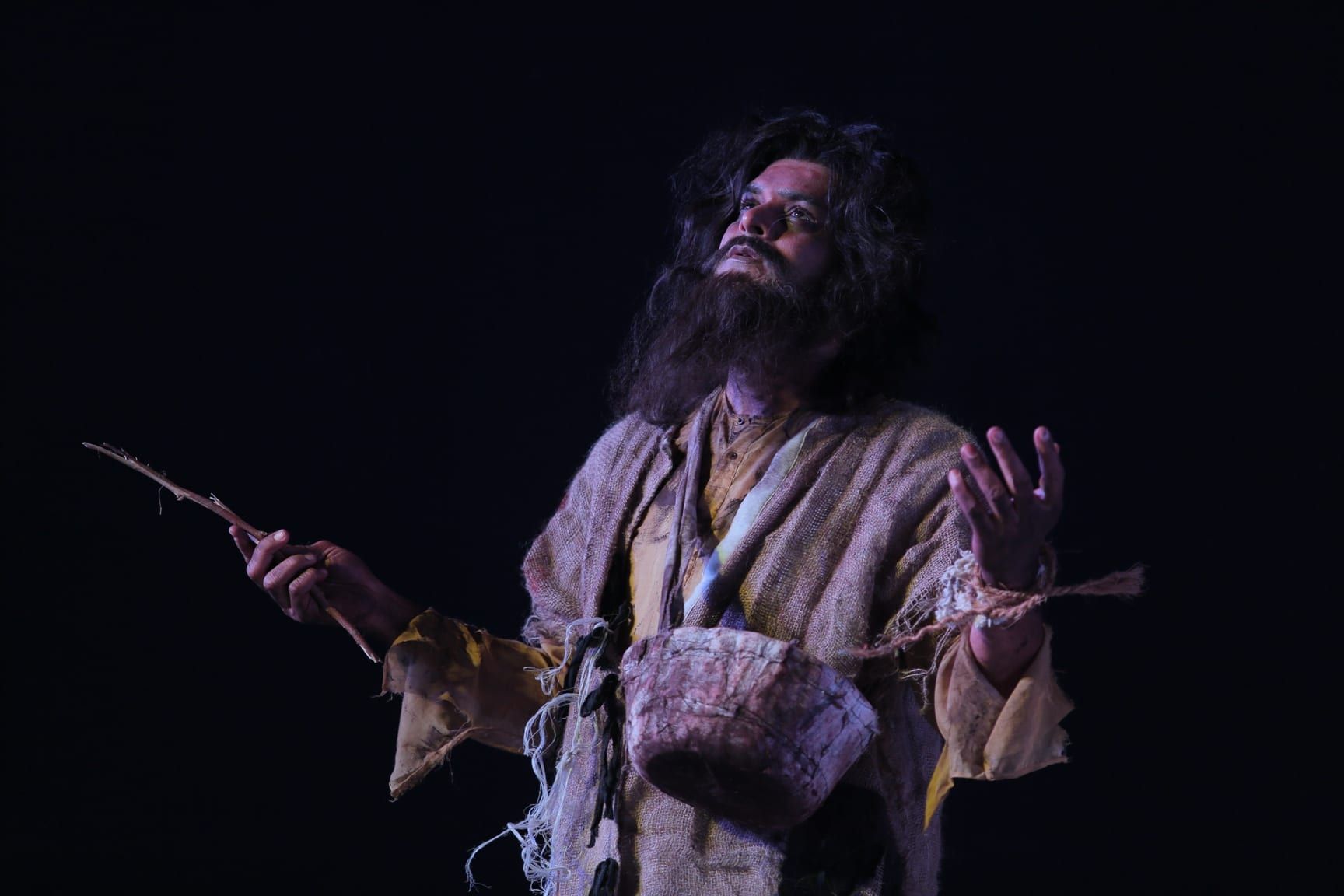
Based on the Upamitibhavaprapancha Katha by Siddharshi Gani — a 10th-century Sanskrit text that Hermann Jacobi called the first allegorical novel in Indian literature, predating Bunyan's Pilgrim's Progress by seven centuries. The play follows Dramak, an ordinary soul trapped in the city of Adrishyamool Paryant — a place that stands for the world as we know it, governed by greed, attachment, illusion, and desire. Dramak lives a bestial existence, wasting his time in futile efforts to preserve his meagre possessions. Caught in the bonds of attachment and illusion, believing the worldly illusion around him to be truth, he accumulates infinite karma and moves further from liberation with each birth and death. But there exists a Maharaja's royal temple — maintained with skill and devotion by servants who guide souls toward spiritual liberation through dharma, renunciation, compassion, and mercy. Their hands are always extended. The question is whether Dramak will take hold. The concept was distilled from Siddharshi's 16,000-verse original by Dr. Jitendra B. Shah, Director of the L.D. Institute of Indology, and dramatised by Prathang Dave and Raju Dave. Kabir Thakore designed the sets and Kanhaiya composed the music. The tagline reads: the end of sorrow is the beginning of peaceful happiness.