
Pai Pai
A Play for Ages 6 to 106

A pai was the smallest coin India ever minted — so small that the phrase pai pai came to mean every last fraction of what you own. Dhiruben Patel's play hangs one from a fishing line and lets a houseful of teenagers try to catch it. They are convinced their parents don't give them enough money. So they set out to earn some themselves, by every innovative scheme a group of school friends can dream up, and one after another the schemes fail. What arrives at the end is not a windfall but an understanding: of what it actually took their parents to build the comfortable home they had been taking for granted, and of how much of it was never about money at all. The play looks straight at the craze for money in the world these children are growing into, and does it as farce — a joke at the expense of everyone in the room, adults included. Written by Dhiruben Patel — novelist, playwright, editor of Sudha, president of the Gujarati Sahitya Parishad, and winner of the Ranjitram Suvarna Chandrak and the Sahitya Akademi Award — and directed by Manoj Shah, who also plays in it. Riddhi Vora, Durgesh Rajput, Maulik Shah, Prakash Waghela, Prashant Savalia, Nimesh Shinde and Rushikesh Chandaran complete the company, on a set that is a teenager's living room down to the pop-star posters on the wall. The poster puts the argument in one image: a 1945 one-pice coin with a hole through the middle, dangling on a line cast from a moon shaped like a pie. Two hours with an interval, and, as the Gujarati poster says, for children aged six to a hundred and six.
Commissioned By
NCPA Mumbai
Presented in the fifth NCPA Summer Fiesta, which ran from 1 May to 15 June 2015, with a single performance in the 177-seat Godrej Dance Theatre on Sunday 10 May at four in the afternoon. The play also went into the children's festival at Prithvi Theatre.
The People
Behind
the Play
Also Worth
Seeing
iSchool
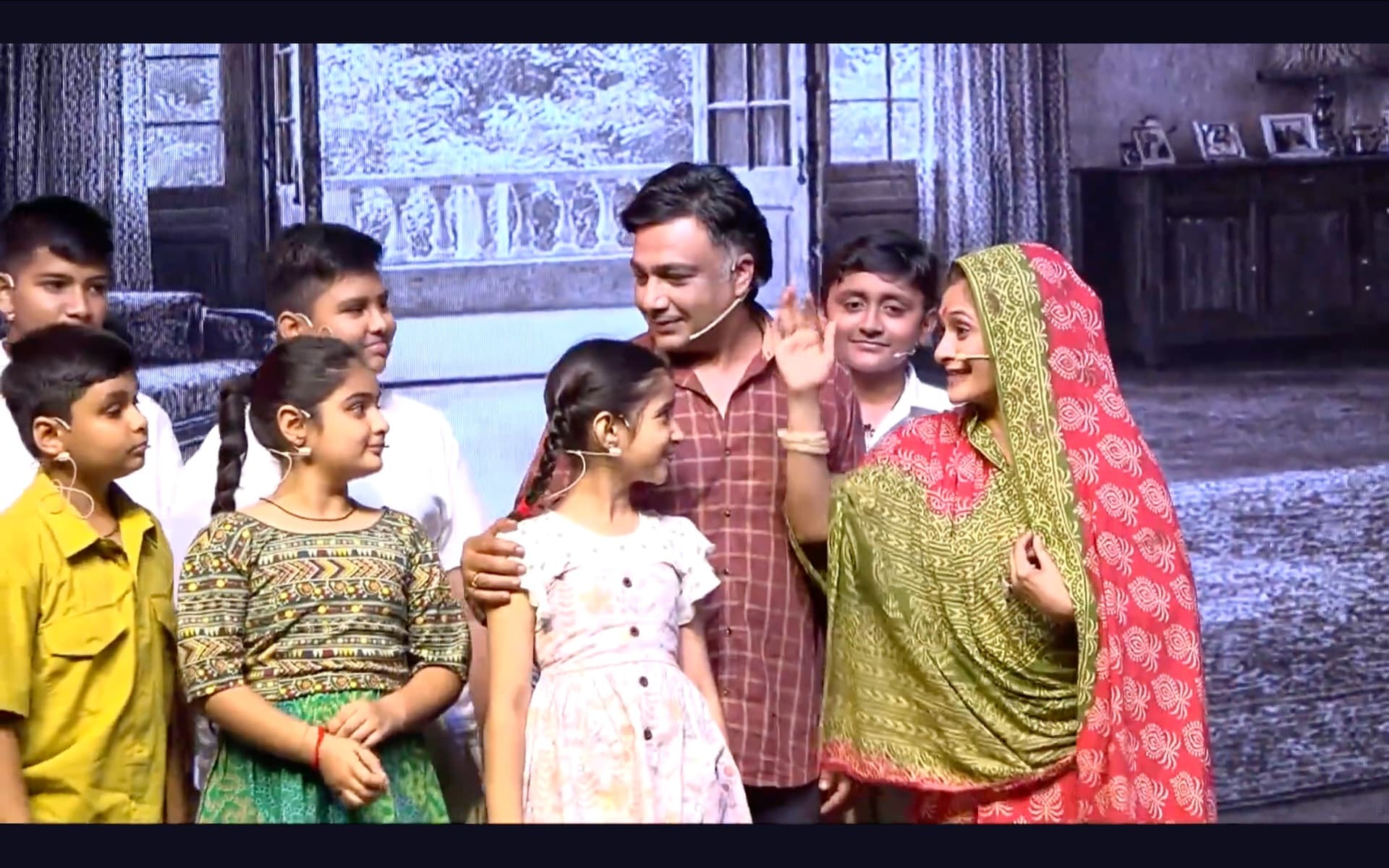
An Ideas Unlimited production directed by Manoj Shah.
Lagan Magan
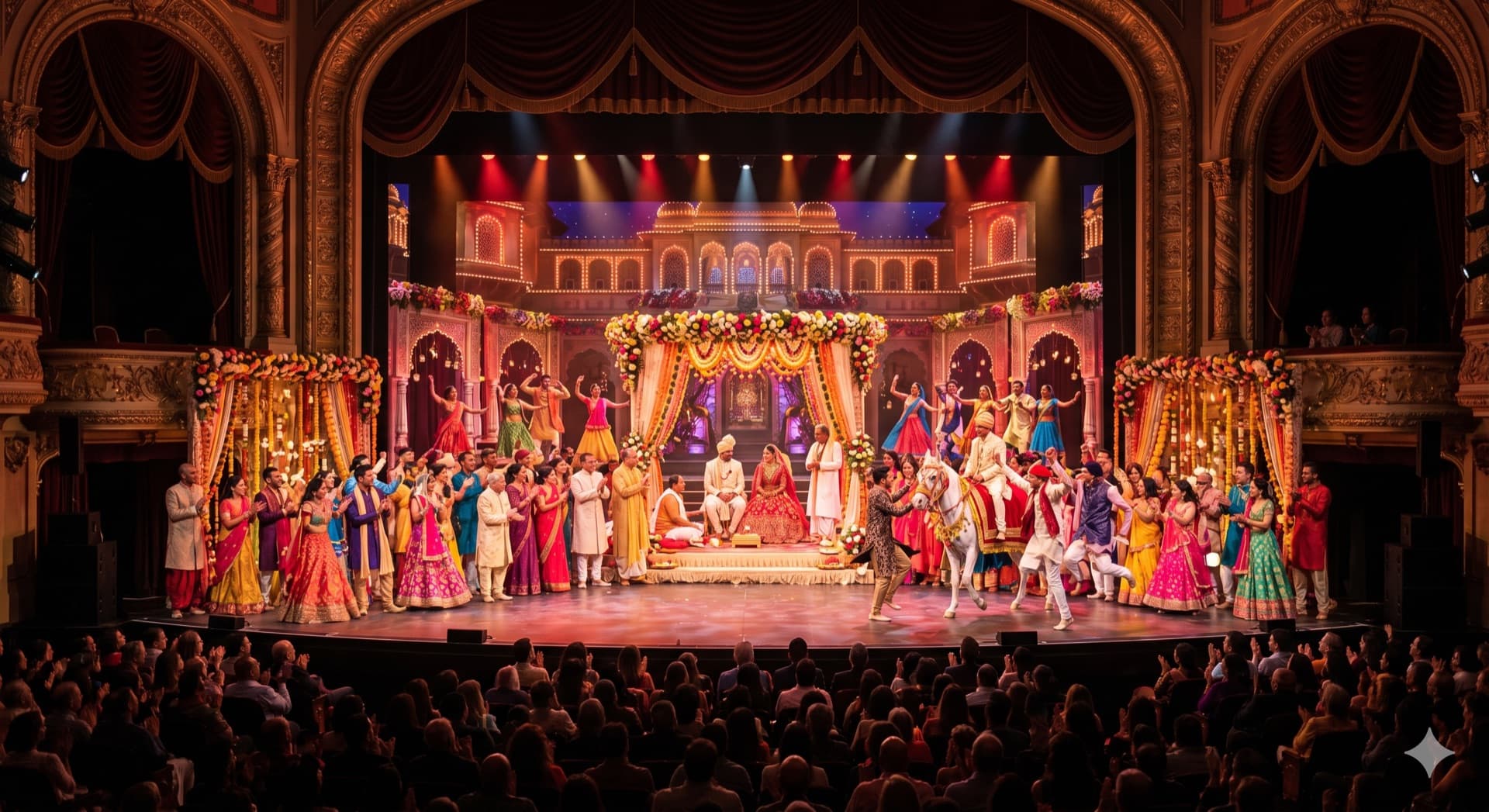
Lagan Ma Magan turns a grand Gujarati wedding venue into the epicentre of joyous chaos, where multiple families from different regions arrive to celebrate a series of marriages. Each family carries not only its own customs and traditions but also its distinct dialect — turning every conversation into a lively mix of familiar phrases, amusing misinterpretations, and unexpected linguistic clashes. As the celebrations unfold, the differences in dialect become both a source of humour and tension. What sounds like an argument to one family is just an animated discussion to another. Affectionate phrases are mistaken for sarcasm. Wedding rituals become battlegrounds of speech, where words hold as much power as emotions, and every blessing arrives with a pronunciation problem. As the dance, the music, the endless festivities, the laughter and the shared moments take over, the play quietly insists that dialects — though different — are threads of the same cultural fabric. Lagan Ma Magan is finally a celebration of linguistic diversity, proving that love and family always find a common language, no matter how different the words may sound.
Kaagdo
Happiness Decoded
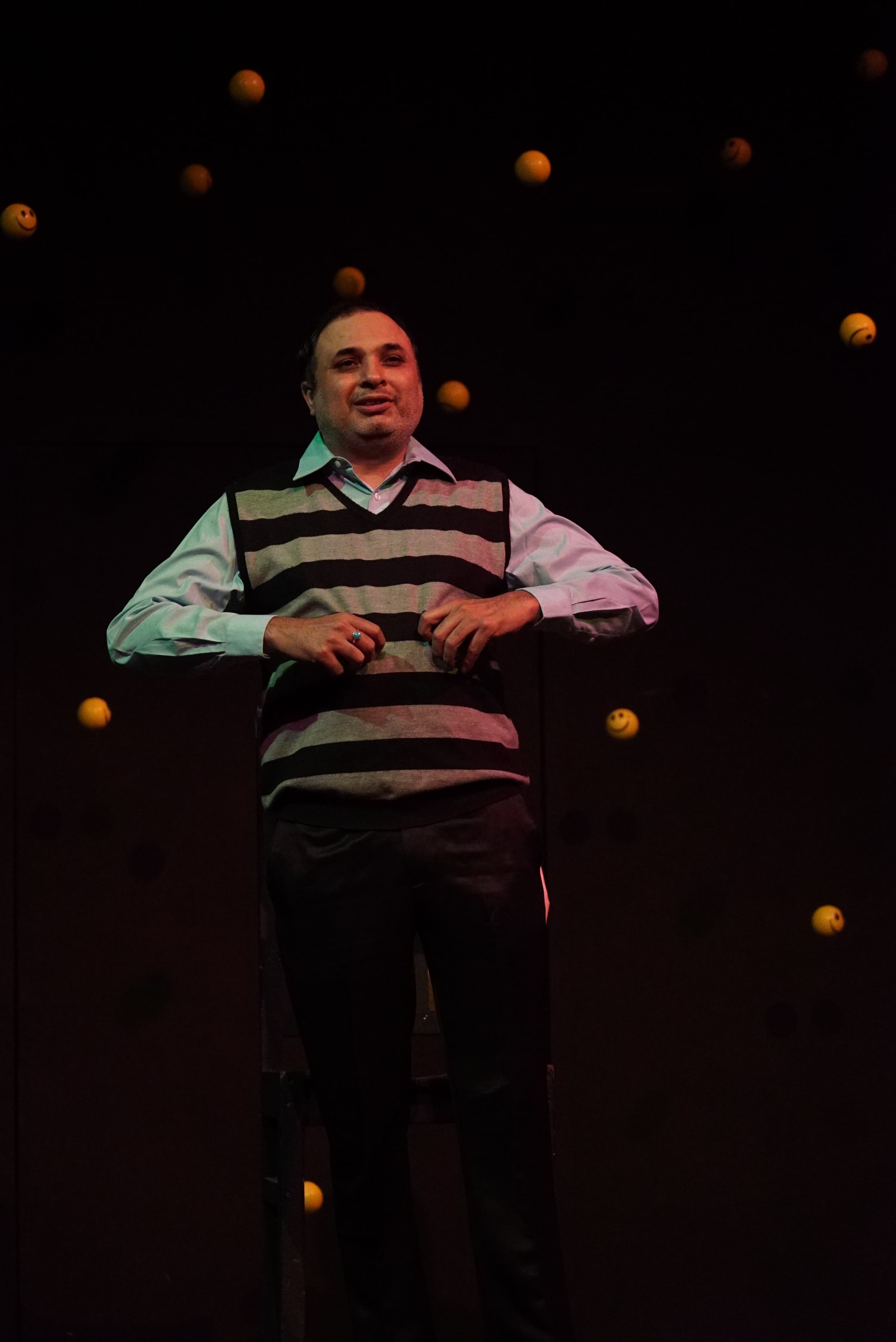
Imagine a world where being happy is a crime. That is the reality in Kaagdo — a biting satire named after the Gujarati folk tale Anandi Kaagdo (The Happy Crow), in which a crow is punished by a king but gleefully sings and enjoys every punishment. The play follows a man — a humble, barefoot government worker in a striped sweater — whose wife has died, whose daughter lives abroad, who owns nothing of consequence, and who is inexplicably, unshakeably content. This is considered suspicious. He is taken to court. A relentless lawyer is brought in to interrogate this anomaly, to crack open this man’s happiness and find the secret formula the world believes must exist. Written by Geeta Manek and directed by Manoj Shah, Kaagdo draws from Japanese ikigai, Sufism, and Zen Buddhism to ask the simplest and most destabilising question in modern life: what if happiness is not something you chase, but something you already have? Jay Upadhyay plays the contented man with a warmth that makes his happiness feel not naive but earned. Unnati Gala plays his daughter — successful, modern, perpetually updating — who cannot understand why her father refuses to want more. The Hindu’s theatre critic Vikram Phukan described the play as an ‘existential parable’ that is ‘not didactic in its approach.’ Shah himself said: ‘Even sadness is a tradition of happiness, which ultimately can be found within us.’