Dr. Anandibai
Like, Comment, Share

The first woman to perform a solo role in a Manoj Shah production — and the first Indian woman to earn a medical degree. Two firsts, separated by 131 years. Dr. Anandibai Gopalrao Joshi was married at nine, widowed of her infant son, and told by every institution around her that a woman's place was in the home. In 1886, she sailed to America and earned her MD from the Woman's Medical College of Pennsylvania — the first Indian woman to do so. She returned to India to serve as the physician-in-charge at the Albert Edward Hospital in Kolhapur. She was twenty-one. She died of tuberculosis the following year, at twenty-two. Written by Geeta Manek and directed by Manoj Shah, the play uses the conceit of social media — Like, Comment, Share — to draw parallels between Anandibai's 19th-century struggles and the pressures facing Indian women today. Are they still defined by the likes they receive? Still waiting for male validation? Still weighed down by domestic duty disguised as devotion? Manasi Joshi performs the 75-minute monologue alone on a bare stage — no props, no set, just Kabir Thakore's spatial design and Hemant Joshi's lighting carving the world out of darkness. The play premiered at NCPA's CentreStage Festival on 2 December 2017, opened in Hindi at Bhavan's College and in Marathi at the Damu Kenkre festival in 2018, and was selected for the 8th Theatre Olympics that same year.
The People
Behind
the Play
Press &
Reviews
DNA India
A Play to Celebrate Life and Times of India's First Female Doctor
Written by Geeta Manek and directed by Manoj Shah, the solo play performed by Manasi Joshi uses a social media conceit to draw parallels between 19th-century struggles and modern Indian women's issues.
1 December 2017
Mumbai Theatre Guide
Dr. Anandibai: Like, Comment, Share — NCPA CentreStage
Actress Manasi Joshi describes the struggles and sacrifices of Dr Anandibai Joshi, who died at age 22, in this Gujarati play selected for the Theatre Olympics.
2 December 2017
Also Worth
Seeing
Mohan No Masalo
Recipe for Making a Mahatma
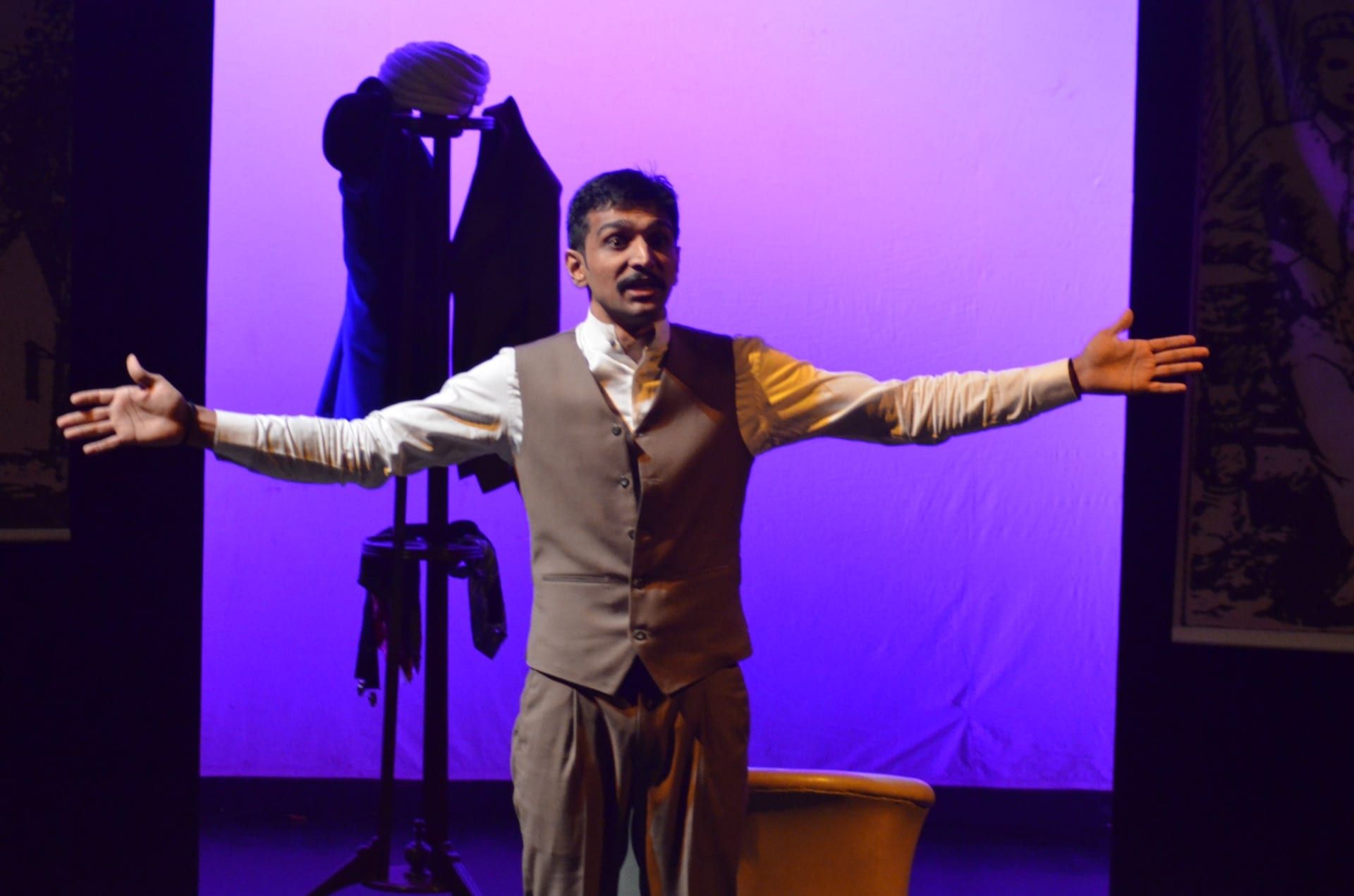
The play that entered the Limca Book of Records. The play that Pratik Gandhi performed before Scam 1992 made him famous. The play about Mohandas Gandhi before he became the Mahatma. Mohan No Masalo — Mohan’s Spices — recovers the young Mohandas: the scared boy from Porbandar, the awkward teenager who married at thirteen, the mediocre student who sailed to London to study law, the diffident barrister who failed in Bombay courts, and the accidental activist who boarded a train in South Africa and found his purpose when he was thrown off it. These are the masalas — the spices — that made the Mahatma. The recipe, told by the man himself. Pratik Gandhi performs the ninety-minute monologue alone against Atul Dodiya’s black-and-white backdrop paintings of a young Gandhi. The Gujarati script was written by Satya Mehta, the Hindi version by Mihir Bhuta and Arpit Jain, the English by Ishan Doshi. Parthiv Gohil provided the vocal performances. The play premiered on 22 March 2015 at NCPA and was subsequently performed in all three languages — Gujarati (Mohan No Masalo), Hindi (Mohan Ka Masala), and English (Mohan’s Masala) — in a single day at the same theatre by the same actor. This feat earned a Limca Book of Records entry for ‘Performance of One Play in Multiple Languages in One Day.’ Manoj Shah on why he made this play: ‘I wanted to be with youth. Best way to re-invent ideas for youth without cliché results is Mohan ka Masala.’
Gathariya
Kaleidoscope
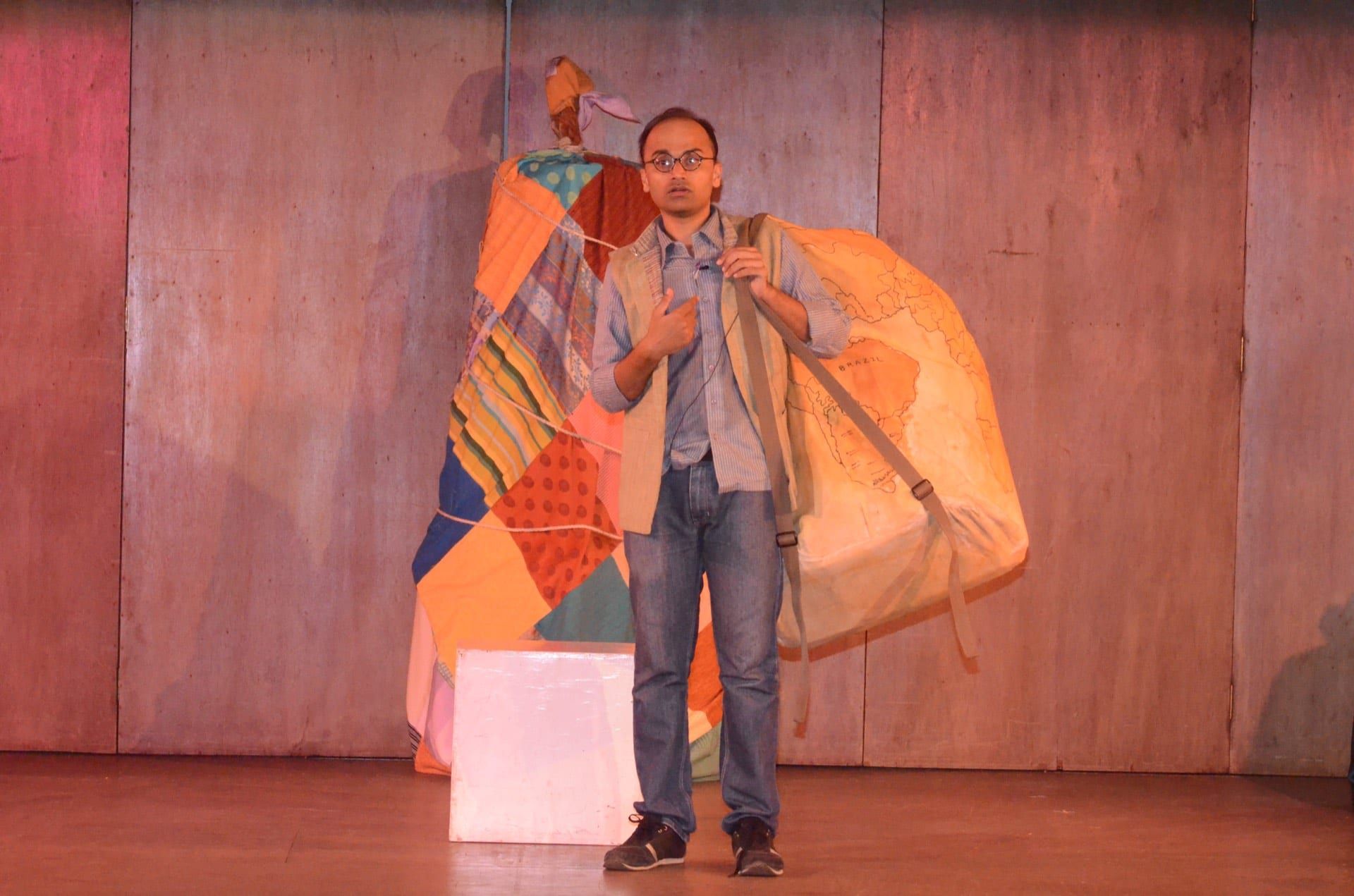
Chandravadan Chimanlal Mehta — Chan. Chi. Mehta to everyone who read him — spent his life packing and unpacking. He was born in Surat in 1901, schooled in Vadodara and Surat, wrote more than twenty-five plays including Agagadi, joined Gandhi at the Bardoli Satyagraha in 1928, taught at New Era High School in Bombay, went into All India Radio in 1938 and ran its Ahmedabad station, started the first diploma and degree courses in theatre in India at M. S. University in Baroda, and travelled — Europe, America, theatre after theatre — until the travelling became the writing. The twelve volumes he made of it are all called Gathariyan: bundles, the cloth-tied bedroll a traveller slings over one shoulder. Bandh Gathariyan. Chhod Gathariyan. Safar Gathariyan. Natya Gathariyan, the one on theatre, took the Sahitya Akademi Award in 1971. Manoj Shah's play takes the title and the image literally. Pulkit Solanki plays Mehta alone on a bare stage with two bundles: one stitched out of patchwork the height of a man, one painted as a map of the world. He unties them and the life comes out of them in no particular order — a doll made for a child, a name given, the first day of school and the first punishment in it, a marriage he did not want, a train to Surat, Uttarayan kites over the roofs, Bardoli, a film projector, the Ila poems that move without warning between nursery rhyme and elegy, Vande Mataram, Bach's St Matthew Passion, New York jazz, and the long way home. Kanti Patel wrote it; Satya Mehta made the dramatisation; Kanhaiya's fifty-two-cue score carries the century the way the bundles carry the luggage. The play is subtitled Kaleidoscope, and it earns the word. There is no chronology to hold on to and no second actor to play against — only a man, his luggage, and Shekhar Phadke's light finding him in it. What holds is the voice: the appetite of a man who wanted to see every stage on earth and then tell Gujarat about it in Gujarati. It premiered at the Godrej Dance Theatre at the NCPA, Mumbai, at four in the afternoon on 27 March 2016 — World Theatre Day, the observance Mehta's own record says he moved the resolution for at the International Theatre Institute's congress in Vienna, under UNESCO. It later played Prithvi Theatre, Juhu.
Hu Chandrakant Bakshi
I, Chandrakant Bakshi
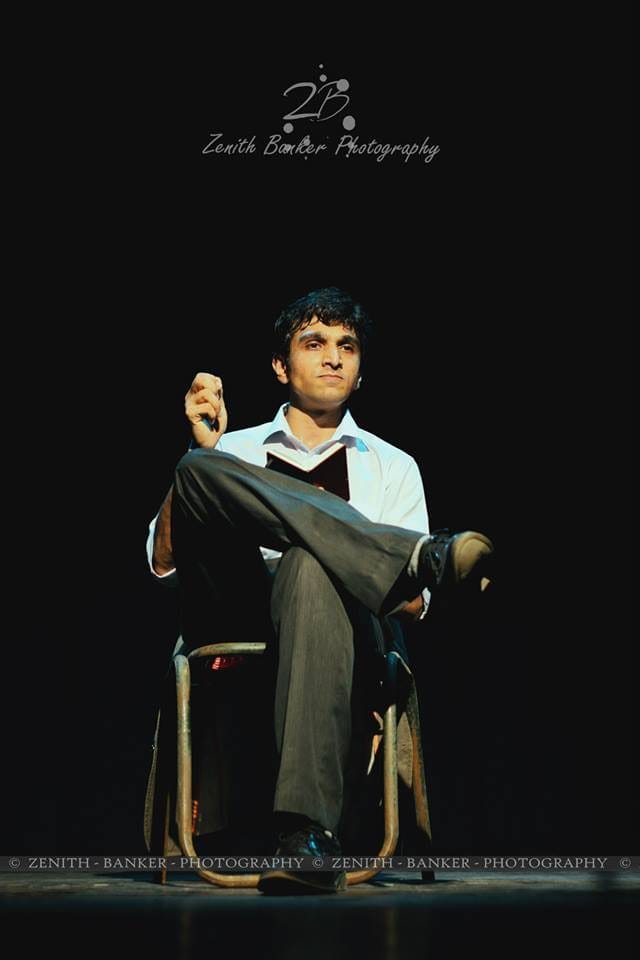
The story of Gujarati literature's most controversial writer, told by the man himself — or rather, by Pratik Gandhi inhabiting him with a ferocity that made audiences forget they were watching an actor. Chandrakant Bakshi (1932–2006) authored 178 books, served as Professor of History, became Sheriff of Mumbai, got his short story 'Kutti' banned by the Gujarat government, publicly defied Bal Thackeray and refused to apologise, and wrote an autobiography so incendiary that parts of it could not be published. His writing style — Gujarati laced with Urdu, Hindi, and English — was as deliberately provocative as his public persona. He was, by every account, an incredible egoist. He was also, by every account, adored by his readers. Written by Shishir Ramavat and drawn from Bakshi's autobiography Bakshinama, the play premiered on 15 June 2013 at Prithvi Theatre. Manoj Shah uses a ladder throughout the production as a metaphor for Bakshi's obsession with being on top. Gandhi — years before Scam 1992 would make him a household name — delivers what CreativeYatra called a 'cautious yet fearless' performance, bringing the bold and egotist protagonist to 'flawless perfection.' This play, along with Mohan No Masalo two years later, is credited with solidifying Pratik Gandhi's reputation as an actor of immense talent.
Mr. Apple
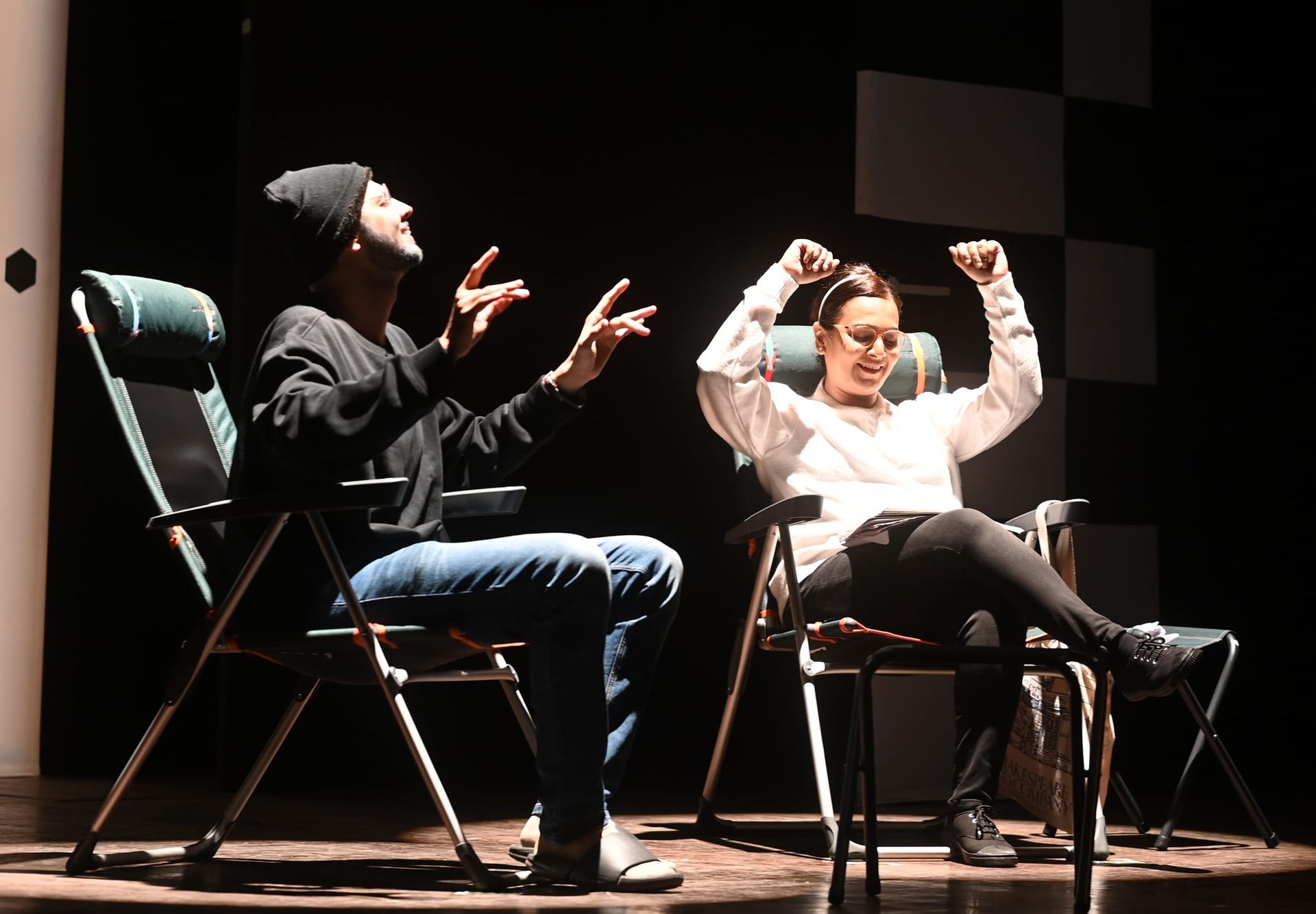
A riveting Gujarati drama exploring Steve Jobs' turbulent relationship with his daughter Lisa Brennan-Jobs. How do you measure greatness — by brilliance alone, or by the complexities that shape a person? Mr. Apple, written by Shishir Ramavat and directed by Manoj Shah, sits with the extraordinary yet deeply flawed life of the iconic entrepreneur behind Apple Inc. Jobs is universally celebrated as the visionary who revolutionised technology and birthed the digital age, but his personal journey was marked by contradictions and poignant ironies. Abandoned by his biological parents, he tragically repeated the cycle with his own daughter Lisa, whom he initially refused to acknowledge as his child. The play captures their explosive, often heartbreaking relationship through intense confrontations, deep-seated bitterness, cathartic meltdowns, and eventual moments of tenderness and reconciliation. Rather than depicting a conventional father-daughter narrative, Mr. Apple portrays how human relationships are never purely black or white but painted in nuanced shades of grey. It does more than celebrate Steve Jobs' brilliance — it courageously reveals his vulnerabilities and emotional struggles, offering a humane portrayal of the man behind the legend. As audiences witness the human inside the icon, the play invites introspection into identity, legacy, and the universal quest for connection and acceptance. Designed by Kabir Thakore with music by Amit Bhavsar and lights by Inaayat Sami, performed by Disha Savla Upadhyay, Alpesh Dixit, and Pinkesh Prajapati.
Adbhut
The Wonder Within
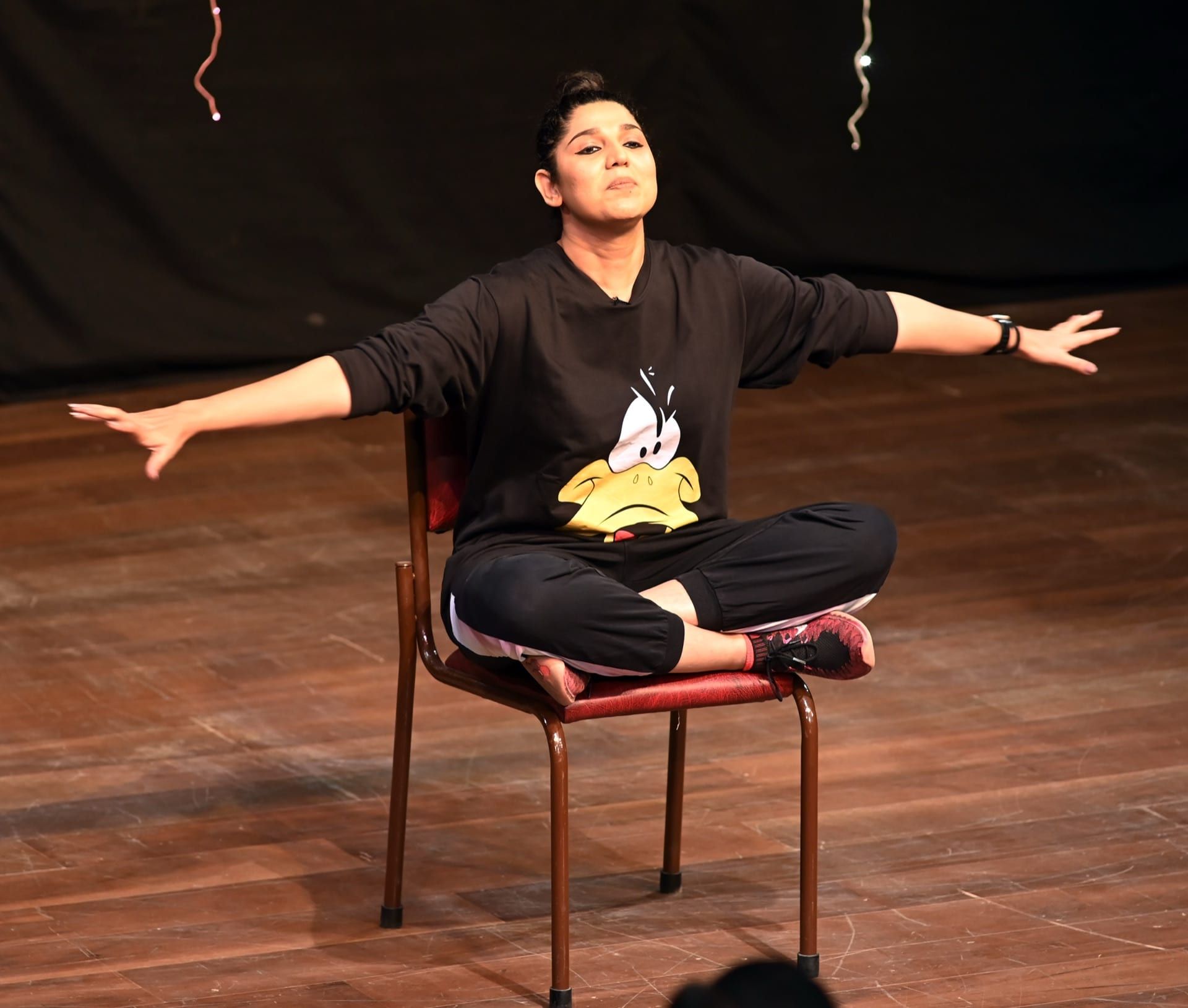
A solo Gujarati adaptation of Every Brilliant Thing by Duncan Macmillan and Jonny Donahoe — one of the most performed plays in the world — reimagined for Indian audiences by Satchit Puranik and directed by Manoj Shah. The original play premiered at the Ludlow Fringe Festival in 2013 with Donahoe performing, before transferring to London and an HBO special. It has since been staged thousands of times worldwide. Puranik's Gujarati adaptation transforms the play's cultural texture — Doordarshan evenings replace Saturday morning cartoons, garba nights replace school dances — while preserving its radical theatrical form: the audience is the cast. From the moment the play begins, the boundary between performer and audience dissolves. RJ Devaki guides the room through the story of a girl who, at age seven, begins a list of every brilliant thing worth living for as a way to pull her mother back from the edge of depression. The list grows as the girl grows, through adolescence, heartbreak, marriage, and the quiet weight of adulthood. With nothing but a chair, a Daffy Duck sweatshirt, and extraordinary presence, Devaki turns strangers in the audience into co-performers, drawing out laughter, silence, and tears in equal measure. Adbhut is not a lecture on mental health — it is a lived experience of it, told with the warmth of someone who understands that sadness and wonder can occupy the same breath.
Kaagdo
Happiness Decoded
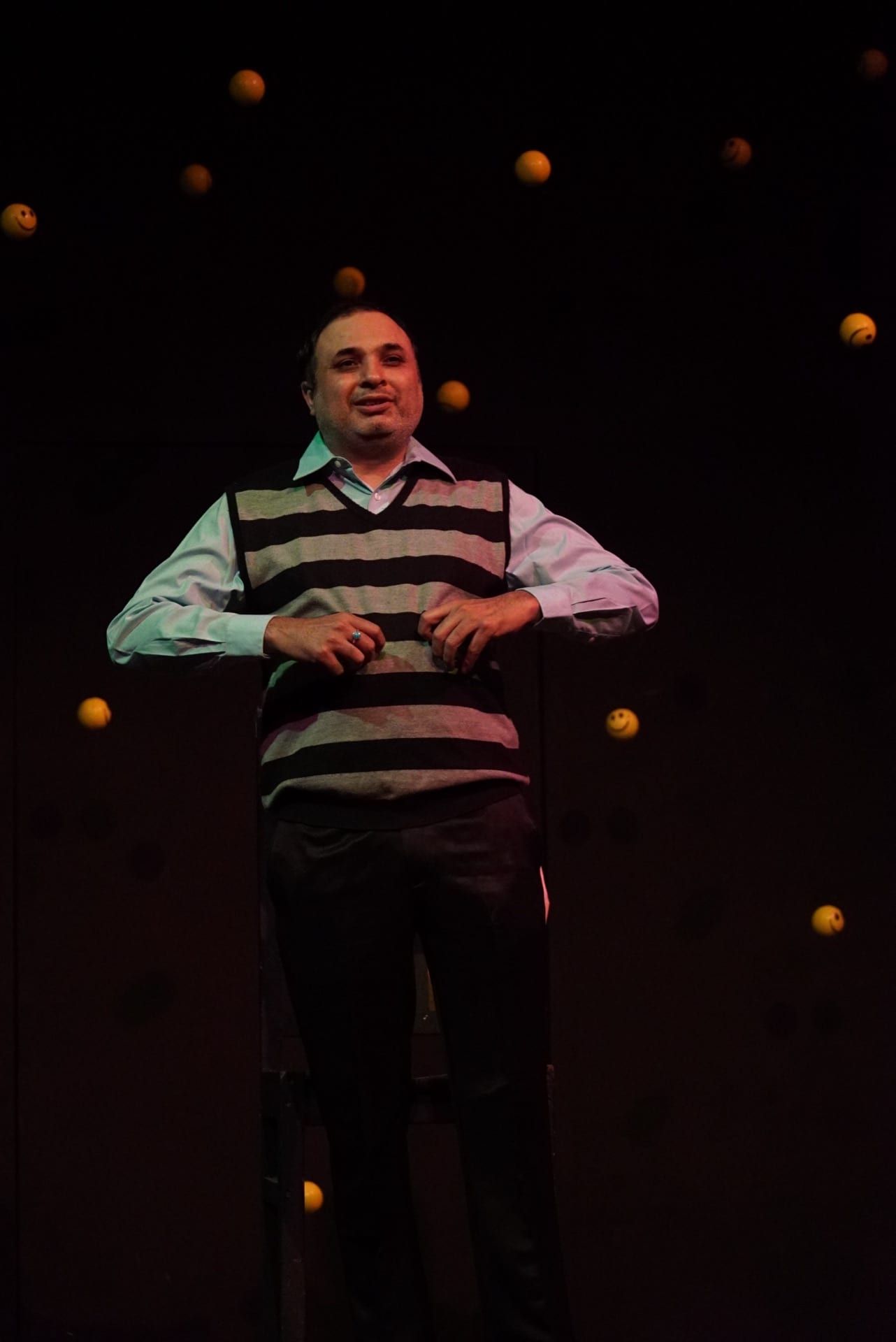
Imagine a world where being happy is a crime. That is the reality in Kaagdo — a biting satire named after the Gujarati folk tale Anandi Kaagdo (The Happy Crow), in which a crow is punished by a king but gleefully sings and enjoys every punishment. The play follows a man — a humble, barefoot government worker in a striped sweater — whose wife has died, whose daughter lives abroad, who owns nothing of consequence, and who is inexplicably, unshakeably content. This is considered suspicious. He is taken to court. A relentless lawyer is brought in to interrogate this anomaly, to crack open this man’s happiness and find the secret formula the world believes must exist. Written by Geeta Manek and directed by Manoj Shah, Kaagdo draws from Japanese ikigai, Sufism, and Zen Buddhism to ask the simplest and most destabilising question in modern life: what if happiness is not something you chase, but something you already have? Jay Upadhyay plays the contented man with a warmth that makes his happiness feel not naive but earned. Unnati Gala plays his daughter — successful, modern, perpetually updating — who cannot understand why her father refuses to want more. The Hindu’s theatre critic Vikram Phukan described the play as an ‘existential parable’ that is ‘not didactic in its approach.’ Shah himself said: ‘Even sadness is a tradition of happiness, which ultimately can be found within us.’