
Mummy Tu Aavi Kevi?
The Generation Next Play

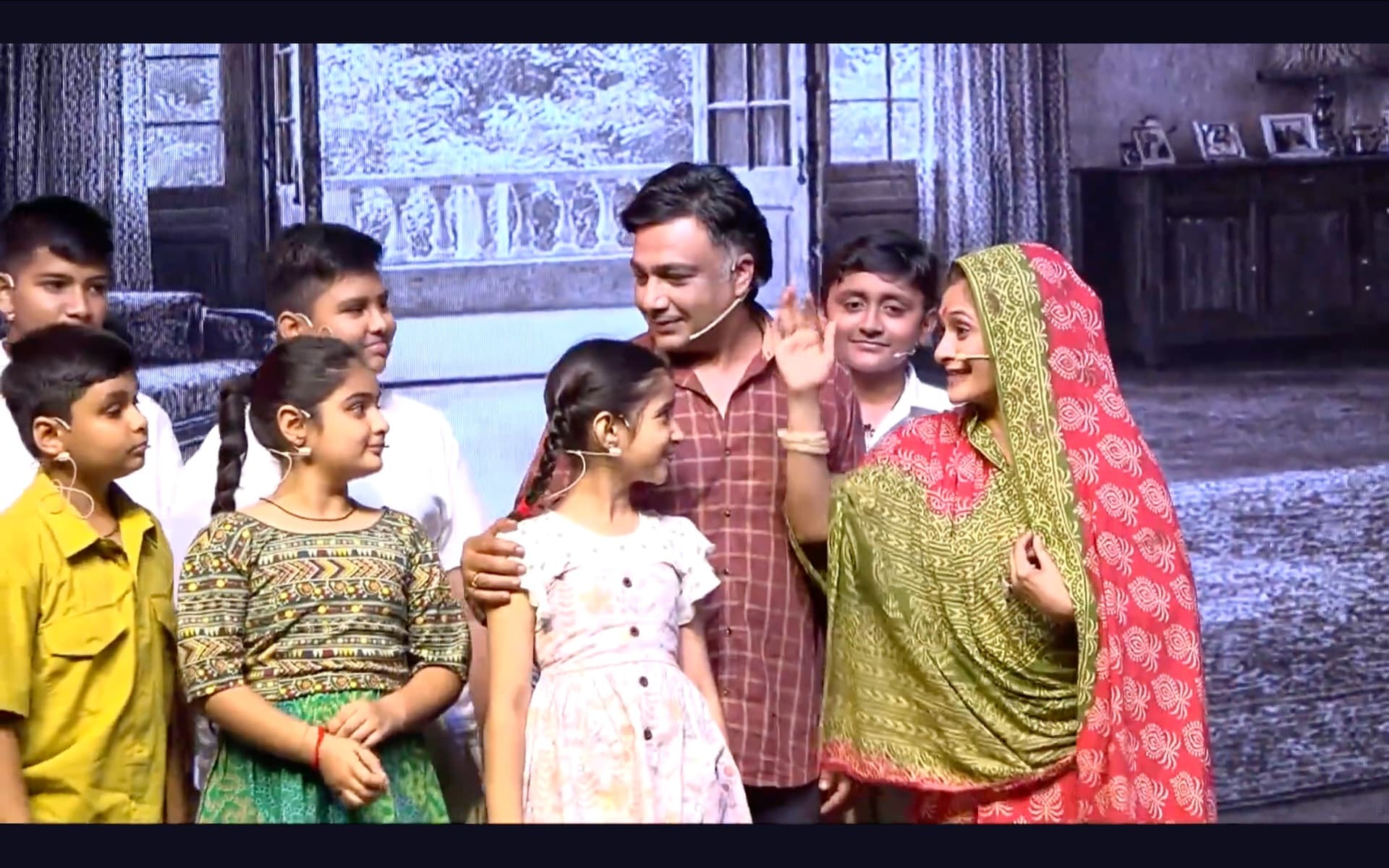
A conservative Gujarati mother is remade, by her own children, into a Hip Modern Mom — and the household never recovers. That is the whole engine of Mummy Tu Aavi Kevi, written by Dhiruben Patel and directed by Manoj Shah for Prithvi Theatre's summer programme for children in 2010. The family is six people. Aparna is forty, Shrikant forty-five. Saloni is fifteen, Vyom twelve, Vismay eight, and Kachra Shankar — who cooks — is forty-five and learning Chinese. The children speak a Gujarati so laced with English that the language itself becomes the joke: it's not my fault, my friends don't like kids, mom you are so outdated, mummy move with the times please. Vyom wants his birthday in a hotel rather than at home with shrikhand, puri and dhokla. Saloni wants her mother's hairdresser fixed. Somebody wants to know who Saraswatichandra and Bhadrambhadra were — brothers or cousins? After enough public embarrassment at the hands of their Desi Mom, the children push her into a make-over and get a 21st Century Mom instead: a woman allergic to tears because they spoil her complexion, who needs absolute pin-drop silence for her beauty-rejuvenating sleep, and who would like a freshly brewed, non-adulterated, environmentally friendly, reverse-osmosis, ozonised glass of pumpkin juice — not Ganga-Jamuna, and certainly not Kachra Shankar. Whether the children are happier with their Ultra-Chic Mom, the production's own flyer noted, is a question that will only be answered after savouring the play. Ideas Unlimited staged it in the GRIPS form — the German children's-theatre model built by Volker Ludwig's GRIPS Theater in Berlin and taken up across India from the 1980s, in which adults play the children and the play treats its young audience as citizens with real problems rather than an audience for fairy tales. The set is a printed modern flat: a boy's room with a Manchester United poster and a bunk bed, a living room, a fitted kitchen, bean bags and folding director's chairs. The company billed the show as a play for children aged six to a hundred and six, and Pidilite — the makers of Fevicol — put their name to it. Dhiruben Patel was seventy-four when it opened and one of the most decorated writers in the language: the novels Vadavanal and Agantuk, the play Bhavni Bhavai that became Ketan Mehta's 1980 film, the Ranjitram Suvarna Chandrak, the Sahitya Akademi Award. Her comedy about children who are ashamed of their mother went on to over sixty performances on the Gujarati circuit, was still being revived at Prithvi on 9 June 2016, and in December that year reached the screen as Ashish Kakkad's film Mission Mummy — Aparna, Vyom, Saloni and Vismay all intact.
Commissioned By
Prithvi Theatre
Made for Prithvi Theatre's summer festival of work for children in 2010, and sponsored by Pidilite Industries — the makers of Fevicol. The company billed it as a play for children aged six to a hundred and six.
The People
Behind
the Play
Also Worth
Seeing
iSchool
An Ideas Unlimited production directed by Manoj Shah.
Lagan Magan
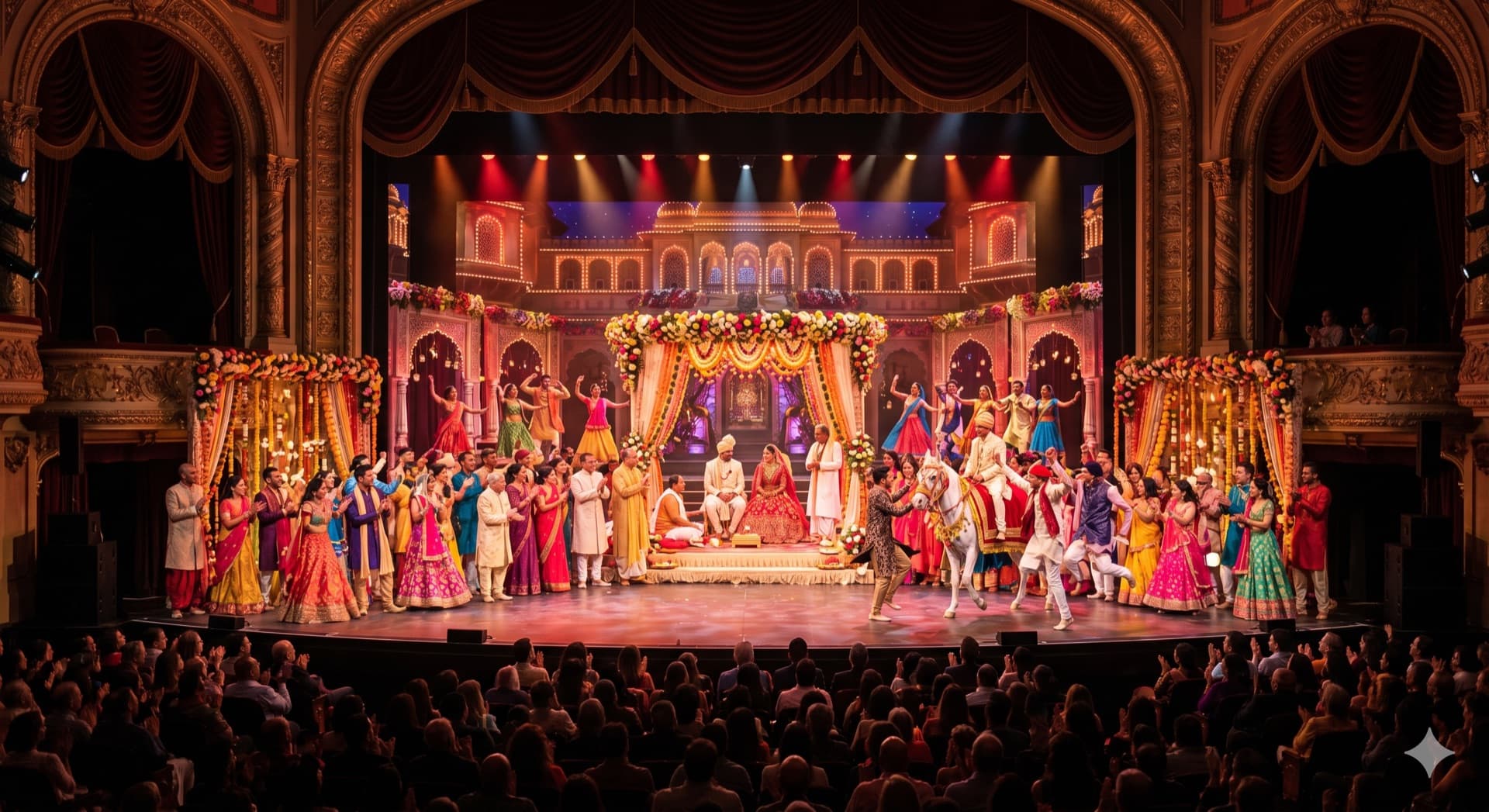
Lagan Ma Magan turns a grand Gujarati wedding venue into the epicentre of joyous chaos, where multiple families from different regions arrive to celebrate a series of marriages. Each family carries not only its own customs and traditions but also its distinct dialect — turning every conversation into a lively mix of familiar phrases, amusing misinterpretations, and unexpected linguistic clashes. As the celebrations unfold, the differences in dialect become both a source of humour and tension. What sounds like an argument to one family is just an animated discussion to another. Affectionate phrases are mistaken for sarcasm. Wedding rituals become battlegrounds of speech, where words hold as much power as emotions, and every blessing arrives with a pronunciation problem. As the dance, the music, the endless festivities, the laughter and the shared moments take over, the play quietly insists that dialects — though different — are threads of the same cultural fabric. Lagan Ma Magan is finally a celebration of linguistic diversity, proving that love and family always find a common language, no matter how different the words may sound.

Master Phoolmani
Once More, Shout It Loud
Bhangwadi Theatre stood on the corner of Princess Street in Kalbadevi from 1874 until it closed in 1968. Its plays ran all night, carried forty songs apiece, and had no microphones — everything depended on lungpower. When the audience shouted "once more" the actor sang the song again with a new verse, sometimes twenty times over, while coins and cash and garlands rained onto the stage; the more popular companies strung nets to protect their performers from the money. Special trains brought audiences from Kolkata, Chennai, Cochin, Vadodara and Surat. Outside, the whole of Kalbadevi was lit with lamps, and before curtain-up a gun loaded with potash powder was fired into the air and the doors opened. Master Phoolmani is a play about two men who have nowhere left to put that world. Chandrakant Shah's script takes Satish Alekar's Marathi masterpiece Begum Barve as its structure and spikes it with the life of Jayashankar Sundari — who, with Bal Gandharva, was the legendary actor-singer of female roles in the early twentieth century, in an era when women were not allowed on stage at all, and who taught the young girls and the wives of rich seths how to wear a sari and carry themselves. Manilal is a Bhangwadi actor whose stage name was Master Phoolmani and whose theatre no longer exists. Sheth Vallabhdas Bhatia, once immensely rich, is still besotted with Phoolmani's music. Vasantlal and Sumanlal are bachelor government clerks with no marriage prospects and a great deal of imagination. Out of that meeting the four of them build a fantasy and move into it. Manilal becomes the heroine Vanlata and marries Sumanlal; both come to believe she is pregnant. Then Bhatia Seth and Vasantlal pull the fantasy down, and the ending is not funny at all. As Manoj Shah put it, the physical relationship between the lonely out-of-work Bhangwadi actors and the unemployed clerks was never the point — their need to connect was more important than sex. The staging kept the Bhangwadi rules and dropped its budget. Only men act in the play. The musicians are trained singers in the Bhangwadi and Bhavai styles, playing live on tabla, dholak and a folding beech-wood organ over seventy-five years old, imported from America by film actor Ashok Kumar's company and one of the few such instruments left in India — the same organ used by Master Krishnarao Fulambrikar in the Sangeet Natak. There are twenty-nine songs, built on particular ragas, old folk tunes and traditional melodies, and the actors sing them all. Bhupen Khakhar — India's first Pop artist, a Padma Shri, four years from the end of his life — painted the backdrop as eleven-foot portraits on collapsible folding frames, with a golden curtain to halve the stage. Jayashankar Sundari and Bal Gandharva wore elaborate women's costumes; this company did not have the money, so a dhoti is folded into a sari and the audience is left to complete it. Master Phoolmani opened at Horniman Circle Gardens on 15 November 1999 as part of the Prithvi Theatre Festival and ran until 2015 — over a hundred performances, the longest run in Ideas Unlimited's history. The poster promised what the play delivered: one more chance to shout once more.