How Karl Marx Ended Up in Kalbadevi
The idea was Uttam Gada’s, and it was brilliantly simple: what if Karl Marx — the philosopher of class struggle — visited Kalbadevi, one of Mumbai’s most chaotic, commercial, quintessentially capitalist neighbourhoods? Where Kutchi shopkeepers employ armies of relatives and gaonwalas. Where capitalism is pursued and practised without apology. Where a rich meal at the famous Bhagat Tarachand is fraught with some guilt, and a pied-à-terre in a crowded chawl reminds Marx of his early days of poverty, struggle, and the writing of Das Kapital.
When Uttam first pitched it, I laughed. Then I thought about it for a week. Then I called him back and said, “This is the most Indian idea anyone has ever had about a German philosopher.”
The play works because it’s not really about Marx. It’s about Mumbai. It’s about how India digests and transforms every idea that comes its way — communism, capitalism, spirituality, modernity — into something uniquely, irreducibly Indian. Marx learns Gujarati because of his admiration for Mahatma Gandhi, but when he goes to Mani Bhavan, he finds the gates shut. He rants about billionaires launching rockets, then does the Gangnam Style dance. He reviews a Gujarati thali. He takes on the Ambanis. He questions everything from capitalism to chutney to Gandhi’s charkha.
We first staged it at the NCPA Vasant Gujarati Natya Utsav in 2013. The response was immediate. People who had never voluntarily attended a play about political philosophy were quoting lines at dinner parties. Deepa Gahlot wrote in Time Out Mumbai that the play was ‘enough to provoke the audience to go back thinking, this Karlbhai was one clever dude, eh?’ Keyur Seta called it ‘a fine example of revolution through entertainment’ that ‘deserves to be translated to other languages.’ Deepa Punjani at Mumbai Theatre Guide called the title ‘enticing, full of prospects’ and dared us to be ‘more risky and provoking.’ We took that dare.
Since then, Karl Marx In Kalbadevi has had more lives than we ever imagined. We’ve done it in Gujarati, Hindi, and Hinglish. At Wilson College for the 150th anniversary of Das Kapital. At the Aligarh Muslim University international theatre conference. At JAINA conventions in the United States. It has been running for twelve years and shows no sign of stopping.
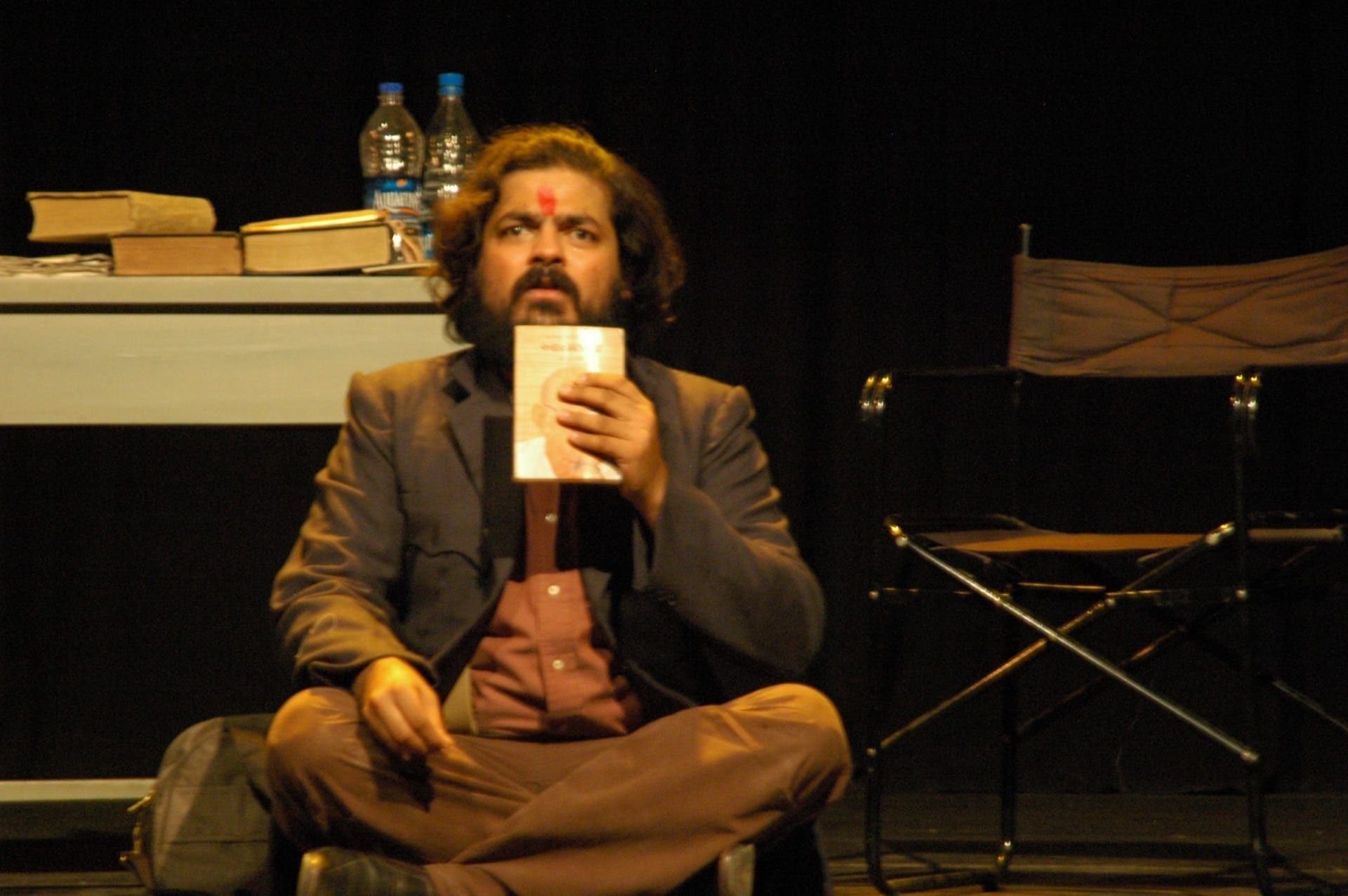
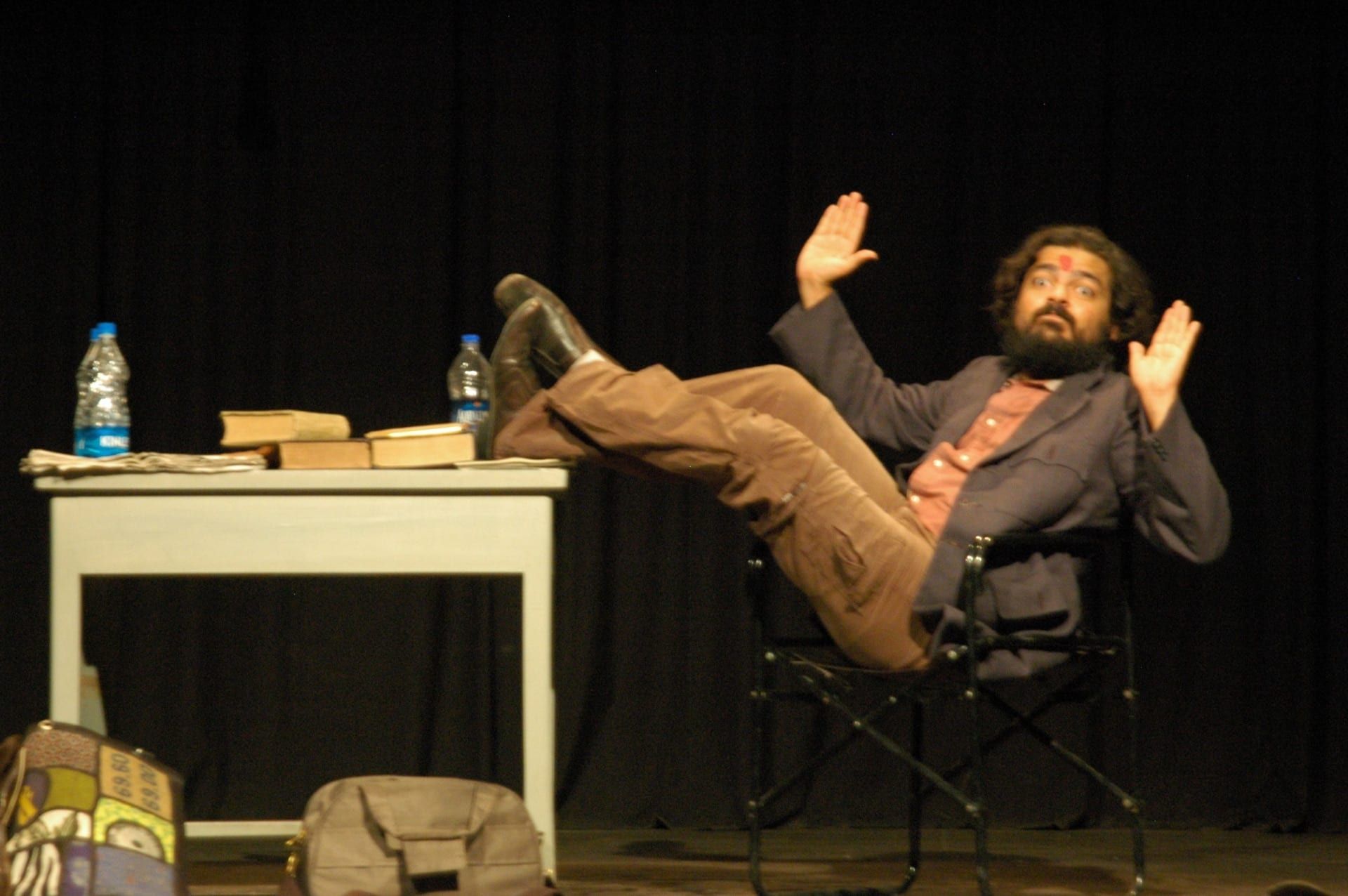
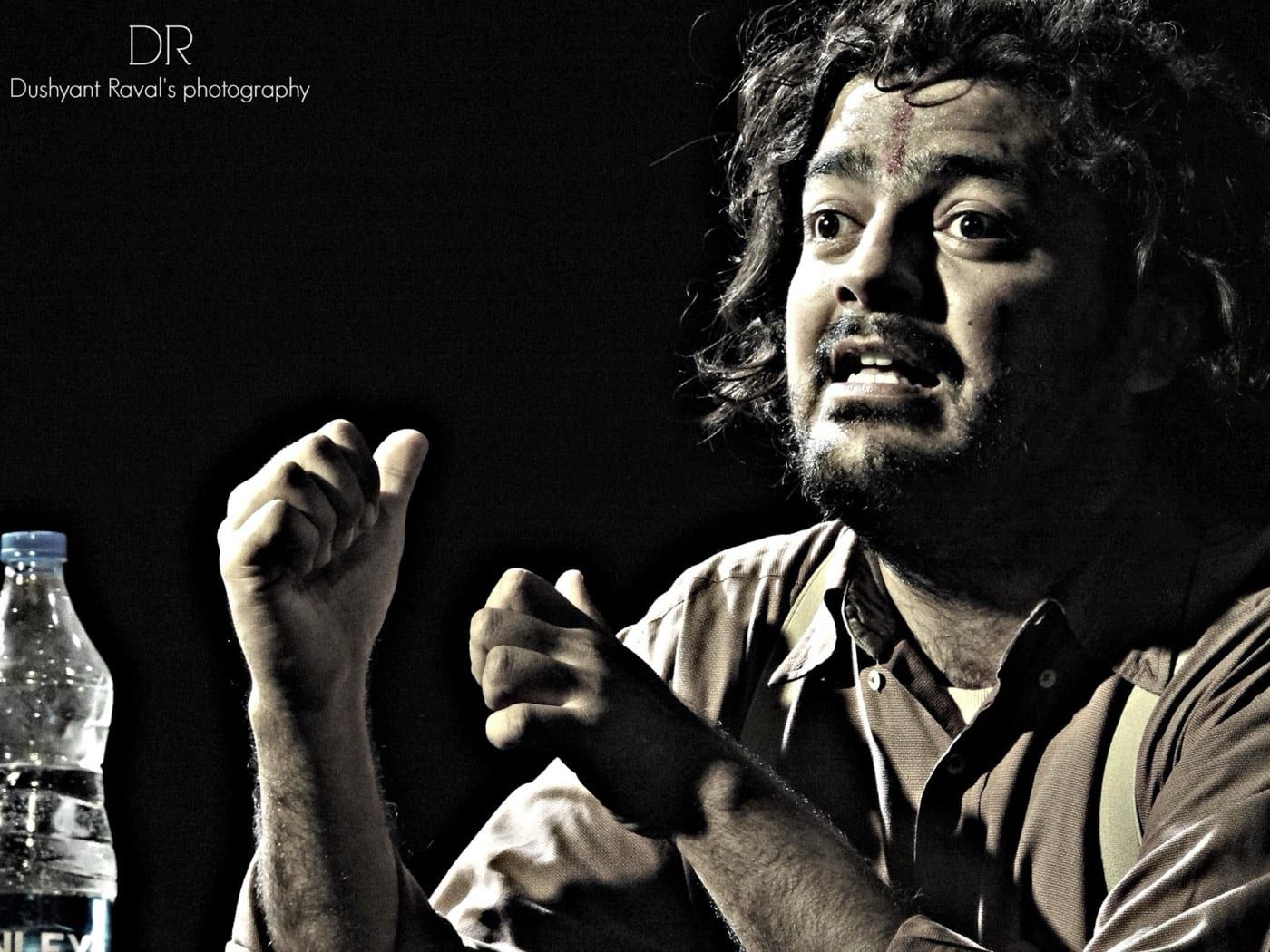
The play has been performed by Satchit Puranik, who brings a manic energy to Marx that makes the philosopher feel less like a historical figure and more like your most opinionated uncle at a family wedding. He looks the part — wild hair, thick beard, a tilak on his forehead that Marx himself would have found philosophically confusing. He holds the stage alone for ninety minutes with nothing but a desk, a chair, some books, a water bottle, and a suitcase. The audience never looks away.
Marx’s views on capitalism are in fact being studied in new light after the 2008 financial crisis. He may have been completely wrong about communism — we have history to prove that — but his readings of capitalism have never seemed more urgent. The play does not pretend to offer a complex analysis of Marxist philosophy. What it offers is something more valuable: it takes a figure consigned to the dustheap of history and makes him feel like someone you’d want to argue with over chai.
People ask me why this play works so well. I think it’s because it does what the best theatre does: it takes something you think you know and makes you see it completely differently. It comforts the disturbed. And disturbs the comfortable.