Kaagdo: What If Happiness Is Not the Problem but the Answer?
There is a Gujarati folk tale called Anandi Kaagdo — The Happy Crow. A crow is found at fault by the king, who devises one punishment after another. The crow sings through every one of them. It enjoys the cage. It enjoys the hunger. It enjoys the cold. The king grows furious. How do you punish someone who simply refuses to be unhappy?
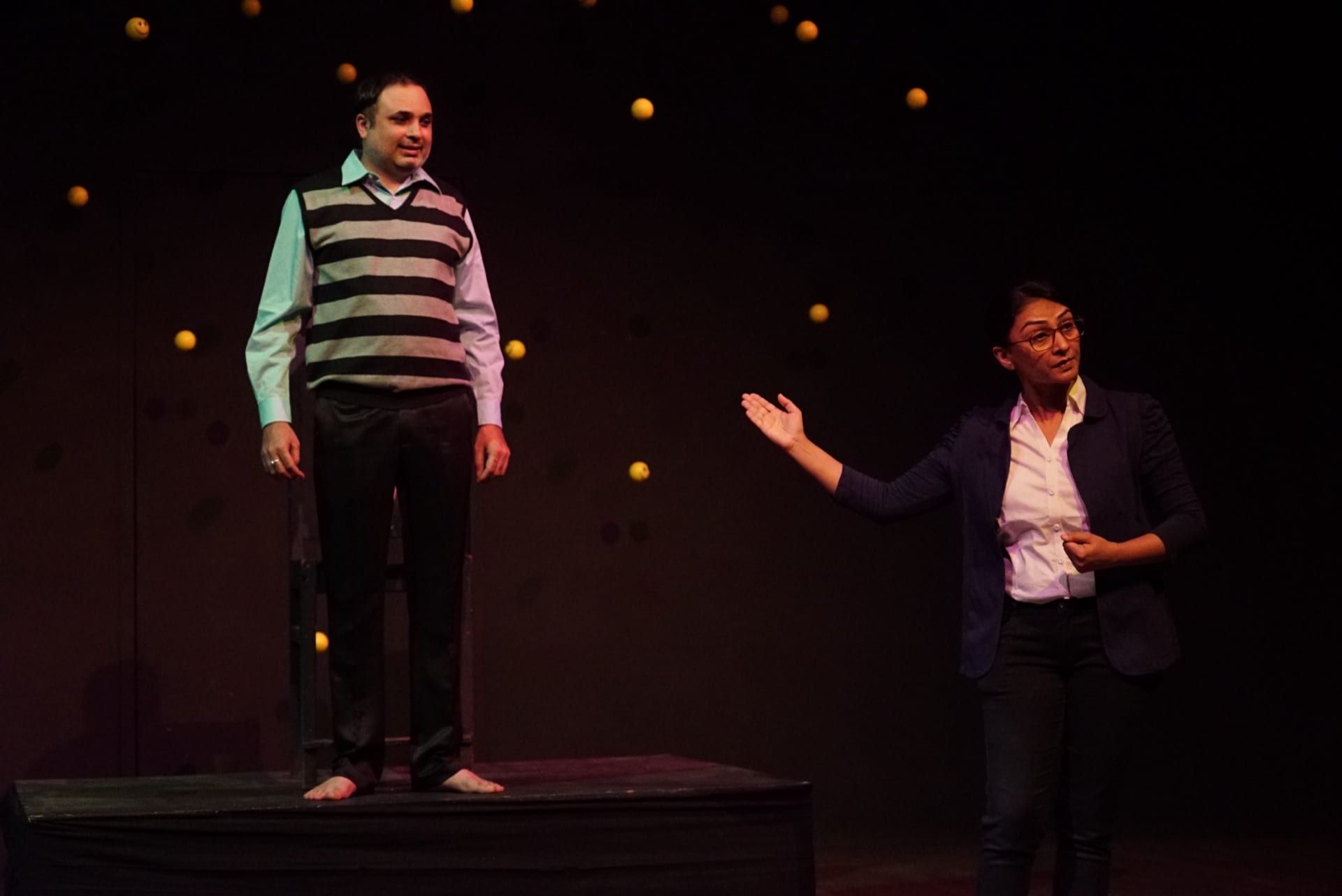
Manoj Shah turned this question into a play. Kaagdo, written by Geeta Manek, premiered at the Prithvi Theatre Festival in June 2019. It runs ninety minutes. It has two actors, a platform, a chair, and a backdrop of floating smiley-face balls. It is, beneath its gentle comic surface, one of the most unsettling things Ideas Unlimited has ever staged.
The premise is deceptively simple. A man — a modest government worker whose wife has died, whose only daughter lives abroad, who owns nothing of material value — is inexplicably, unshakeably happy. This is considered suspicious. In a world that measures worth through acquisition, productivity, and visible striving, a man who simply sits and smiles is either hiding something or broken. He is taken to court. A lawyer is brought in to interrogate him, to find the secret formula, to crack open his contentment and expose whatever must be rotting inside.
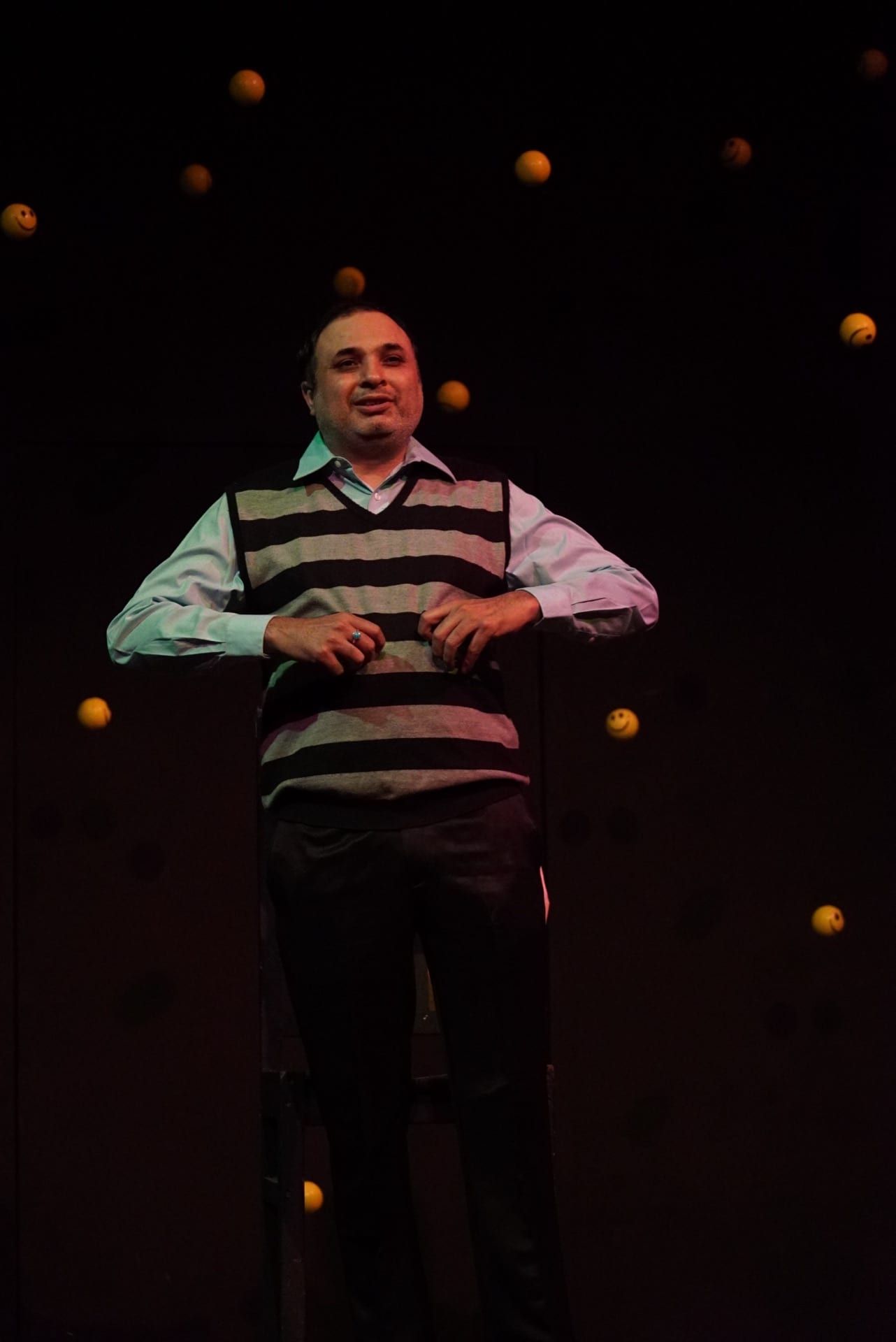
Jay Upadhyay plays the happy man — barefoot, in a striped sweater, sitting on his platform with the calm of someone who has nowhere else to be. Unnati Gala plays his daughter, sharp-suited and bespectacled, constantly updating, perpetually connected, unable to understand why her father refuses to want more. The generational clash is not about technology versus tradition. It is about two fundamentally different relationships with desire.
The play’s philosophical DNA is eclectic. Shah and Manek drew from Japanese ikigai — the concept of a reason for being. From Sufism — the tradition that locates the divine in the act of surrender. From Zen Buddhism — the discipline of finding completeness in emptiness. ‘We had initially wanted to make a play about a Zen master,’ Shah told The Hindu’s Vikram Phukan, ‘but felt that might be alienating to Gujarati audiences.’ So they made a play about a crow instead.
Phukan, in his review, described Kaagdo as an ‘existential parable’ that was ‘not didactic in its approach.’ This is the key distinction. The play does not argue that happiness is good and ambition is bad. It does not preach simplicity. It presents a man who is happy and a world that cannot tolerate it, and leaves the audience to decide which side of the courtroom they are sitting on.
Shah said something in that interview that deserves to be the play’s epitaph: ‘Even sadness is a tradition of happiness, which ultimately can be found within us.’ It is a line that sounds like a fortune cookie until you sit with it. Sadness is a tradition of happiness. The capacity to feel sorrow is itself evidence that joy exists. The two are not opposites. They are the same substance, experienced from different angles. Kaagdo knows this. The court does not.