Jal Jal Mare Patang: The Philosopher Who Burned Too Bright for Forty Years
The title translates as ‘the kite burns as it flies.’ It is a metaphor for Manilal Nabhubhai Dwivedi, who was born in Nadiad, Gujarat on 26 September 1858 and died in the same town on 1 October 1898, writing at his desk. He was forty years old. In those forty years, he wrote the first tragic hero in Gujarati literature, founded India’s first women’s magazine, introduced Western philosophy to an entire region of India, and produced a body of work so significant that the era of Gujarati literature from 1885 to 1905 is named after him: the Mani-Govardhan Era.
The facts of his life read like a novel that no one would believe. He was married at fourteen to a four-year-old girl named Mahalaxmi. He earned a BA from Elphinstone College in history and politics, then became a professor of Sanskrit at Samaldas College in Bhavnagar. He founded the magazine Priyamvada in 1885 — dedicated to women’s education and empowerment at a time when the idea itself was radical — and later renamed it Sudarshan, publishing it until his death.
In 1893, he was invited to present a paper at the first Parliament of World Religions in Chicago — the same event where Vivekananda delivered his famous speech beginning ‘Sisters and brothers of America.’ Dwivedi could not afford to attend. His paper on Hinduism was read by Virchand Gandhi on his behalf. His book Raja Yoga, written in English in 1885, was praised by the orientalist Sir Edwin Arnold and later read by Mahatma Gandhi while imprisoned in South Africa in 1908.
Narmad, the founder of modern Gujarati literature, considered Dwivedi his intellectual heir. The poet-prince Kalapi of Lathi was his devoted follower. His play Kanta (1882) created the first tragic hero in Gujarati drama, fusing Sanskrit dramatic conventions with Shakespearean tragedy. His autobiography Atmavrittanta — written around 1886 and published posthumously only in 1979 — has been compared to Rousseau’s Confessions and Havelock Ellis’s My Life for its unflinching candour about his intellectual, spiritual, and personal struggles.
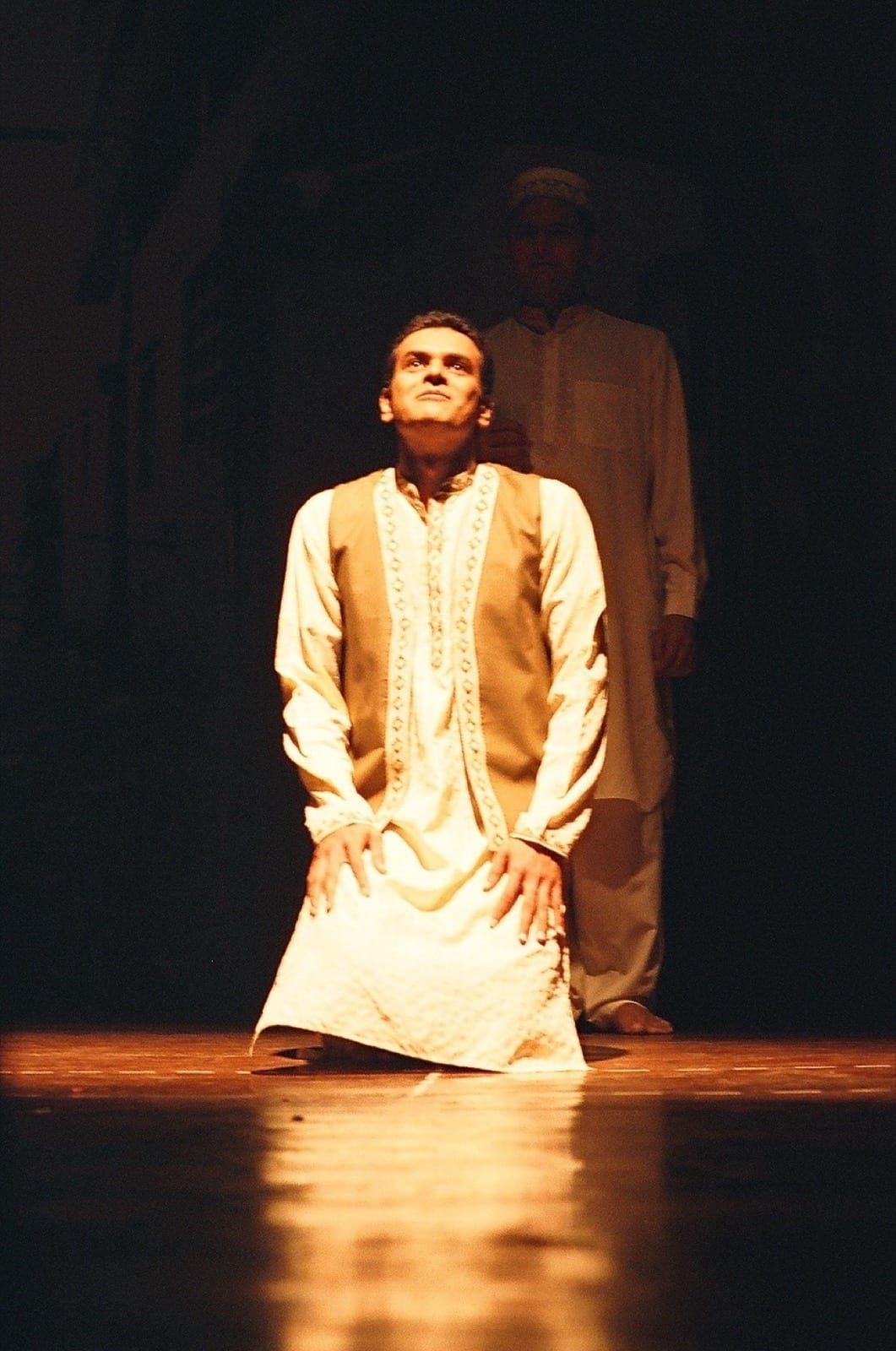
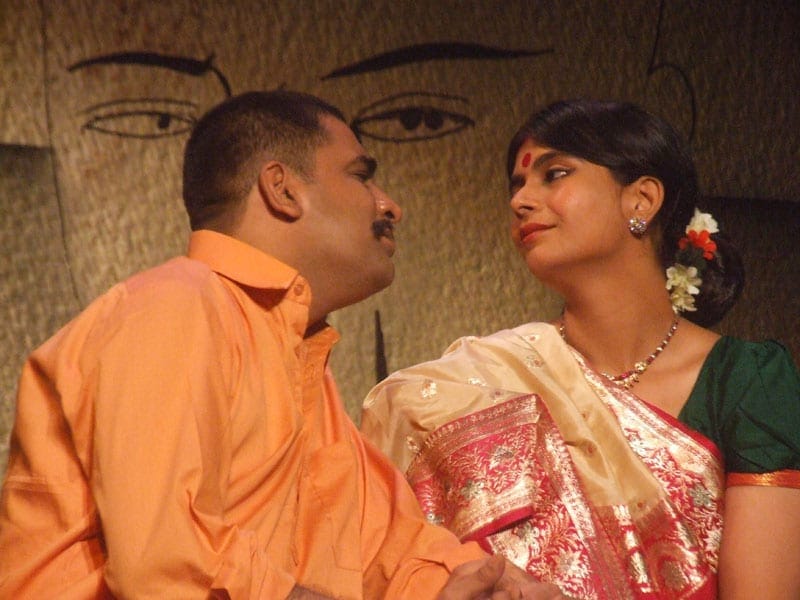
Manoj Shah spent seven years researching Dwivedi’s life before staging Jal Jal Mare Patang. The script, written by Mihir Bhuta, was drawn from the autobiography and other sources. The production premiered on 28 February 2009 at NCPA and later performed at Prithvi Theatre. It received an A-certificate from the Maharashtra Censor Board of Theatres for its frank depiction of Manilal’s personal life — a life marked by contradictions: the advocate of women’s empowerment whose own marriage collapsed, the philosopher of spiritual discipline whose body was ravaged by disease.
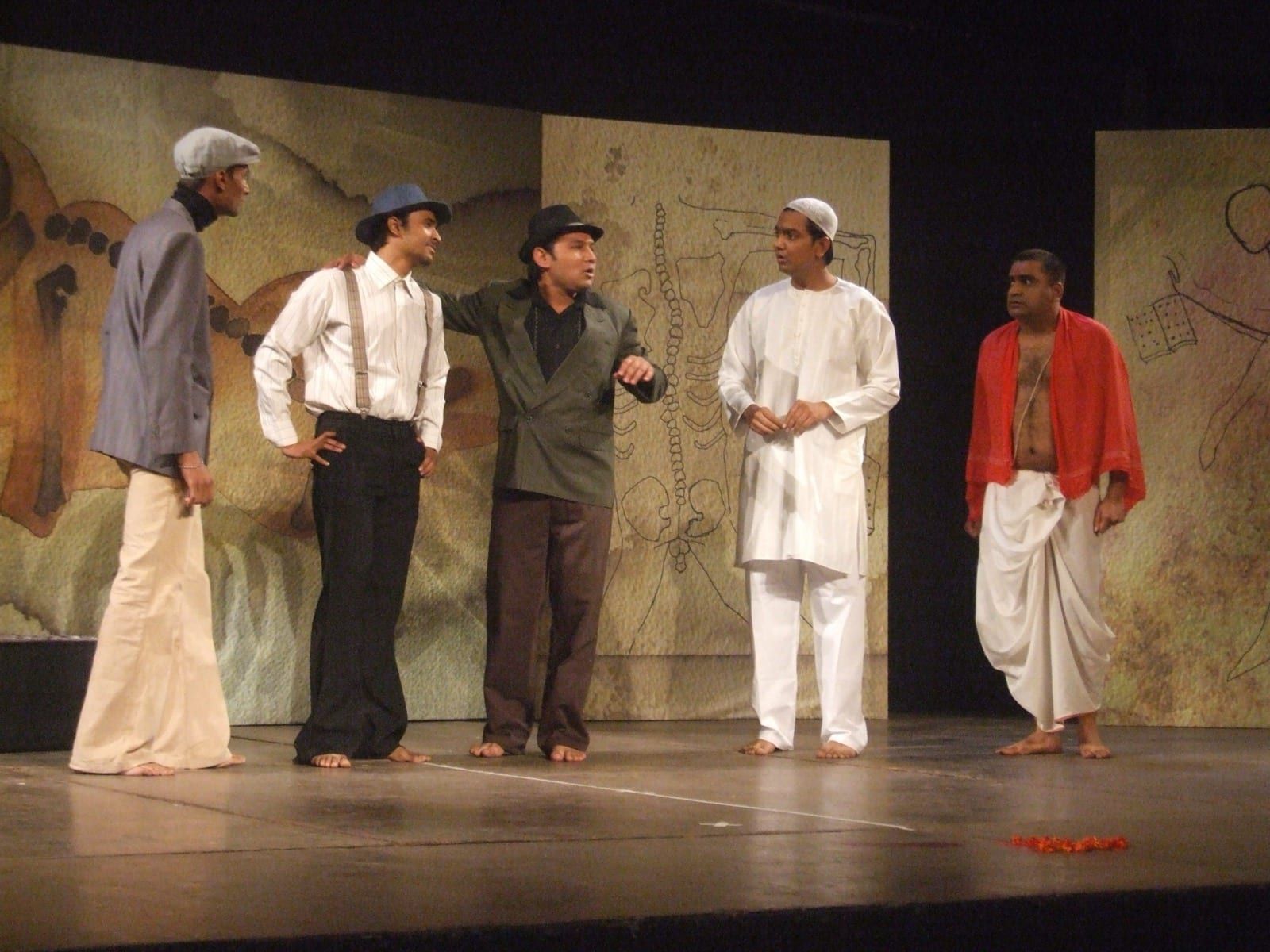
The visual language of the production was shaped by Atul Dodiya, one of India’s foremost contemporary artists, who created the backdrop paintings. This was the third collaboration between Ideas Unlimited and a major painter — following Bhupen Khakhar’s work on Master Phoolmani and Ghulam Mohammed Sheikh’s on Mareez. Dodiya would later paint the black-and-white backdrops for Mohan No Masalo.
Dwivedi remains one of those figures whose influence far exceeds his fame. He is the man Gujarati literature is named after, yet most Gujaratis could not describe his life. His philosophical work arguing the superiority of Advaita Vedanta provoked years of controversy. His seven-year intellectual dispute with Ramanbhai Neelkanth of the Prarthana Samaj has been called unparalleled in Gujarat’s history of reflective literature. He wrote 24 volumes of original work in Gujarati, Sanskrit, and English before the age of forty.
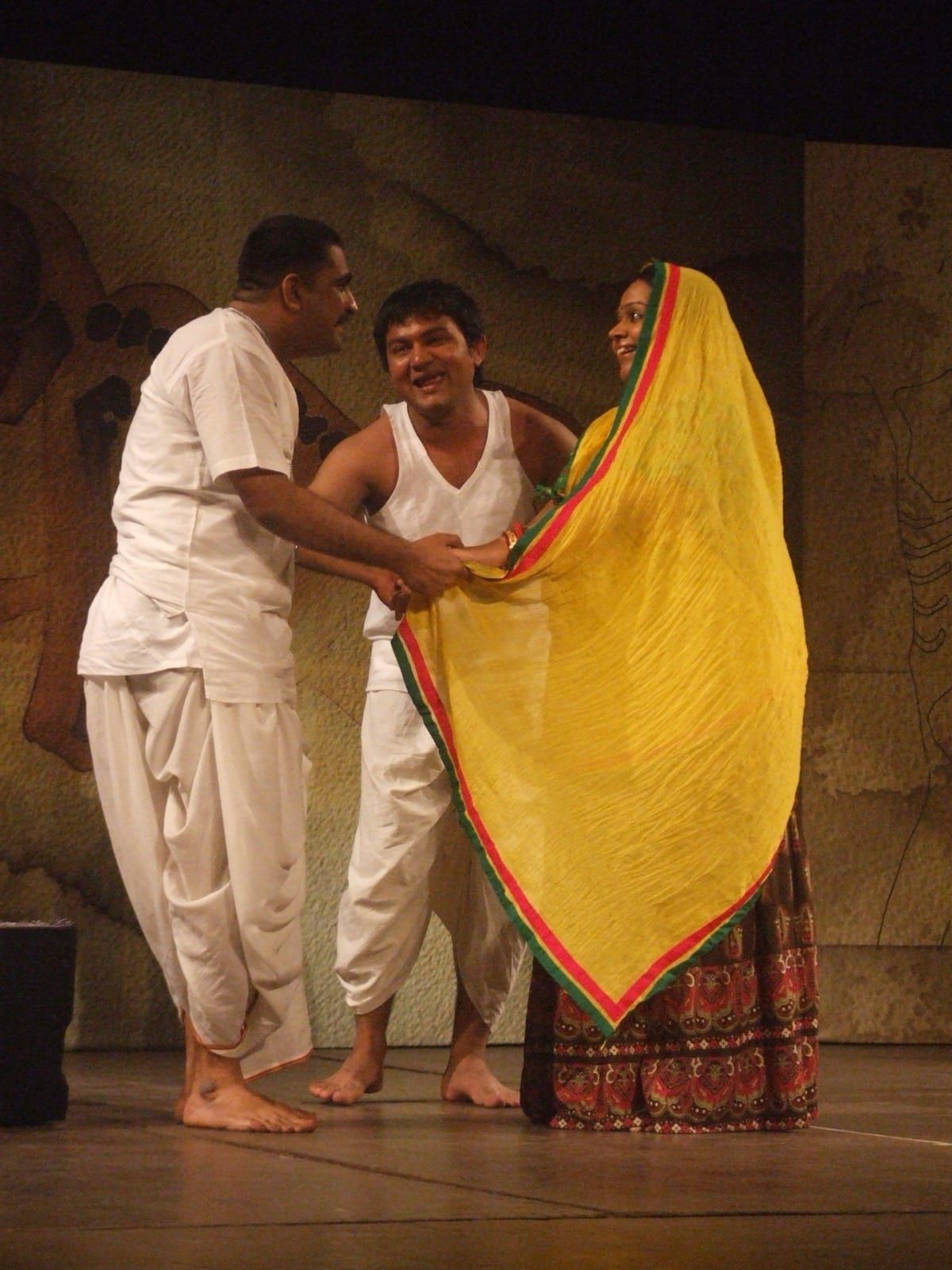
The kite burned as it flew. Jal Jal Mare Patang does not mourn this. It traces the arc — the full, blazing, contradictory arc of a man who introduced a civilisation to itself through the medium of another civilisation’s philosophy, and who died, as he lived, in the middle of a sentence.