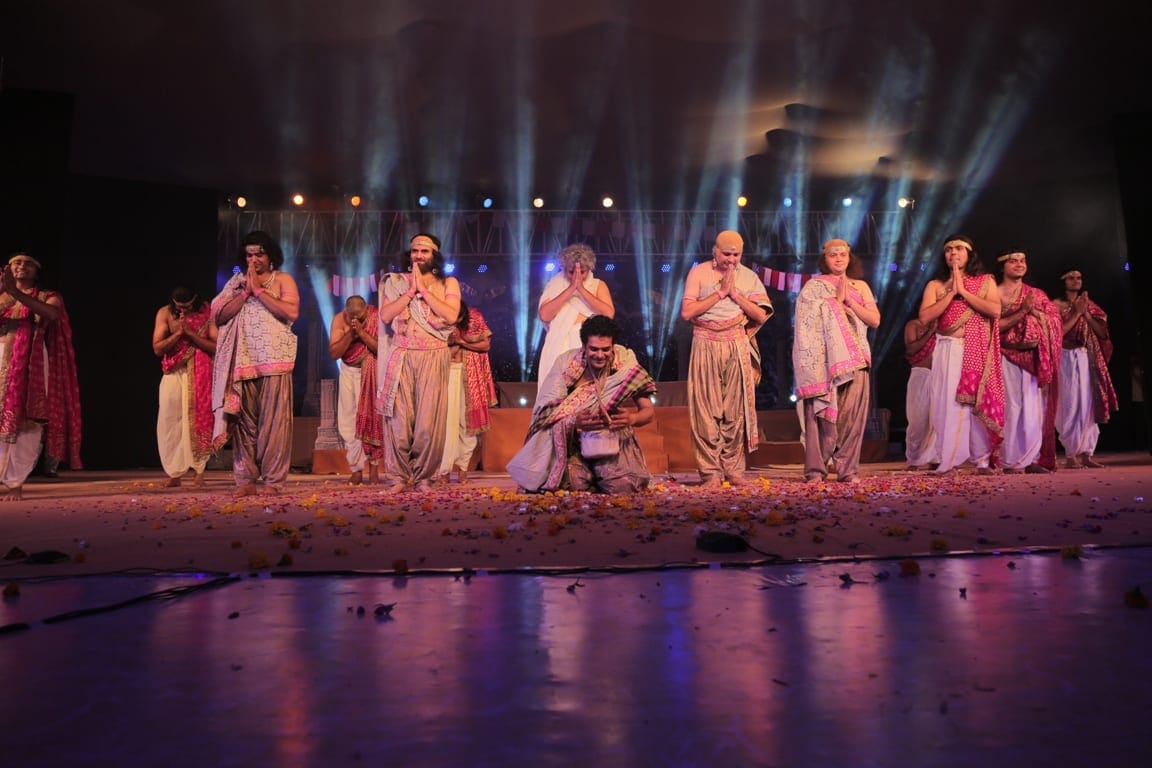
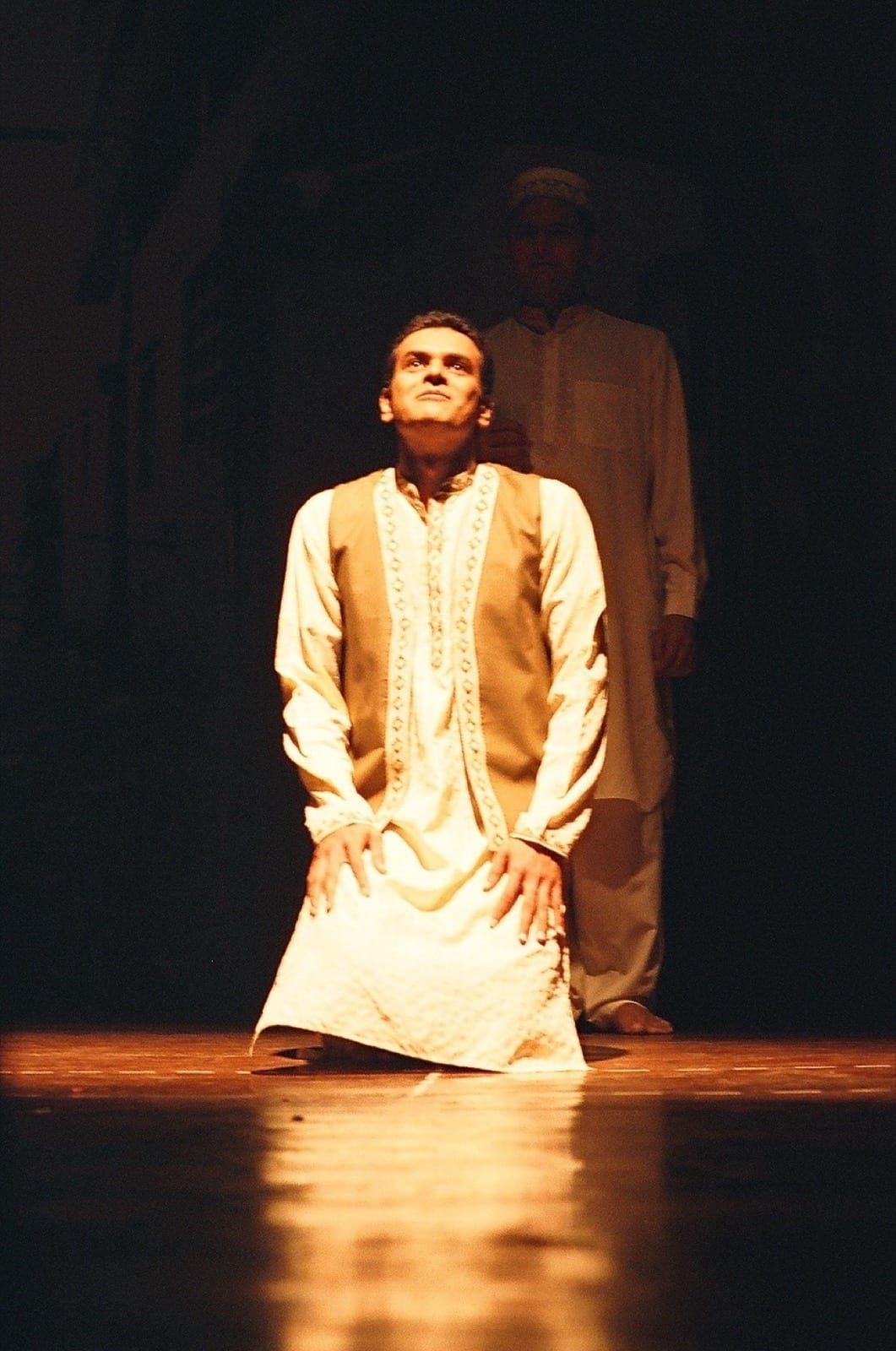
Bhav Prapanch: Staging India’s First Allegorical Novel
In the 10th century, a Jain monk named Siddharshi Gani composed a work in Sanskrit that the German Indologist Hermann Jacobi would later call the first allegorical novel in Indian literature. The Upamitibhavaprapancha Katha — literally, the story of worldly illusion through analogy — runs to 16,000 verses in anushtup metre, woven into a champu format that alternates between prose and poetry. It predates John Bunyan’s The Pilgrim’s Progress by seven centuries and Guillaume de Deguileville’s The Pilgrimage of the Life of Man by four.
The text is not obscure to scholars. Peter Peterson’s edition was published by the Asiatic Society in 1890. Analytical studies have appeared in Jain academic journals for over a century. But for most people — including most Jains — the Upamitibhavaprapancha Katha remains a title encountered only in footnotes. No one had attempted to stage it. The challenge was obvious: how do you dramatise 16,000 verses of allegorical philosophy?
The answer came from an unlikely collaboration between a Jain Indologist and a theatre director. Dr. Jitendra B. Shah, Director of the L.D. Institute of Indology in Ahmedabad — a scholar who has authored twelve books, curated 10,000 manuscripts, and coordinated the Dalai Lama’s meeting with Jain Acharyas — distilled Siddharshi’s vast text into a theatrical concept. Prathang Dave and Raju Dave dramatised it into a script. Manoj Shah directed.
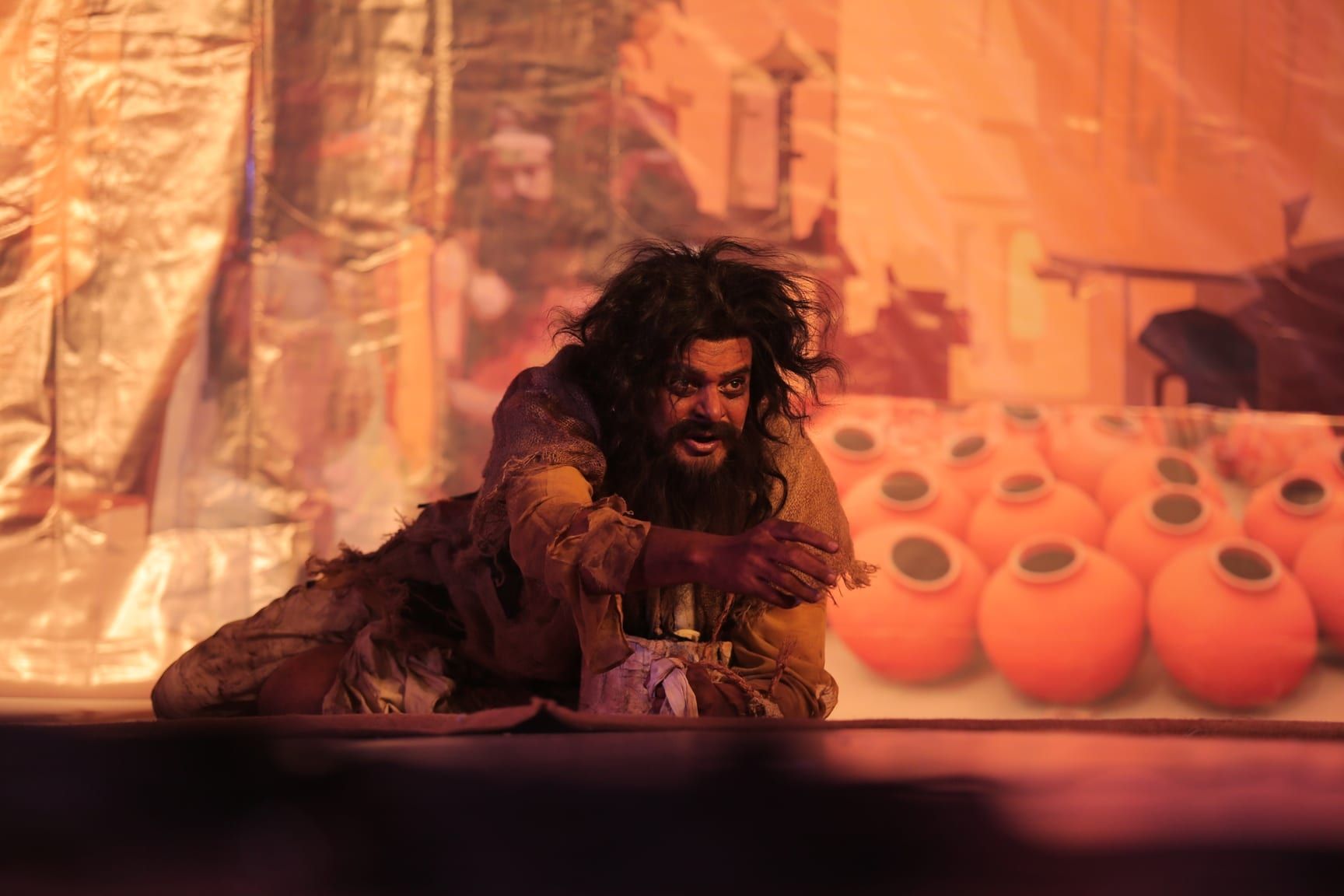
The play follows Dramak, an ordinary soul living in a city called Adrishyamool Paryant — a name that translates roughly as ‘invisible from root to end.’ This city is the world as Jain philosophy understands it: a place governed by greed, attachment, illusion, and desire, where souls live bestial existences, accumulating karma through infinite cycles of birth and death, each time moving further from liberation.
Dramak is not a villain. He is something more familiar and more unsettling: a person who wastes his time in futile efforts to protect possessions that will not last, relationships that will not survive death, and a body that is already decaying. He is, as the Gujarati synopsis puts it, a reflection of our everyday lives — one we experience constantly but choose, out of ignorance and attachment, to ignore.
Against this stands the Maharaja’s royal temple — maintained by servants, attendants, and ministers who embody dharma, renunciation, compassion, and mercy. They are always ready to guide souls toward liberation. Their hands are always extended. The question the play asks is not whether help exists, but whether we are willing to take it.
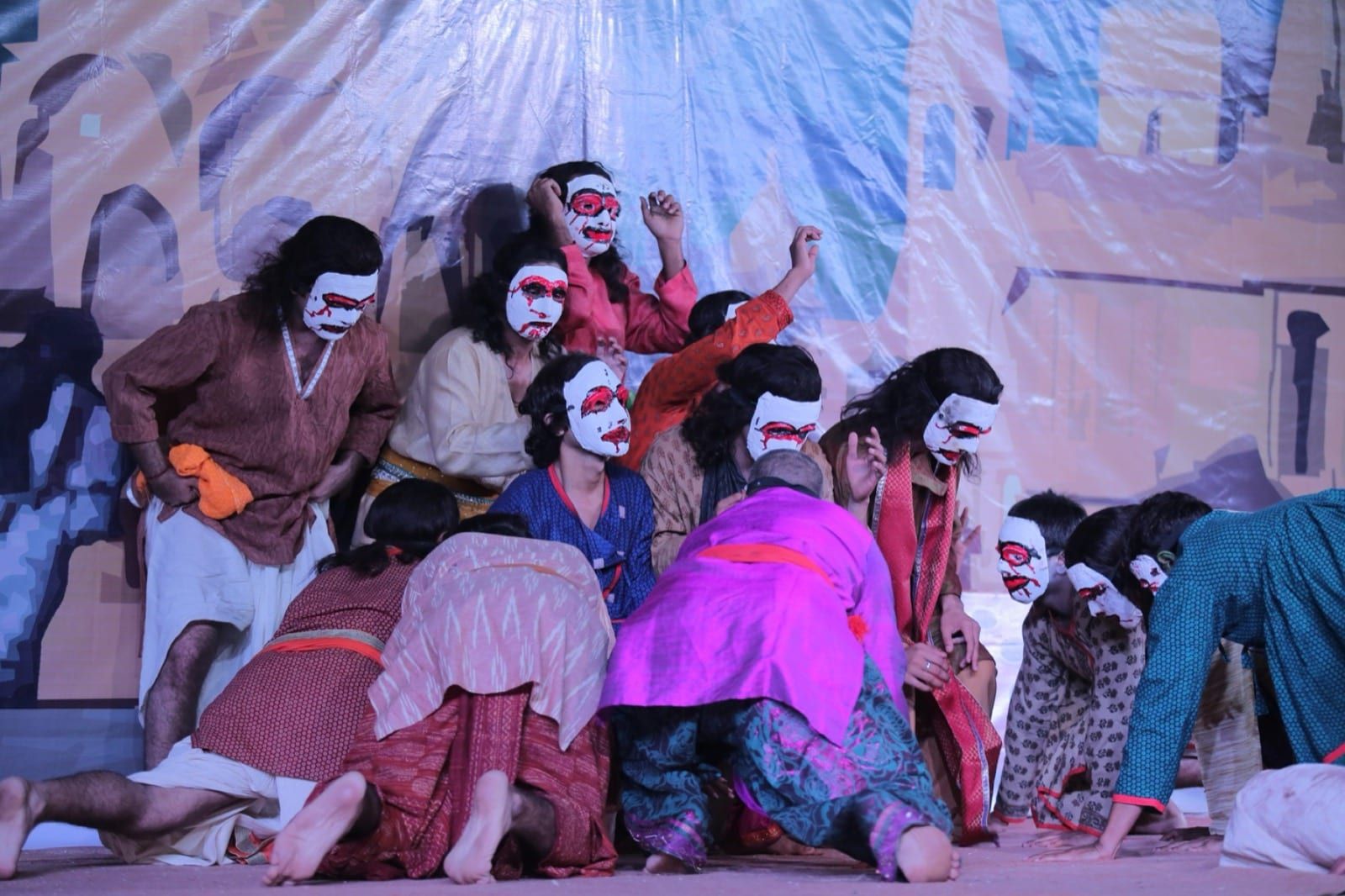
The staging was monumental. Kabir Thakore — the Ahmedabad architect who built Scrapyard Theatre in his own courtyard — designed sets that moved between the squalor of Dramak’s worldly existence and the luminous grandeur of the Maharaja’s temple. Kanhaiya composed the music. Rajiv Bhatt designed costumes that ranged from the ragged burlap of the trapped soul to the pristine white of the Jain monk. The cast included Dharmendra Gohil, Vimal Upadhyay, Jay Upadhyay, Hemang Vyas, and Manoj Shah himself.
What makes Bhav Prapanch distinctive in the Ideas Unlimited catalogue is its ambition. This is not biography or social commentary or literary adaptation. This is metaphysics staged as theatre — an attempt to make the abstract mechanics of karma, rebirth, and liberation visible and visceral. The masked figures representing worldly temptation, the tormented soul crawling across the stage, the serene monk standing in golden light while chaos swirls around him — these are images that work on an audience the way the original text was meant to work on a reader: not through argument, but through experience.
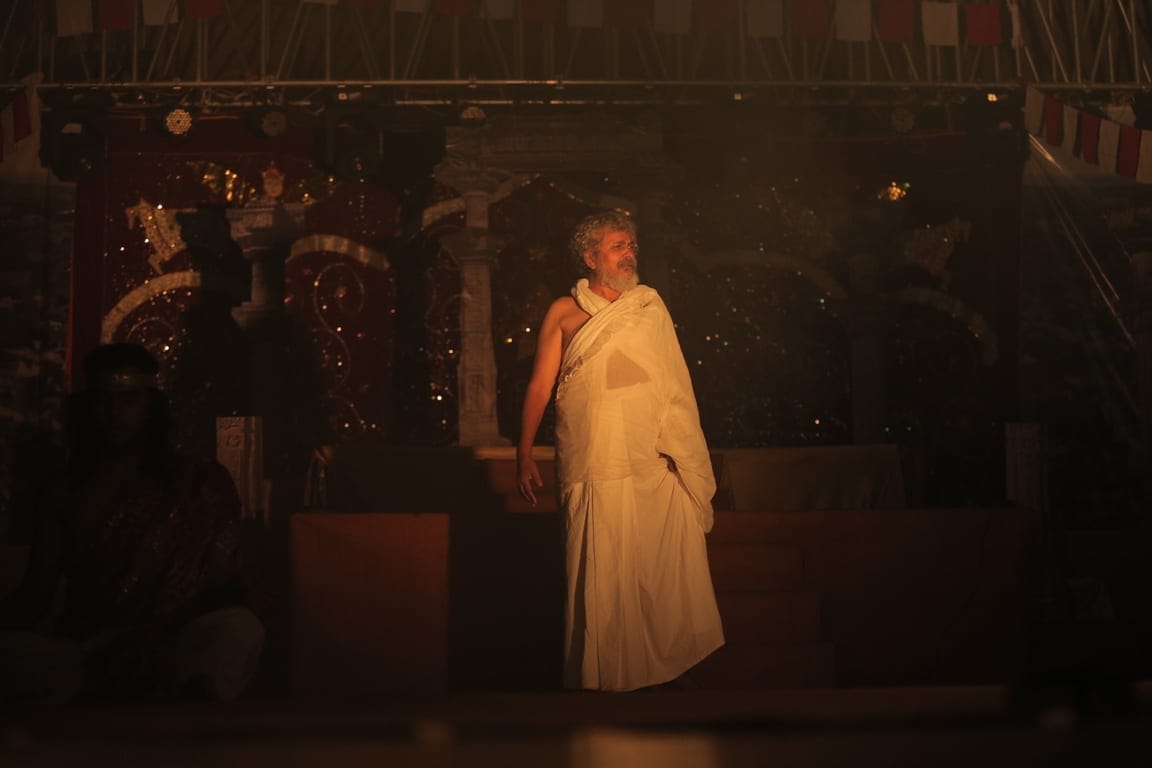
Siddharshi wrote for monks and scholars. Manoj Shah staged it for everyone. The Gujarati language, the theatrical form, the physical immediacy of live performance — these translate Jain philosophical concepts into something an audience can feel in their body, not just process in their mind. You do not need to know what ‘anushtup metre’ means to understand a man clutching at possessions that are already slipping through his fingers.
The play’s tagline, taken from the poster, reads: the end of sorrow is the beginning of peaceful happiness. It is a Jain idea, but it is also a theatrical promise. Bhav Prapanch does not lecture. It shows you the sorrow first — in all its bewildering, masked, terrifying detail — and then it shows you the way out. The monk in white. The temple that was always there. The hand that was always extended.