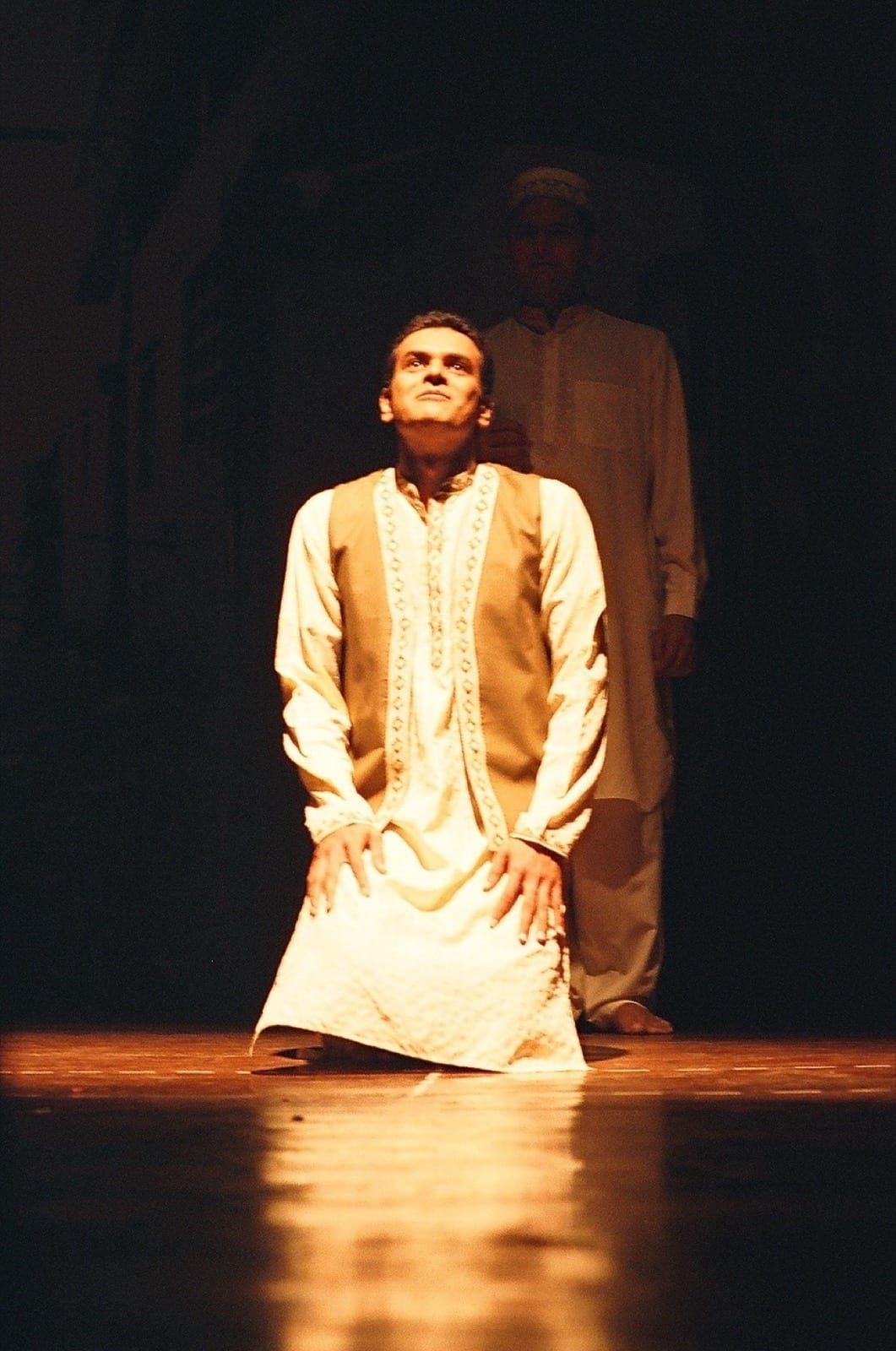
Bhamasha: The Jain Warrior Who Funded Maharana Pratap’s Last Stand
There is a moment in the history of Mewar that school textbooks mention in passing, if at all. After the Battle of Haldighati in 1576, Maharana Pratap’s army was shattered. His treasury was empty. His family lived in the hills, eating bread made from grass seeds. The Mughal empire, under Akbar, controlled everything. Pratap was ready to surrender. And then a man walked into his camp carrying twenty lakh gold coins and two-and-a-half crore silver rupees — enough to fund an army for twelve years. That man was Bhamashah.
Born in 1547 into the Kavdia gotra of the Oswal Vaishya community, Bhamashah was a Jain Shravak — a layperson committed to the principles of non-violence, truthfulness, and right conduct. His father, Bharmal, had served as fort commander of Ranthambore. Bhamashah himself rose to become Diwan — Prime Minister — of Mewar under Maharana Pratap. He was responsible for the state’s economy, military strategy, and administration. He was, in other words, not merely a donor. He was the architect of Mewar’s survival.
The play Bhamasha, staged by Ideas Unlimited at the Tata Theatre, NCPA on Republic Day 2013, sets out to recover this man from the footnotes. The story was conceived by Dr. Bipin Doshi, a Jain scholar who recognised that Bhamashah’s significance extended far beyond a single act of generosity. Mihir Bhuta dramatised the narrative, building a structure that moves between the Mughal courts, the Rajput battlefields, and the Jain merchant’s inner world of conscience and calculation.
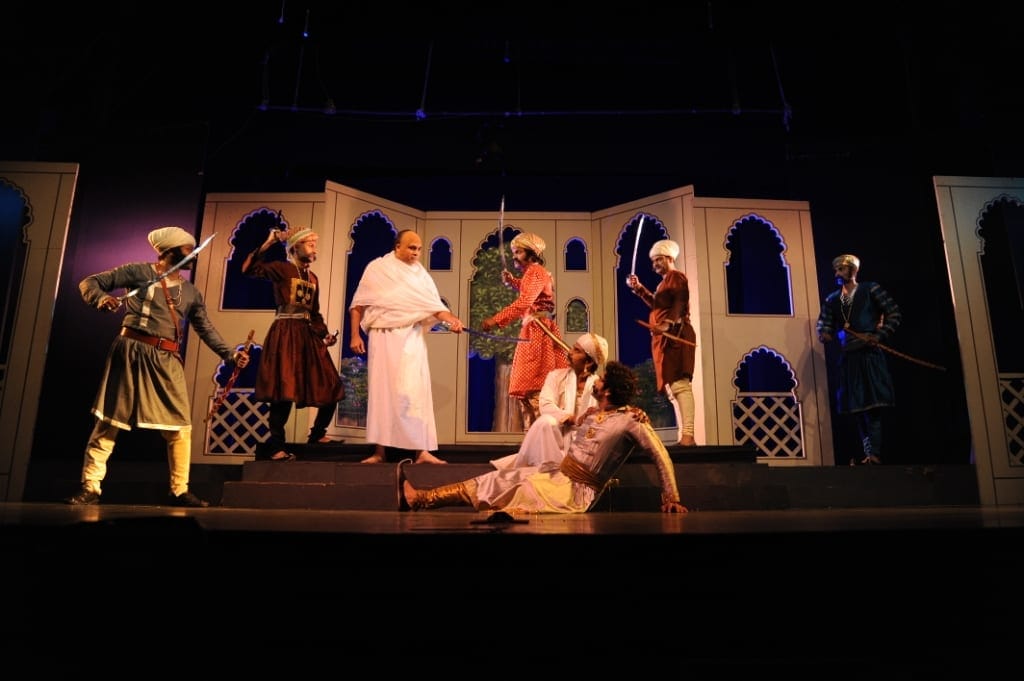
Dayashankar Pandey — known to millions from Taarak Mehta Ka Ooltah Chashmah and to cinephiles from Lagaan and Swades — took on the title role. He spent weeks working on the Rajasthani dialect, inhabiting a character who is simultaneously a shrewd businessman, a fearless warrior, and a devout Jain. “Theatre is a place where we can experiment, grow, learn and improvise,” Pandey said of the experience. “All actors should experience this magic once.”
The production’s most distinctive element was its music. Chugge Khan, the Rajasthani Manganiar folk musician whose work has since appeared on Coke Studio and international festival stages, led a live ensemble of traditional musicians. The Marwari folk songs they performed were not incidental music. They were the emotional architecture of the play — the sound of a desert civilisation fighting for its existence.
Om Puri, one of Indian cinema’s most commanding voices, provided the recorded narration. Yashpal Sharma, the actor best known for Lagaan and Gangaajal, contributed voice-over work. Kabir Thakore, the Ahmedabad-based architect and theatre veteran who serves as convener of Rangmandal, designed sets that evoked Mughal-era palaces and Rajput fortresses with an economy that left room for the actors and music to breathe.
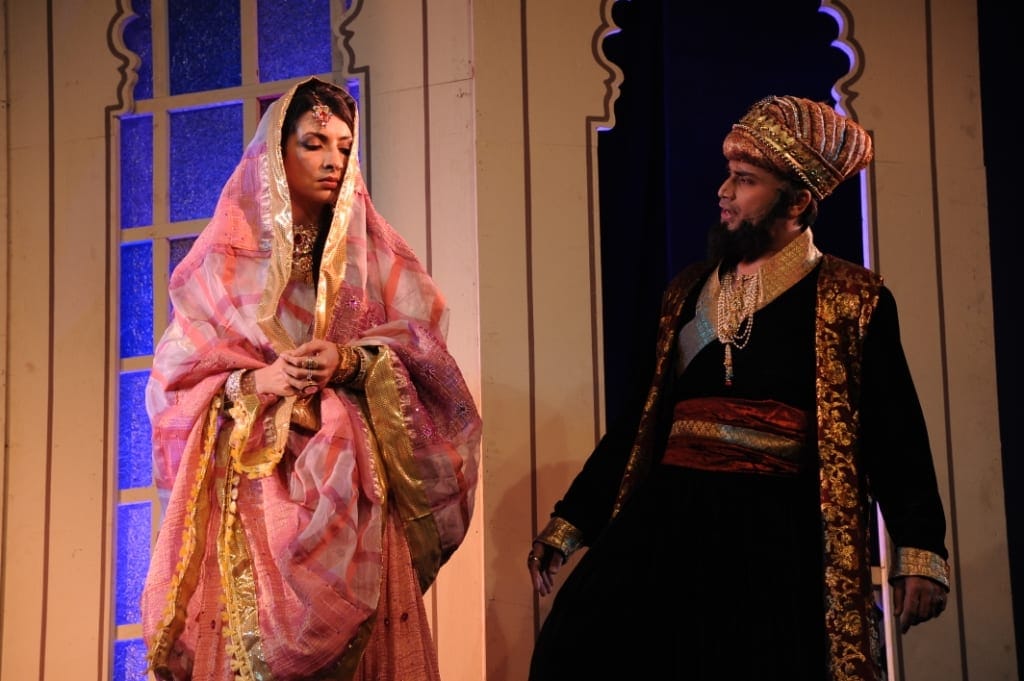
The historical Bhamashah’s story does not end with the famous donation. With the wealth he provided, Maharana Pratap rebuilt his army and launched the Battle of Dewair in 1582, recovering western Mewar including Kumbhalgarh, Udaipur, and Gogunda. Thirty-six thousand Mughal soldiers reportedly surrendered. Bhamashah served as treasurer of Mewar until his death in 1600. His descendants served as Prime Ministers of Udaipur for generations. The Indian government issued a postage stamp in his honour in 2000.
What makes Bhamashah’s story particularly resonant — and what the play foregrounds — is the question of what it means to be a Jain Shravak in a time of war. The Jain commitment to ahimsa is often misread, even within the community, as passive non-resistance. Bhamashah’s life argues otherwise. He fought in battles. He raided Mughal camps. He gave everything he had to defend his land. His ahimsa was not the absence of action. It was the refusal to let injustice stand unchallenged.
Ideas Unlimited had built its reputation on Gujarati biographical dramas — Mareez, Apurva Avsar, Jal Jal Mare Patang. Bhamasha was the company’s first major Hindi-language production, and Manoj Shah chose the biggest stage available: the thousand-seat Tata Theatre at NCPA, on the most symbolic date in the Indian calendar. The ambition was deliberate. This was not a community play for a Jain gathering. This was Indian history, staged for an Indian audience.
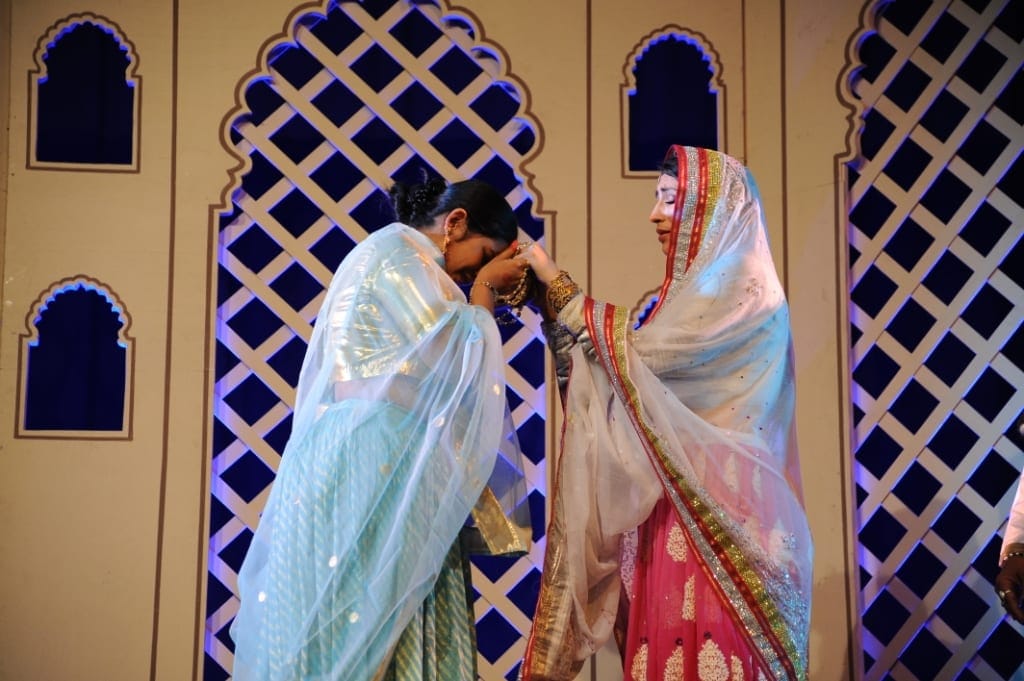
The play’s success led to a 2017 film adaptation, with Dayashankar Pandey and Dharmendra Gohil reprising their roles and Manoj Shah appearing as a Sadhu. The film, rated 7.6 on IMDb and available on Zee5, brought the story to an even wider audience. But the stage version, with its live Manganiar orchestra and the electric proximity of the theatre, remains the definitive telling.
Bhamashah is remembered today primarily as a philanthropist — the man who gave. But the play insists he was something more: the man who understood that freedom has a cost, and that paying it is not charity but duty. In a culture that venerates the king on the battlefield, Bhamasha asks us to look behind him — at the merchant, the strategist, the Jain who believed that protecting his people was the highest form of non-violence.