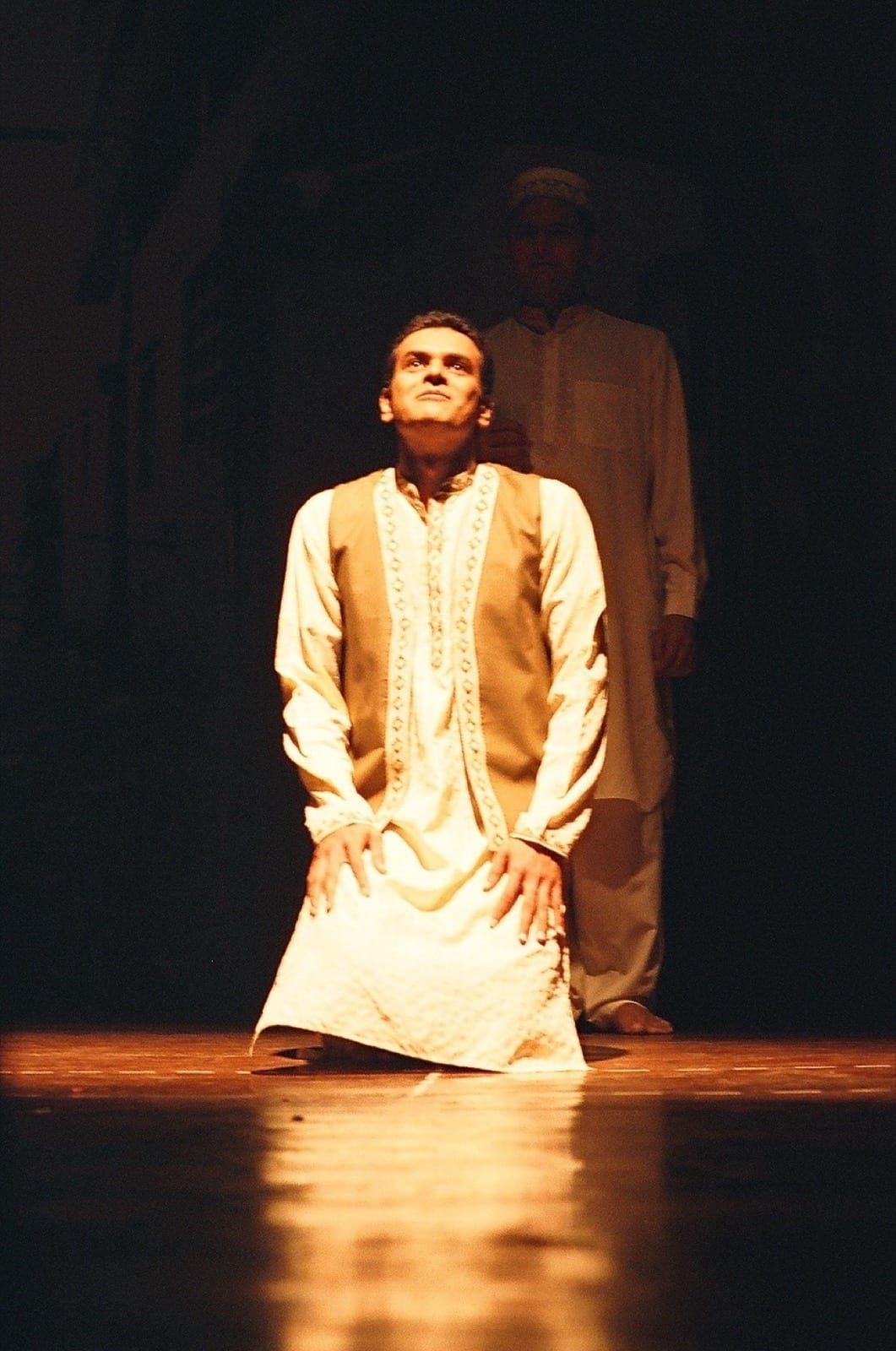
Achalayatan: When Tagore’s Most Radical Play Spoke Gujarati
Rabindranath Tagore wrote Achalayatan in 1911, a year before he would win the Nobel Prize for Literature. The title translates roughly as ‘The Immovable Institution’ — and the play is exactly about that: a system so petrified by its own rules that it has forgotten why those rules exist.
The setting is an ashram, sealed off from the world. Its windows are shut. Its doors are locked. Even air from outside is considered contamination. The students recite scriptures they do not understand. The elders enforce rituals they cannot explain. Into this airless world steps Panchak, a young student who cannot bring himself to stop asking why.
Panchak’s crime is simple: he opens a window. Through it, he glimpses a world of untouchables living free, unencumbered lives outside the ashram walls. No rules, no hierarchy, no pretence of spiritual superiority — just people living. This encounter shatters his faith in the institution and sets him on a path toward a truth the ashram has spent centuries trying to wall out: that God does not live inside closed systems.
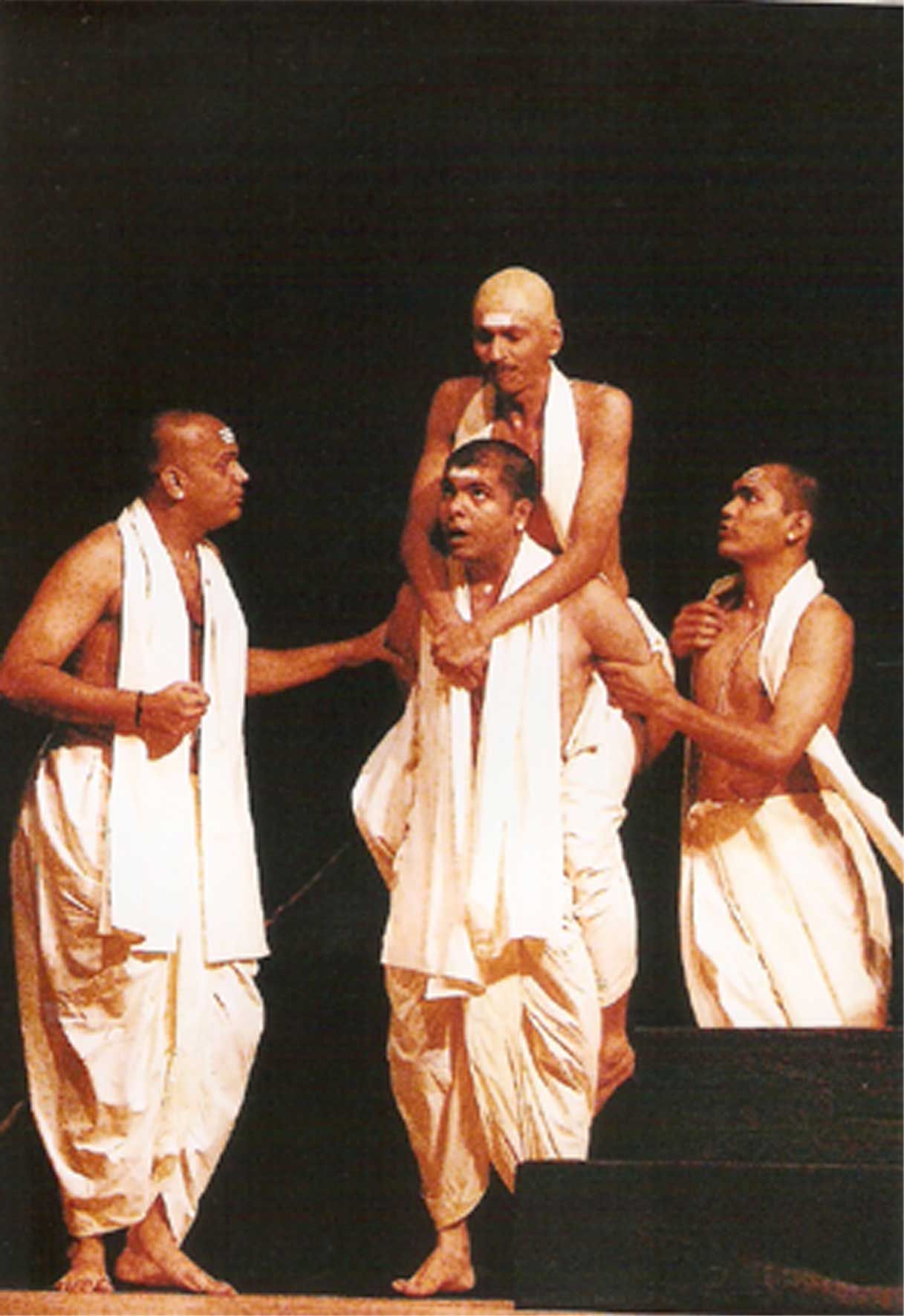
The play is Tagore at his most allegorically fierce. It is a direct attack on the Hindu orthodoxy of his time — the rigid caste hierarchies, the empty ritualisms, the educational institutions that teach obedience rather than understanding. When it was first staged in Bengal, conservative audiences were outraged. Over a century later, the play’s critique has only sharpened. Every country, every era, every institution builds its own Achalayatan.
What makes the Ideas Unlimited production historically distinctive is the text itself. The Gujarati adaptation was not a modern commission. It was created decades earlier by a group of Gandhian intellectuals: Giridhar Kripalani adapted the Bengali original under the guidance of Kaka Kalelkar, with the process touched by figures like Mahadevbhai Desai and Swami Anand — men who moved between Tagore’s Santiniketan and Gandhi’s ashrams, bridging Bengal and Gujarat at the level of ideas.
Mahadev Desai, Gandhi’s personal secretary, was himself a prolific translator of Tagore into Gujarati, having rendered works like Chitrangada and Viday Abhishap in the 1920s. Kaka Kalelkar had studied at Santiniketan and maintained a lifelong connection to Tagore’s vision of education. The Gujarati Achalayatan, then, was not merely a translation. It was a meeting point of two of India’s great intellectual traditions — the Tagorean and the Gandhian — expressed in the language of Gujarat.
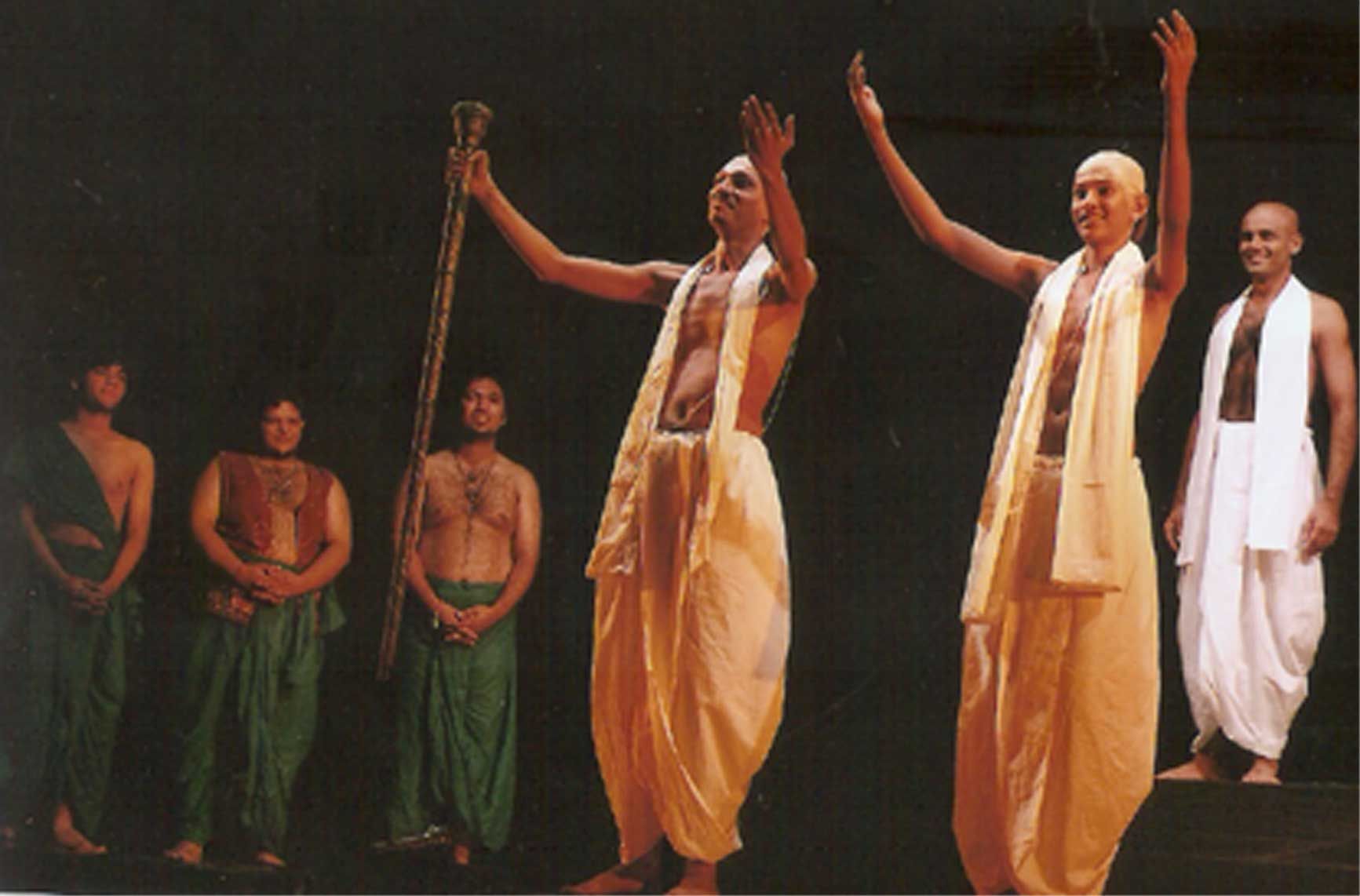
Manoj Shah discovered this adaptation and recognised its power. “After scanning all his work, I finally selected Achalayatan, because it is one of Tagore’s best crafted plays,” Shah wrote in his director’s note. “The plot which revolves around issues like religion, education and society at large, has a very contemporary feel to it. I went through all the nuances of the play for six months and rehearsed with the actors for two months. In all it took me eight months to get the play ready for the stage.”
The choice carried weight beyond the literary. In 2008, staging a Gujarati-language production that excoriated religious orthodoxy required a particular kind of artistic nerve. As the theatre historian Ananda Lal noted in his survey of Tagore productions in Kolkata, Shah’s choice “seemed quite brave, for Tagore is at his most scathing about rigid institutional practices in this play.” Kolkata itself had not seen a major Achalayatan production in over a decade.
The production premiered on 10 September 2008 at G. D. Birla Sabhagar in Kolkata, as part of a five-day Tagore Festival. It was the only Gujarati-language play in the programme — a Mumbaikar troupe performing a Bengali Nobel laureate’s work in Gujarati, in the playwright’s own city. The cast of over twenty performed in white and saffron against minimal sets, with Huseini Dawawala’s lighting design carving the ashram’s claustrophobia out of darkness.
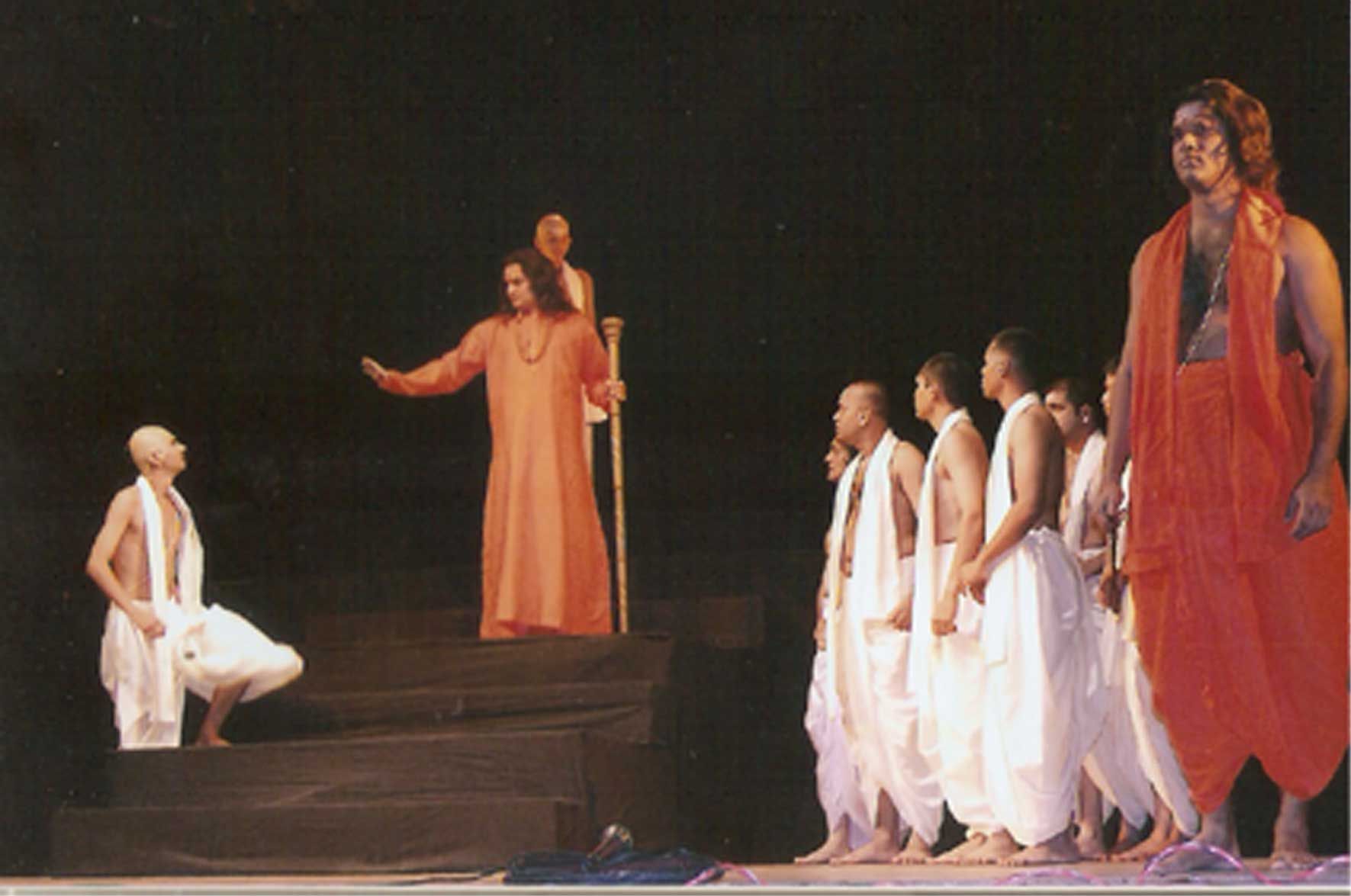
The Gujarati press took notice. Shishir Ramavat, writing in Gujarat Samachar, described the production’s emotional reach and the significance of bringing a Gujarati Tagore to Kolkata. Shah himself framed the play’s tone not as opposition to systems but as self-discovery — a distinction that reveals something essential about his directorial philosophy. He does not stage polemics. He stages journeys.
Achalayatan remains one of Tagore’s most neglected major works. It is rarely staged in any language, let alone in Gujarati. Yet its core argument — that institutions calcify, that rules outlive their meaning, that the divine is not locked behind any door — is as urgent now as it was in 1911. In an era of hardening identities and shrinking intellectual spaces, Panchak’s simple act of opening a window feels less like allegory and more like instruction.
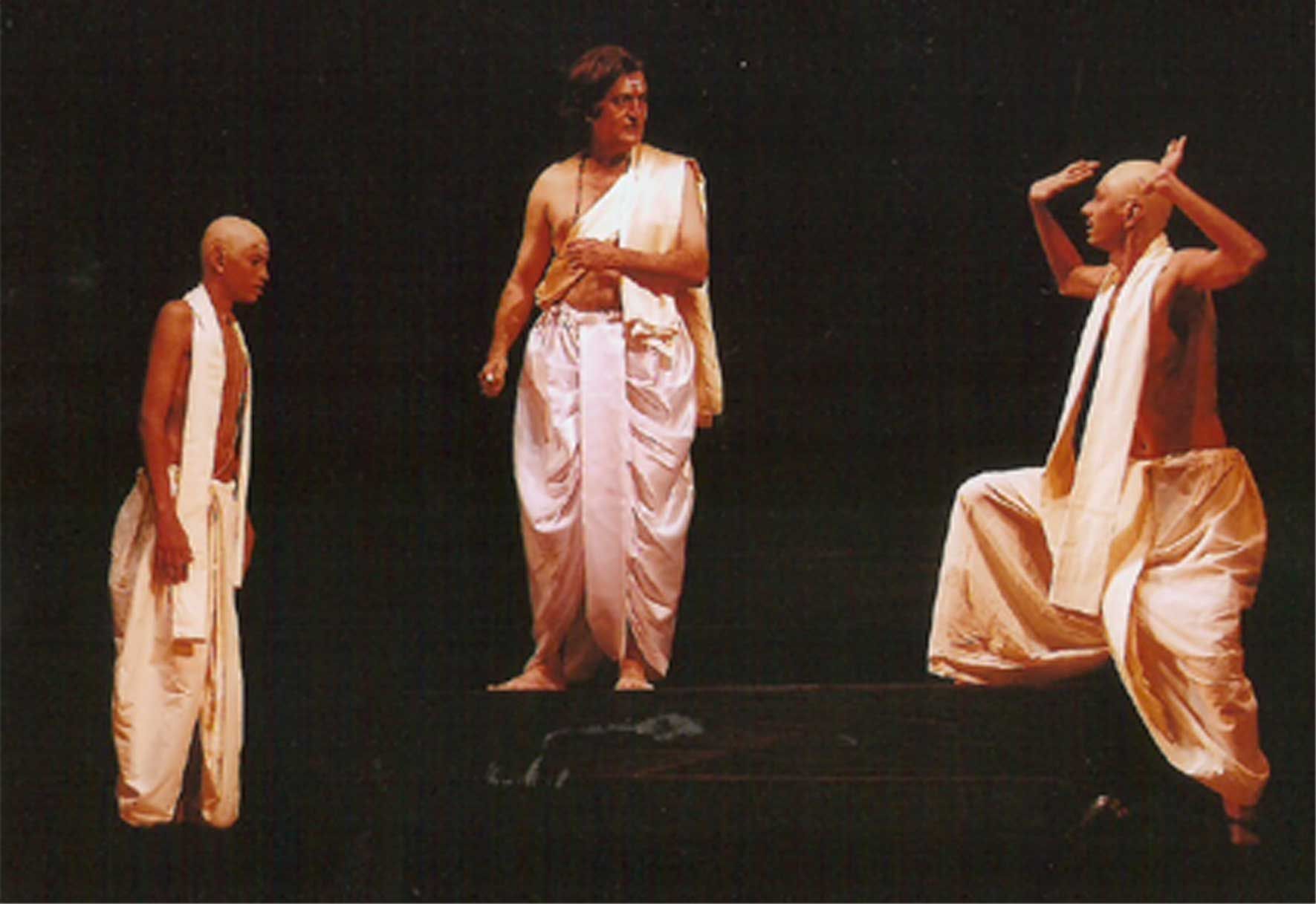
The production was a tribute, as the programme booklet stated, to India’s first Nobel laureate. But it was also something rarer: proof that a great play does not belong to the language in which it was written. It belongs to whoever has the courage to perform it.