Third Bell
Let's See Ourselves on Stage
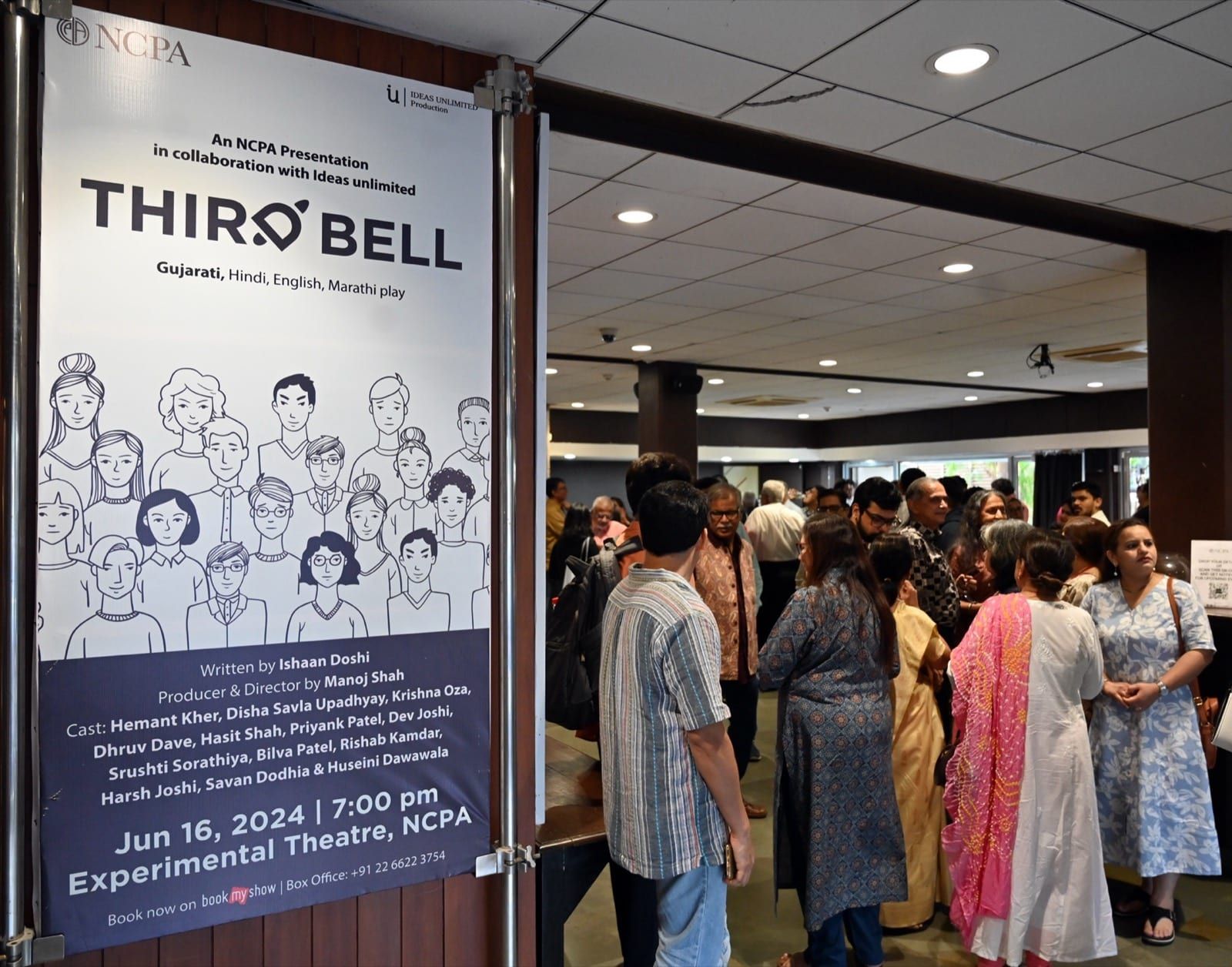
In theatre tradition, the third bell signals that the show is about to start. But what if that bell never rings? What if the real drama is already unfolding in the seats of the auditorium? Third Bell is a meta-theatrical celebration of the audience — a series of conversations, confessions, arguments, and revelations between strangers and companions, all waiting for a performance to begin. A married couple whose argument about a bathroom break turns into a conversation about love, memory, and missed anniversaries. A grieving widow and a guarded painter who spark an unexpected friendship. Two men sitting beside each other who might be a bumbling impresario and a spy — or just very committed audience members. A first date on the edge of implosion. A father and daughter tangled in generational expectations. A narrator and director trying, and failing, to keep everything on schedule. Written by Ishan Doshi and directed by Manoj Shah, Third Bell is a tribute to those who come to watch, wait, wonder, and maybe find a little bit of themselves before the curtain rises.
The People
Behind
the Play
Also Worth
Seeing
Socrates
Mukkadamo — The Trial
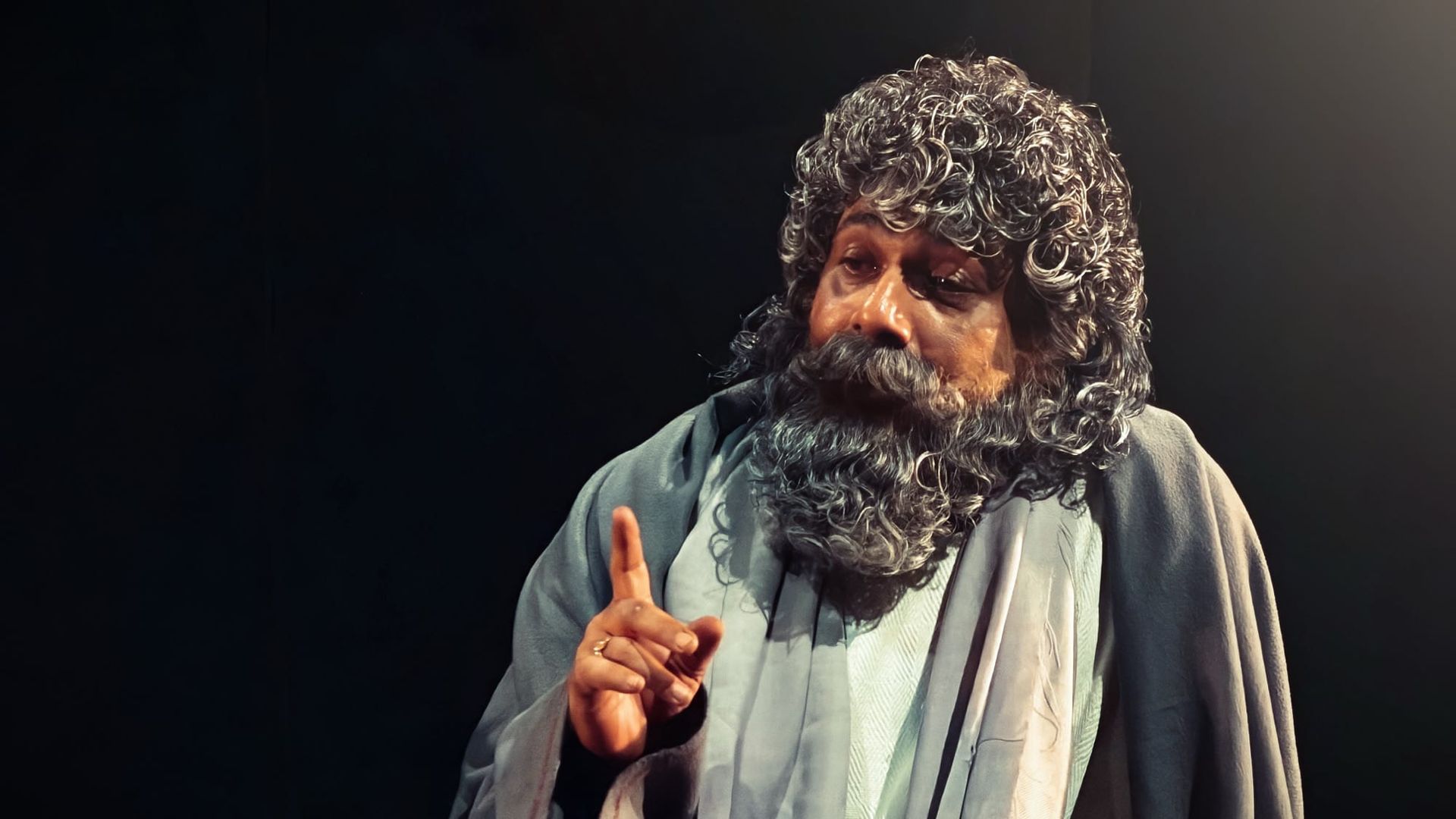
Mukkadamo — Socrates Trial. A 90-minute Gujarati play, directed by Manoj Shah, that returns to the Athenian court 2,400 years after Socrates' death and asks why the philosopher still refuses to leave us alone. Drawing on the writings of three of Socrates' contemporaries — the playwright Aristophanes, the philosopher Plato, and the military general Xenophon — the play assembles a portrait that no single source could give. The five cardinal virtues that anchored his teaching — courage, temperance, justice, piety, and wisdom — are not philosophical abstractions here but the framework of a man's death sentence. What makes this Socrates new on the Gujarati stage is its insistence that any work containing something eternal must be continually reinterpreted. Socrates' obsession with morality, freedom of speech, fearlessness, and self-examination is read here against Indian philosophy, finding parallels that shorten the distance between Athens and Ahmedabad. The play also takes a fresh look at the reality of his death — not as state execution alone, but as the most demanding of his own choices. The production argues that Socrates' insistence on critical thinking is indispensable today — from school education and scientific research to political understanding. After many earlier plays on Socrates, this is the one that brings him home in Gujarati.
Bombay Flower
The Untold Story of Ruttie Petit and Muhammad Ali Jinnah
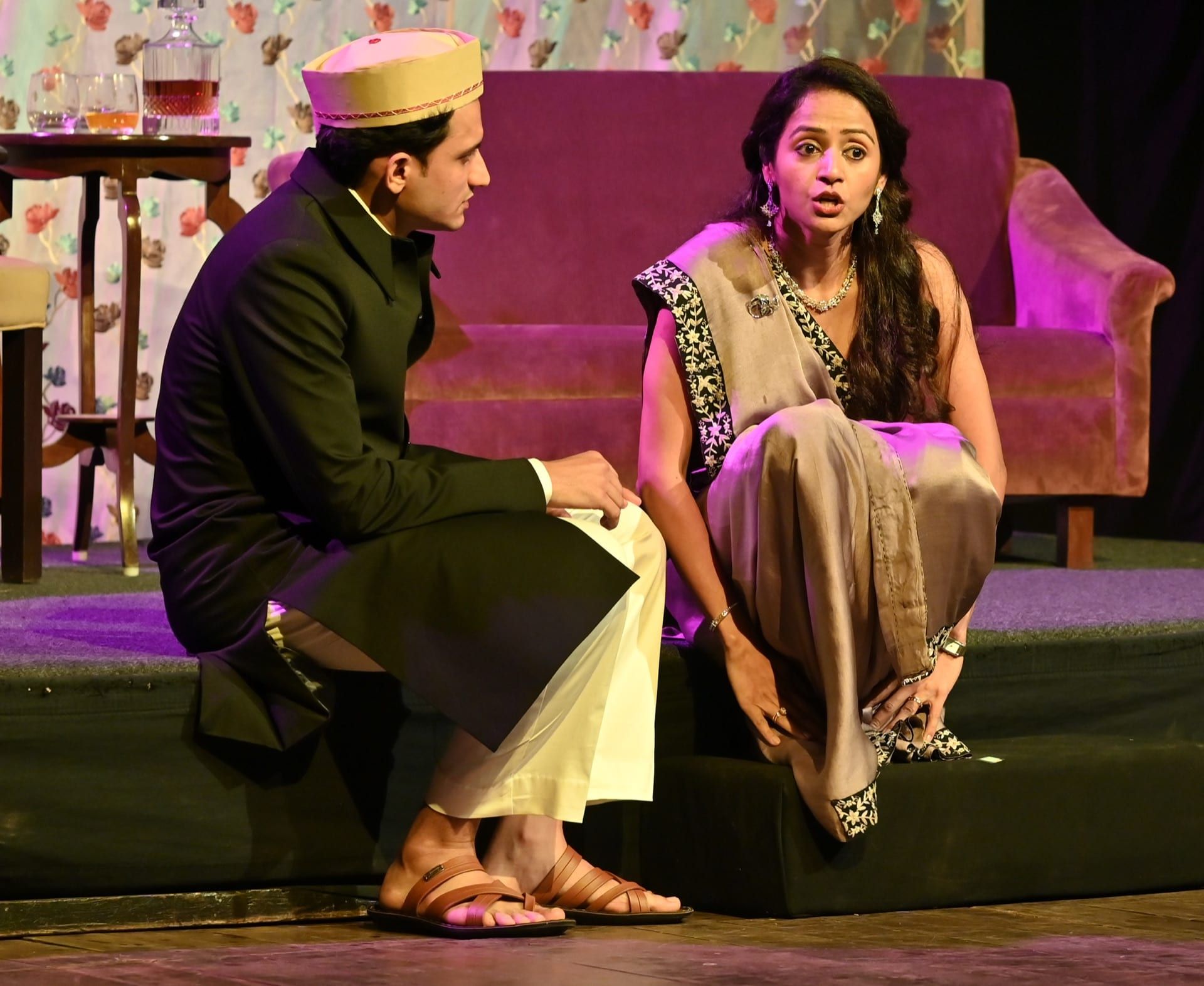
A tribute to the legendary Parsi theatre — Bombay Flower tells the astonishingly daring story of Ruttie Petit (1900–1929), the fiercely independent daughter of Sir Dinshaw Petit, second baronet, who at eighteen married the era's most divisive political figure: Muhammad Ali Jinnah, a man more than two decades her senior. Given the sobriquet 'Bombay Flower' by Sarojini Naidu, Ruttie's exuberance fills the first half of the play — her rebellion against family, faith, and Parsi society to marry for love. In the second half, shunned by her parents and increasingly isolated by Jinnah's consuming political ambitions, she becomes an embittered woman who finds solace in theosophy, opium, and solitary wanderings across Europe. She died at twenty-nine. Written by Geeta Manek and drawn from Sheela Reddy's Mr and Mrs Jinnah: The Marriage That Shook India, the play took four years to develop. It began as a one-woman show before Manoj Shah brought in Jinnah, then Ruttie's parents, his sister Fatima, and their friend Kanji Dwarkadas. Bhamini Oza Gandhi leads as Ruttie, with Vishal Shah as Jinnah. The play premiered to a full house at the Experimental Theatre, NCPA on March 26, 2023 — an NCPA co-production. Bombay Flower is dedicated to Parsi theatre, which Manoj Shah discovered to be the pioneer of both Gujarati and Urdu theatre during his research for Master Phoolmani in 1999. It asks a question that remains relevant: why would an intelligent, sensitive young woman from a privileged background risk everything for a man whose world was entirely different from hers?
Mr. Apple
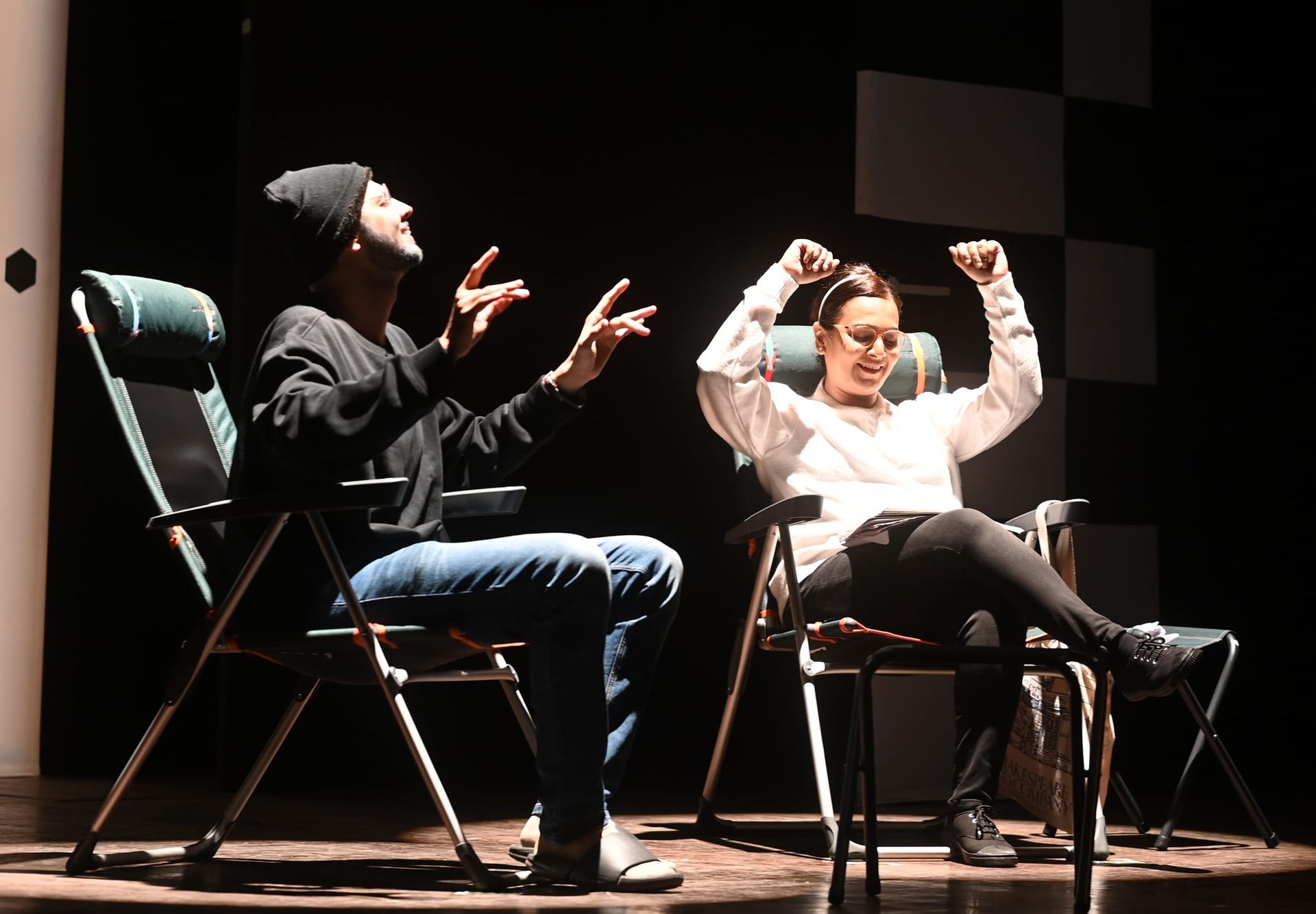
A riveting Gujarati drama exploring Steve Jobs' turbulent relationship with his daughter Lisa Brennan-Jobs. How do you measure greatness — by brilliance alone, or by the complexities that shape a person? Mr. Apple, written by Shishir Ramavat and directed by Manoj Shah, sits with the extraordinary yet deeply flawed life of the iconic entrepreneur behind Apple Inc. Jobs is universally celebrated as the visionary who revolutionised technology and birthed the digital age, but his personal journey was marked by contradictions and poignant ironies. Abandoned by his biological parents, he tragically repeated the cycle with his own daughter Lisa, whom he initially refused to acknowledge as his child. The play captures their explosive, often heartbreaking relationship through intense confrontations, deep-seated bitterness, cathartic meltdowns, and eventual moments of tenderness and reconciliation. Rather than depicting a conventional father-daughter narrative, Mr. Apple portrays how human relationships are never purely black or white but painted in nuanced shades of grey. It does more than celebrate Steve Jobs' brilliance — it courageously reveals his vulnerabilities and emotional struggles, offering a humane portrayal of the man behind the legend. As audiences witness the human inside the icon, the play invites introspection into identity, legacy, and the universal quest for connection and acceptance. Designed by Kabir Thakore with music by Amit Bhavsar and lights by Inaayat Sami, performed by Disha Savla Upadhyay, Alpesh Dixit, and Pinkesh Prajapati.
Gujarati Full Thali
Authentic Literary Test Preparation
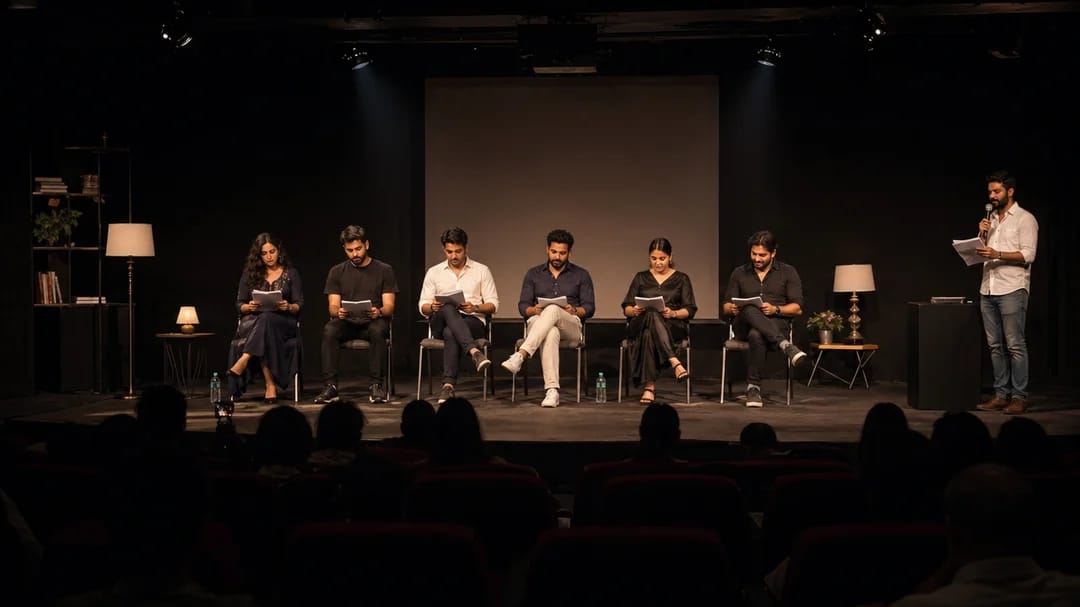
An NCPA Off-Stage presentation in collaboration with Ideas Unlimited — a curated literary feast in Gujarati, served by six storytellers, on one evening at Godrej Dance Theatre. Five writers form the roots of Gujarati identity in language, culture, and imaginative narrative. Five genres of writing speak to those of us standing in the void of an AI-shaped world. Five known actors carry these stories onto stage — reading, performing, framing the language, the culture, and the people of Gujarat back into the room. Inspired by the literary flavours of Hemansi Selat, Ghanshyam Desai, Gulam Mohmmed Shaikh, Madhu Rai, Pavankumar Jain, and Sharifa Vijliwala — six voices that span fiction, poetry, the visual-literary, and the experimental. The stories are served by Hemant Kher, Harsh Joshi, Kalpana Shah, Priyank Patel, Unnati Gala Joshi, and Utkarsh Mazumdar, with narration by Bakul Tailor and direction by Manoj Shah. Box office opened 26 April for NCPA members and 29 April for the public.

Tabiyat
Tabiyat is a hilariously witty Gujarati play in which the body's own organs come to life, climb onto the stage, and argue about the importance of health and its slow, comic revival. Blending ancient wellness traditions with modern medical insight, it uses sharp humour and an almost intellectual comedy to explore bodily, mental, and spiritual well-being all at once. Directed by Manoj Shah, with set design by Kabir Thakore, music by Marmik Shukla, and lights by Huseini Dawawala, the production turns the body into a noisy, opinionated household. Each organ has its own grievances, its own self-image, and its own theory of how the others should behave. The clever dialogue and laugh-out-loud moments make health both thought-provoking and wildly entertaining — a playful but pointed reflection on how fragile wellness really is, and how much of it is comedy we refuse to see. Performed by Disha Savla Upadhyay, Unnati Gala, Hasit Shah, Navid Kadri, Harsh Joshi, Devi Joshi, Priyank Patel and Pinkesh Prajapati, Tabiyat leaves audiences in splits while quietly making the point that taking care of yourself is not a checklist — it is an internal politics, and most of us are bad citizens.
Adbhut
The Wonder Within
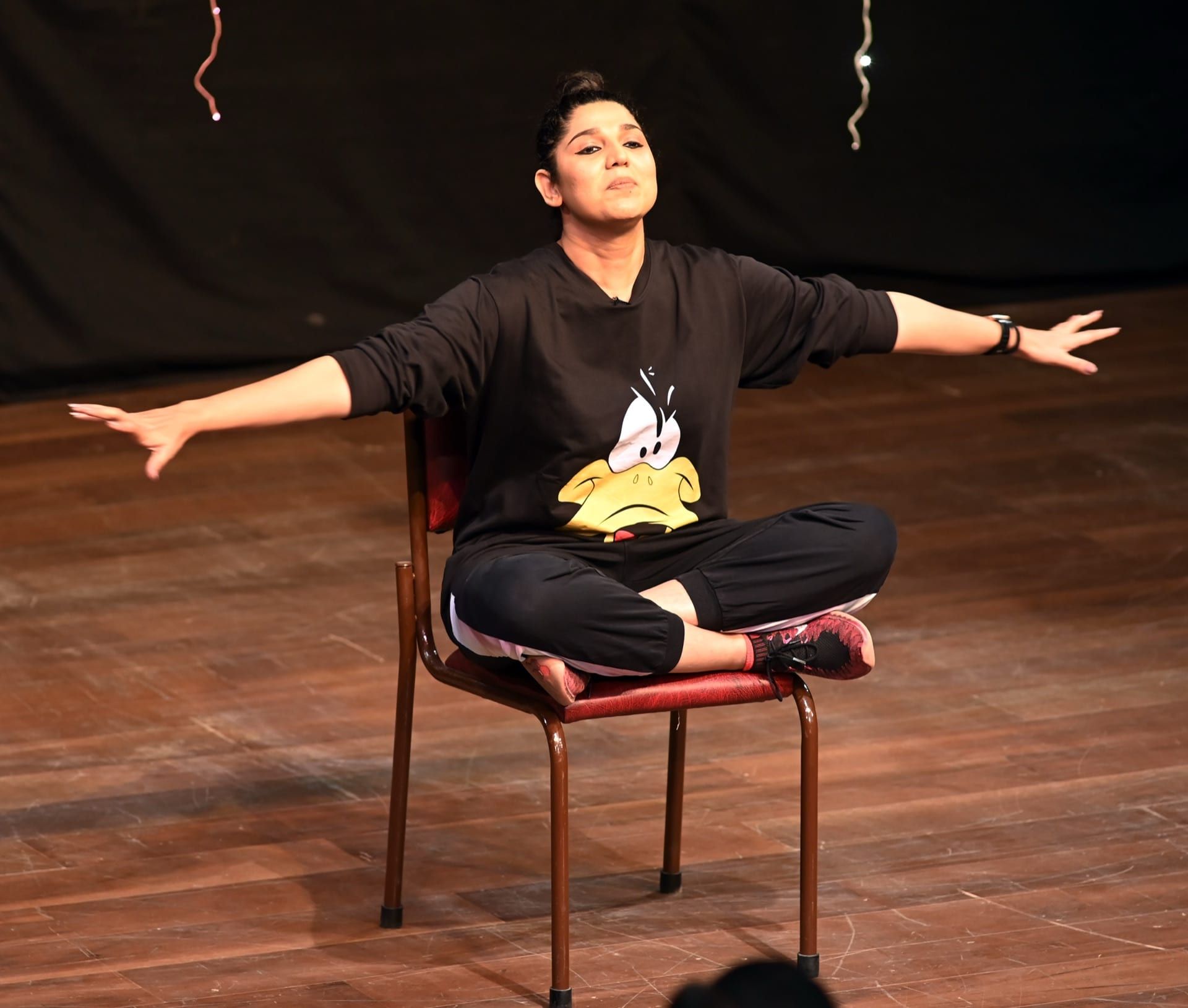
A solo Gujarati adaptation of Every Brilliant Thing by Duncan Macmillan and Jonny Donahoe — one of the most performed plays in the world — reimagined for Indian audiences by Satchit Puranik and directed by Manoj Shah. The original play premiered at the Ludlow Fringe Festival in 2013 with Donahoe performing, before transferring to London and an HBO special. It has since been staged thousands of times worldwide. Puranik's Gujarati adaptation transforms the play's cultural texture — Doordarshan evenings replace Saturday morning cartoons, garba nights replace school dances — while preserving its radical theatrical form: the audience is the cast. From the moment the play begins, the boundary between performer and audience dissolves. RJ Devaki guides the room through the story of a girl who, at age seven, begins a list of every brilliant thing worth living for as a way to pull her mother back from the edge of depression. The list grows as the girl grows, through adolescence, heartbreak, marriage, and the quiet weight of adulthood. With nothing but a chair, a Daffy Duck sweatshirt, and extraordinary presence, Devaki turns strangers in the audience into co-performers, drawing out laughter, silence, and tears in equal measure. Adbhut is not a lecture on mental health — it is a lived experience of it, told with the warmth of someone who understands that sadness and wonder can occupy the same breath.