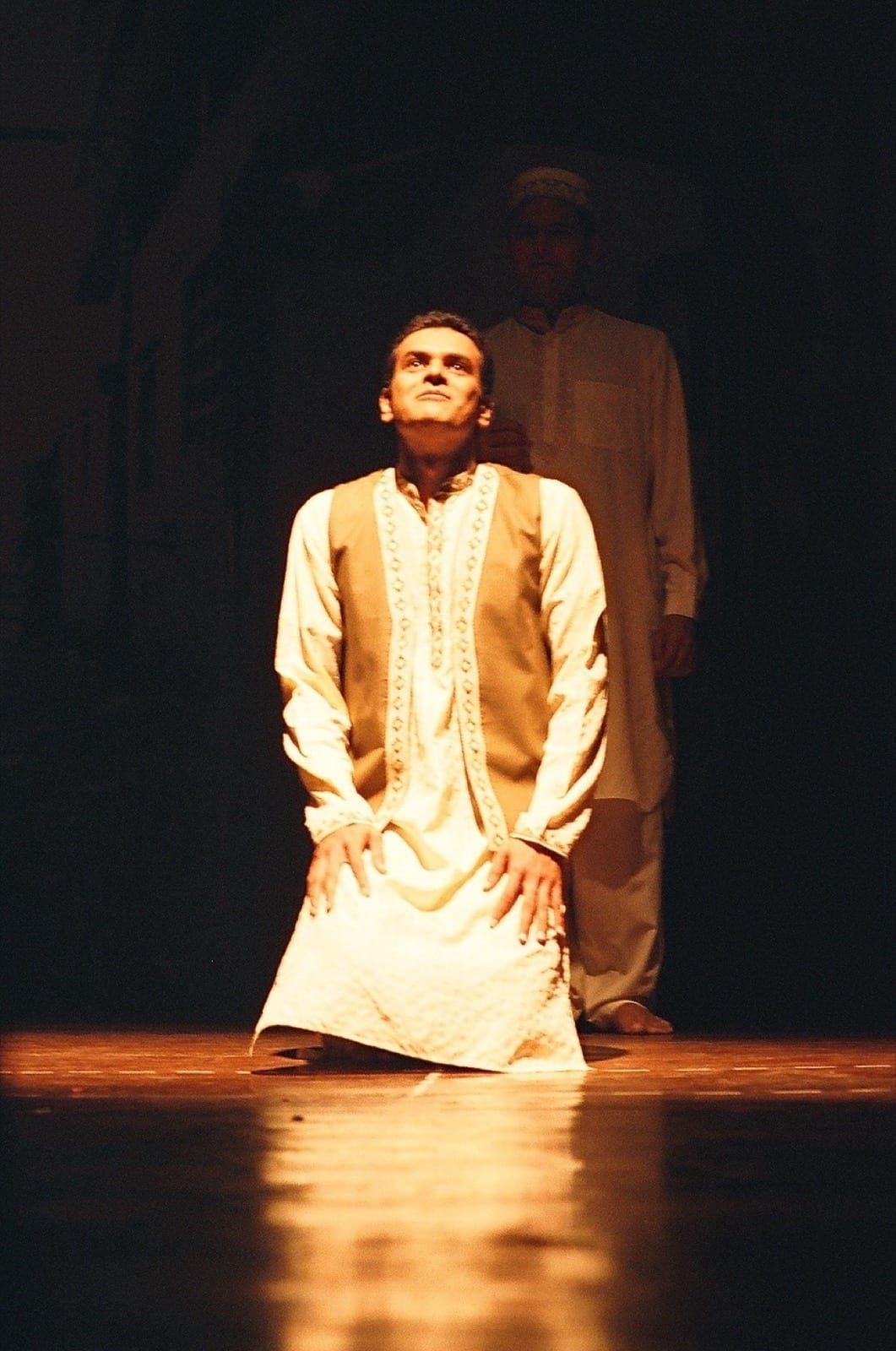
Master Builder: The One Ibsen Play Gujarati Had Never Spoken
There is a bhajan that Gujarati children learn before they learn what it means. Narsinh Mehta wrote it in the fifteenth century and it opens with a line of total surrender: Akhil brahmandma ek tu Shrihari — in all the universe, you alone are God. In 2014 Ideas Unlimited put that line on a poster and changed one word. Ek hu ja Shrihari. I alone am God. The play was called Master Builder, and the architect at the centre of it was named Akhil.
Henrik Ibsen published Bygmester Solness in December 1892, when he was sixty-four and had four plays left in him. Halvard Solness is a builder who started with churches and moved to homes, who rose on the ashes of a fire that destroyed his wife's family house and, with it, their twin sons. He keeps an old draughtsman in his employment and his talented son unpromoted, because he is afraid of the young. He has spent his life putting towers on buildings and cannot bear heights. Into this arrives Hilde Wangel, who says they met ten years ago in her home town, that he kissed her, and that he promised her a kingdom. At the opening of his new house she asks him to climb the tower and hang the wreath himself. He climbs. He falls. Hilde, alone in a crowd of horrified spectators, waves her shawl and cries: my master builder.
It is the most autobiographical thing Ibsen wrote, and he barely bothered to deny it. The play took shape after the summer of 1889 in Gossensass in the Austrian Tyrol, where Ibsen, then sixty-one, spent weeks in the company of a young Viennese woman named Emilie Bardach, wrote to her for a while, and then told her to stop writing back. Scholars at the University of Oslo's Virtual Ibsen Centre treat her as the seed of Hilde without treating Hilde as her portrait — the character is colder and more calculating than anything Emilie appears to have been. Emilie herself settled the question late. At eighty-four she finally saw the play, and said there was not much of her in Hilde, but that in Solness there was little that was not Ibsen.
Ibsen is the most performed playwright in the world after Shakespeare, and India has been staging him for over a century. Much of the recent work came through the Norwegian Embassy, which commissioned Asian directors to adapt him with a question attached: how does one present Ibsen's radical ideas to conservative societies? Reviewing a Bengali Master Builder staged for one of those festivals, The Caravan noted how easily the play travelled — the costumes, the set and the music were firmly in Bengal, and the violence and sexual tension underneath the words survived the crossing intact.
Gujarati had not made that crossing. When Ila Arun and K K Raina's Surnai Theatre and Folk Arts Foundation invited Ideas Unlimited to make work for the first Ibsen Theatre Festival in Mumbai, held from 31 October to 2 November 2014, Manoj Shah read the entire canon to choose. What he found, he wrote in his director's note, was that every major Ibsen had already been translated and adapted into Gujarati, and several had been performed — every one except The Master Builder, which had never been translated, adapted or staged in the language at all. “It is my choice and my decision to check myself as an artist,” he wrote. Ideas Unlimited would be the first to perform it in Gujarati.
His reason for choosing it was not the gap in the record. “The characters in this play are multidimensional,” the note reads. “The journey as a character, and the situation of human conditions, creates this more dark, psychological thriller, part tragedy, human drama. This in fact is a complete drama with navaras.” Navarasa — the nine emotional registers of Sanskrit dramaturgy — is a large claim to make for a chamber play about an architect, and it explains why the production plays Ibsen for heat rather than for gloom.
The transposition was structural, not cosmetic. Ibsen's Solness builds churches; his imagery is Christian, his architecture gothic, his tower crowned with a wreath. Shah swapped that whole apparatus for one that runs deeper in Gujarat than Christianity does anywhere. “In context to our world we temple architect, mythic and mystic creatures, over 3000 yr old tradition of building, towering temple from Vedic period,” he wrote. “The anomalies, anachronisms of Master Builder allow me to adapt this play in my time zone, my culture and my society.” Akhil Nanavati is a Mumbai architect who insists on being called a master builder, and what he builds is temples.
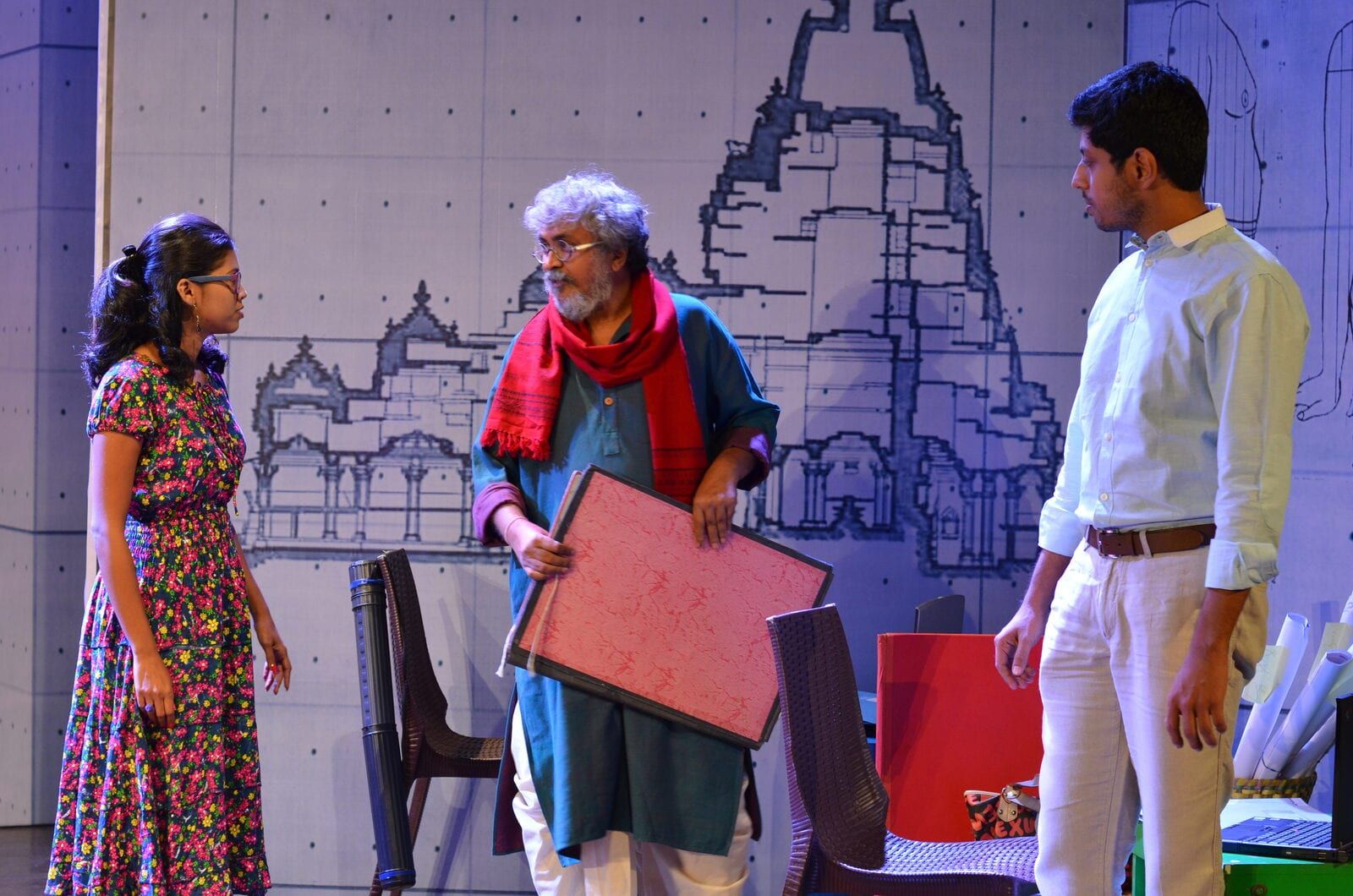
That choice pulled a real lineage into the play. The old draughtsman Knut Brovik, whose practice Solness absorbed and whose son he refuses to promote, becomes Bhanushankar Sompura — and the Sompuras are the hereditary community of temple architects who have carried the shikhara tradition in Gujarat and Rajasthan for centuries, the family name behind the rebuilt Somnath temple. Ragnar becomes his son Aadarsh; Kaja becomes Aadarsh's fiancée Tanvi; Aline becomes Saumya; Dr. Herdal becomes Dr. Shrikant; Hilde Wangel becomes Kamya, twenty-four and arriving from another town to collect on a promise. Setting a man who thinks he is God against a family that has been building for God for three thousand years is a sharper conflict than anything in the Norwegian original.
The Gujarati adaptation is by Chirantana Bhatt, a journalist and translator who has worked in print and broadcast media including the BBC, trained in Kathak, and holds degrees in History. She cut Ibsen's three acts to two. Shah does not treat a script as fixed once rehearsals start. “I cannot work with fixed formulas,” he wrote of the process. “My working method differs every time, play to play. I never know what will happen to the final show. I allow my writer, actor, creative and even myself to grow like a tree. And I often travel in a dangerous zone, to be a total failure till the third bell. But this is what I enjoy of the live performing arts.”
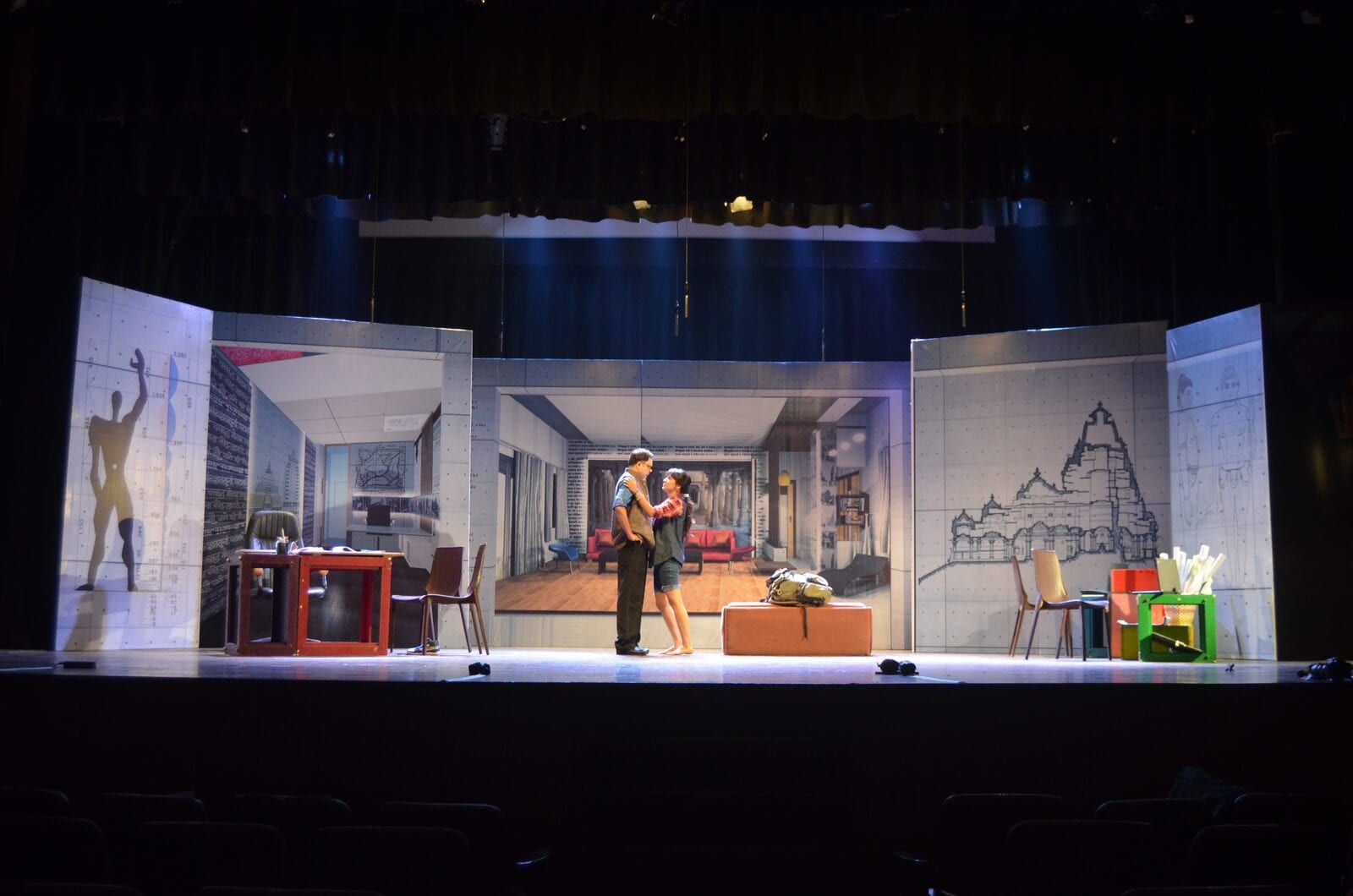
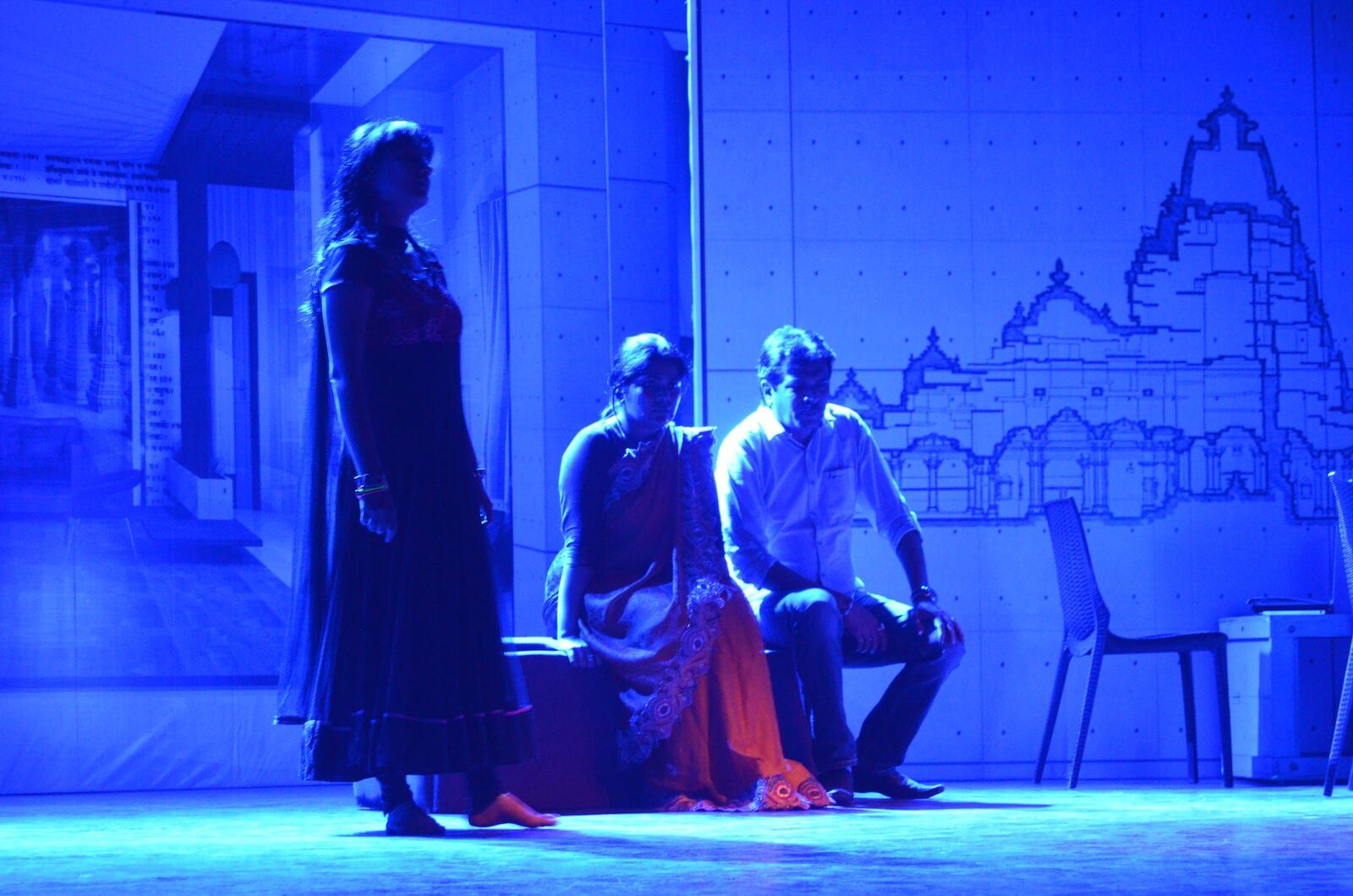
Kabir Thakore's set made the argument visible. Akhil's studio is built out of his own drawings: tall panels of line-drawn temple elevations, shikharas in section, deity figures rendered as architectural plates, with a modern apartment interior printed across them. The man lives inside the thing he builds, and cannot get out of it. Bhautesh Vyas lit it in cold whites for the working day and dropped it into deep blue for the scenes that belong to Kamya, so the temples behind her stop being blueprints and start being apparitions. Kanhaiya wrote the score.
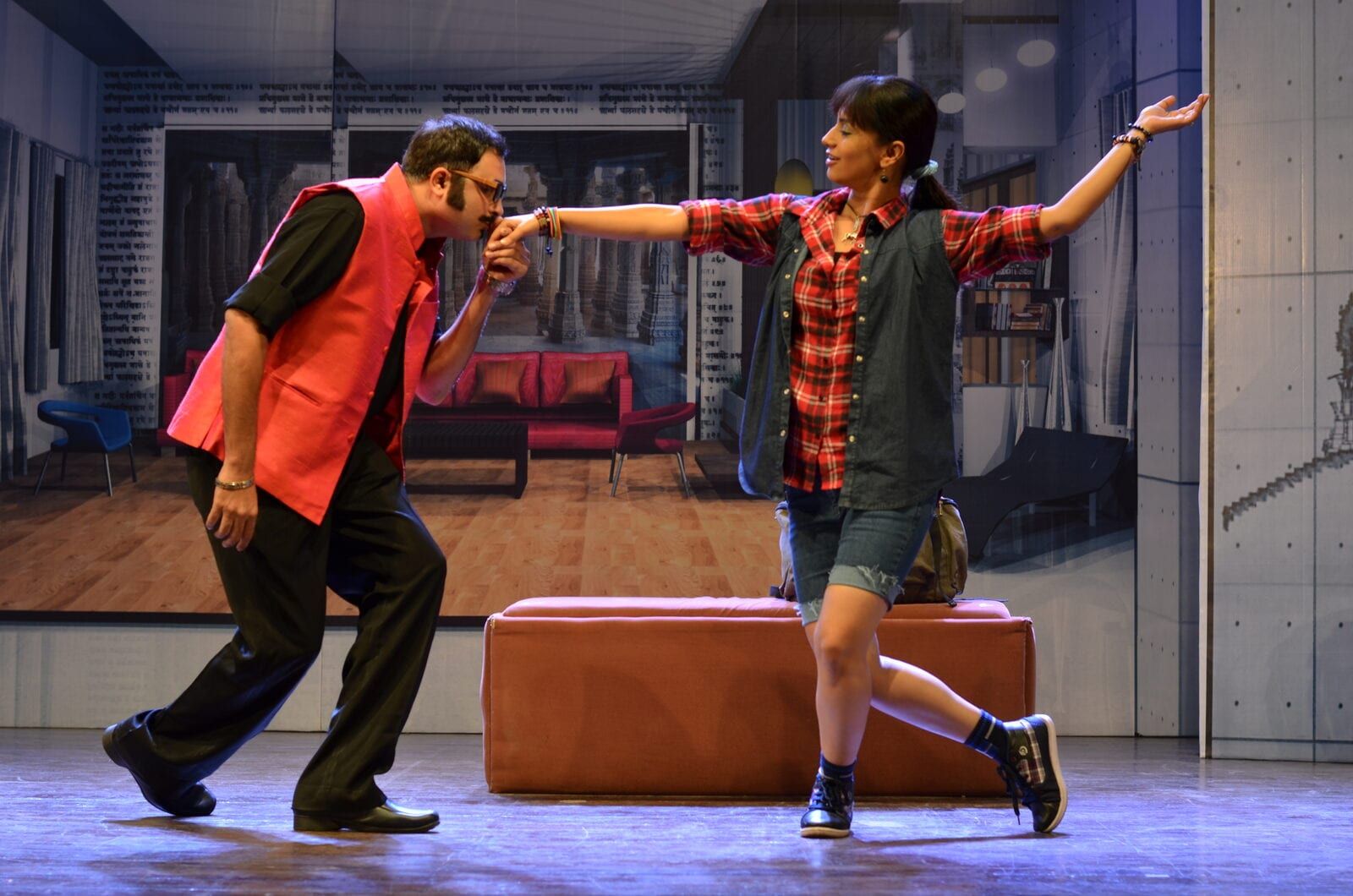
Jay Upadhyay played Akhil — a core member of Shah's company, later widely seen as Pranav Seth in Scam 1992, in a coral jacket and a moustache and a manner that starts as charm and curdles. Manoj Shah appeared in his own production. Rajul Diwan, a film, television and theatre actor of three decades, and Pratik Kothari, trained at the Barry John Acting Studio and a veteran of Salim Arif's productions and of work with Shyam Benegal and Deepti Naval, filled out the firm. Dimple Ashar, a doctor by profession, and Darshana Kanitkar, a performing-arts graduate of M. S. University in Baroda, took two of the women. For Archana Patel Nandi, trained at the Drama School Mumbai and fluent in five languages, Master Builder was her first performance on a Gujarati stage.
Divya Bhaskar carried a full-column preview ahead of the Mumbai run, calling it the masterpiece play of the Gujarati stage and setting out the terms plainly: an 1892 masterpiece in new dress, in a modern context, with the flavour of the Gujarati stage. Shah gave the paper the play's inventory. “This play holds within it fear, power, love, passion, truth, and the signs of the tradition of temple architecture,” he said. “It will prove to be a wholly entertaining and yet experimental and profound play, one that touches the intricate nature of human feeling.”
It ran at the festival, then at Bhaidas Auditorium in Vile Parle on 9 November 2014 at 7:45 pm, and then took its first show outside the festival at Prithvi Theatre on 14 December at four in the afternoon. Shah wrote to Ila Arun and K K Raina to thank them for the commission and to invite them to that Prithvi show — the customary courtesy of a company that has just been handed a play it would never otherwise have found.
Narsinh Mehta's bhajan sits in the production's papers in full, all five verses, and its argument is the opposite of Akhil's. You are the wind and the water and the earth, it says; you are the seed in the tree and the tree in the seed; gold worked into a bangle or an earring has different names and shapes, but in the end gold is only gold. It is a poem about the divine being distributed through everything, and therefore belonging to no one in particular. Ibsen wrote a man who climbed his own tower to settle an account with God and dropped out of the sky in front of a crowd. Gujarat had a poem, four hundred years earlier, that already told him he needn't have climbed.